A Better Place for Your Fall Leaves
In a U.S. Geological Survey study, fall leaves left in the street supplied 56 percent of a neighborhood’s yearly phosphorus pollution in stormwater.
After a hard fall rain, walk to the end of your driveway and look at the curb. You’ll probably find a soggy brown ribbon of leaves pressed against it, steeping in a puddle that moves to the nearest stormwater grate and goes down the stormwater drain. That puddle is brewing a tea that the nearest lake, river, or bay will drink.
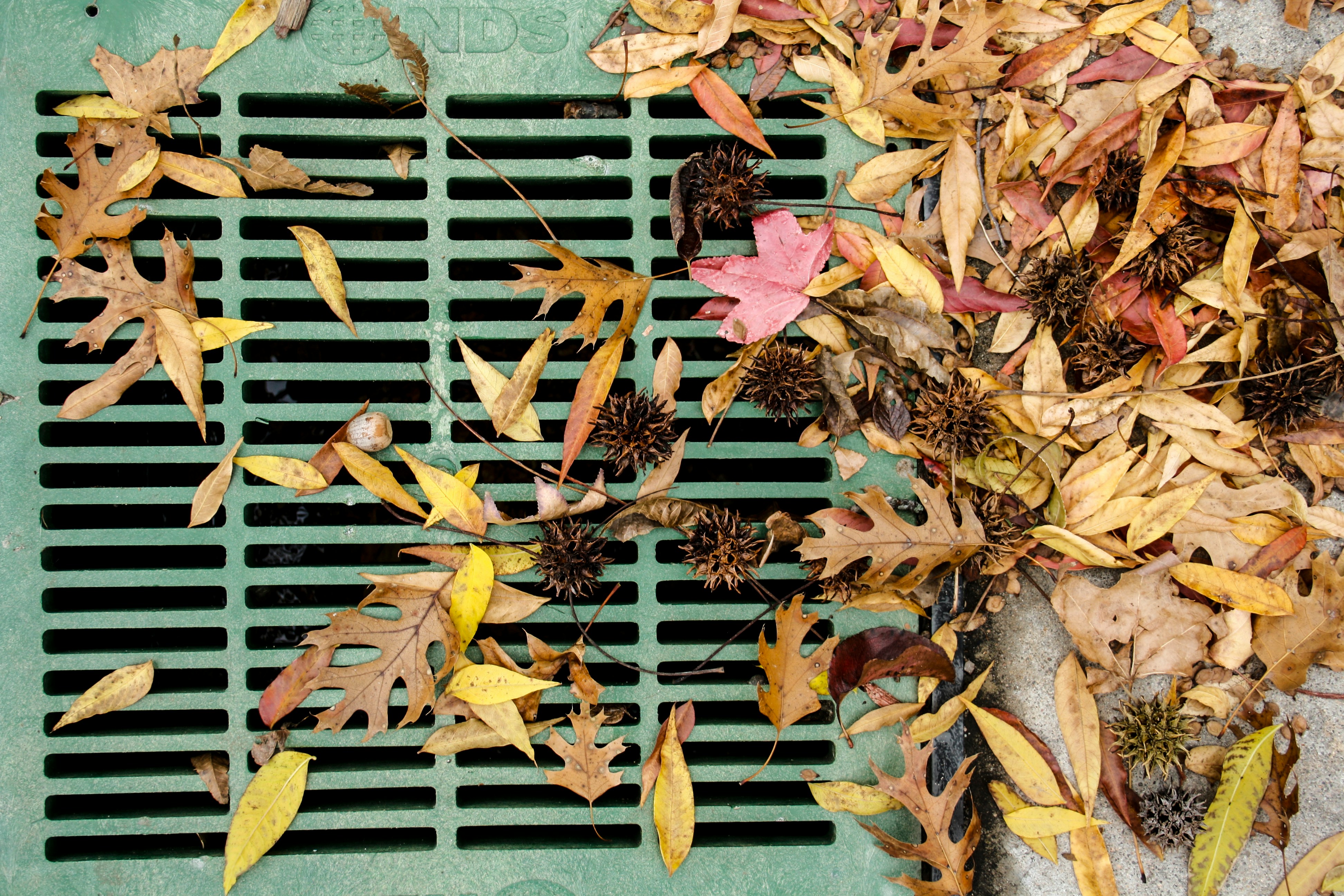
This week’s step is to keep your fallen leaves off the street and on your own ground, where they can feed your lawn, garden beds, or compost pile instead of fueling an algae bloom. Raking toward the yard, not the road, and clearing the area around the storm drain in front of your home before the next rain offers huge benefits.
Before we get to the details, we want to share with you that our community of Sustainability Practitioners is growing fast! Don’t miss out on benefits you can read about here and join at your preferred level: www.SustainablePractice.Life
This step is on the Habitat pathway, which covers how we share our land with the plants, animals, and waterways around us. Last fall we wrote about what leaves can do for your yard: shelter for overwintering insects and “brown gold” for your compost pile. This week is about the other half of the story: what leaves do when they leave your yard, and why the simplest way to protect downstream water is to keep as many leaves as you can on your own ground.
Why leaves in the street matter to our planet
A leaf on your lawn feeds the soil. The same leaf on pavement is fertilizer pollution. When rain soaks a leaf on asphalt, the phosphorus and nitrogen inside it dissolve into runoff, and in most neighborhoods the storm drain carries that runoff to the nearest stream or lake without treatment.
The U.S. Geological Survey measured how much this matters. From 2013 to 2015, hydrologist Bill Selbig compared two Madison, Wisconsin neighborhoods with similar tree cover. One had its streets cleared of leaves before rainstorms; the other didn’t. Where leaves stayed in the street, fall leaf litter accounted for 56 percent of the neighborhood’s yearly phosphorus load in stormwater (winter excluded). Where streets were cleared, it was 16 percent. Clearing the leaves cut phosphorus loads by 84 percent.
Phosphorus is the nutrient freshwater algae starve for most, so a little goes a long way. Lake scientists’ rule of thumb is that one pound of phosphorus can grow up to 500 pounds of wet algae. That is the green “pea soup” scum that clouds lakes in late summer, shades out underwater plants, and in its worst forms produces toxic cyanobacteria blooms that close beaches.
The good news is that the fix doesn’t require any new technology. Selbig’s advice for homeowners whose town doesn’t sweep the streets: compost your leaves, or mulch them into the lawn.
The main challenge: rake toward the yard, not the road
The single most important habit is directional: rake, blow, and sweep leaves away from the curb, never into the street or the gutter. Then put them to work on your own ground. Here are four ways to do it, from least effort to most.
Mow them where they fall. For a lawn with a light-to-moderate leaf cover, skip the rake entirely. Run a mower over the leaves, going over them more than once if needed, until you can see grass through the chopped pieces. The bits settle between the grass blades and feed the soil and the earthworms. Michigan State University turf researchers found a bonus: lawns with mulched maple leaves had up to 80 percent fewer dandelions the next spring. Rake off the thicker layers, then use the mower to mulch the lawn with the lighter leaf cover.
Mulch your beds. Rake or blow extra leaves onto flower beds, shrub borders, and the bare soil under trees. Shredded leaves (run them through the mower first) stay put and won’t mat down, protecting roots from freeze-thaw cycles all winter.
Pile them for leaf mold. Leaf mold is the gardener’s easy way to compost: just leaves, moisture, and time. Pile leaves in a wire hoop or an out-of-the-way corner, wet them as you go, and walk away. Fungi will slowly turn them into a dark, crumbly soil conditioner in one to two years, faster if you shred them first. Finished leaf mold makes excellent mulch and holds water like a sponge in garden beds.
Feed your compost pile. If you already compost food scraps, dry leaves are the “browns” your pile needs all winter. Our Fall Gold issue walks through the recipe: about three parts leaves to one part food scraps, with a stockpile of bagged leaves set aside to cover scraps until spring.
If your town collects loose leaves at the curb, the most sustainable option is to opt out. Why give away nutrients your soil needs? But if you must remove leaves from your property and want to use your municipality’s service, check its rules, put your pile out as close to pickup day as you can (not several days prior), and place it on grass or soil (rather than in the gutter). Every moment a pile sits in the street is a moment rain can seep into it (and steep that ‘tea’ of leaves), causing downstream problems.
Find your next step
If leaves don’t apply to your situation, here are two side challenges. Pick the one that feels like a stretch, not a strain.
If you’ve never looked at your storm drain, adopt it. Find the grate nearest your house and make it yours for the season. Before a forecast rain and after each big leaf drop, clear the top of the grate and about 10 feet of gutter on either side. A few safety rules from city adopt-a-drain programs (Yes! Cities have those!) :
Work from the curb or sidewalk, not out in the street, and wear something bright.
Use a rake, broom, or shovel and wear gloves; never reach in by hand.
Never lift the grate. If the drain is still clogged after you clear the surface, report it to your public works department.
Put the leaves in your compost or leaf pile, and bag any trash separately. Many programs advise against using compost made from street leaves in a vegetable garden, so use it on flower beds or lawn instead.
Many towns now run formal programs with online maps where you can name your drain and log each cleanup. South Portland, Maine launched one in 2024, and Adopt-a-Drain sites cover communities in many other states.
Any time you do yardwork, use a quieter blower. Gas leaf blowers are surprisingly dirty. The California Air Resources Board calculated that running the best-selling commercial model for one hour emits as much smog-forming pollution as driving a 2017 Toyota Camry about 1,100 miles, roughly Los Angeles to Denver. A rake works fine for most yards and doubles as exercise. For bigger jobs, a battery-electric blower has no tailpipe, and a mulching mower does the shredding for you. If you hire a landscaper, ask whether they offer electric equipment.
Bring someone with you
A storm drain collects from the whole block, not just your yard, so this step works best with neighbors. If a landscaping crew next door blows leaves into the street every Thursday, a friendly word with the homeowner (”Here’s what I do with my leaves; do you think your crew could try the same?”) can do more than a season of your own raking.
You can also be the neighbor who takes the leaves. The EPA estimates that U.S. landfills received about 10.5 million tons of yard trimmings in 2018. Many of those bags sit at the curb for days first. Knock on a door and offer to haul a neighbor’s bagged leaves to your leaf pile you’re saving. You’ll get a winter’s worth of compost browns, and they’ll get one less chore.
Or make it a block project. Last month we suggested a neighborhood litter walk; a fall drain-clearing walk before the next storm is the same idea with rakes instead of trash grabbers.
Your one step this week
Before the next rain, walk out to your curb. Clear any leaves from the gutter and the storm drain nearest your home, and bring the leaves back onto your own ground. Then choose where the rest of this fall’s leaves will go: chop them into the lawn, spread them on your beds, pile them for leaf mold, or stockpile them for your compost. Whichever you choose, rake toward the yard, not the road. If you’re ready for more, adopt that drain for the season or trade one gas-blower session for a rake.
The leaves falling around you hold a year’s worth of nutrients the trees pulled from your soil. Keep them on your land, and they feed next year’s garden. Let them wash down the drain, and they could feed next summer’s algae bloom on a lake instead.
Sustainable Practice’s Sustainable Practices: Your Handbook for Effective Action and www.suspra.com map the full Habitat pathway with resources to empower you to protect our planet in practical ways. The One Step articles listed below will help you keep going once the last leaf has fallen.
Share this article with whoever rakes your yard, so this year’s leaves end up in the garden instead of the lake.
References and Resources
Evaluation of leaf removal as a means to reduce nutrient concentrations and loads in urban stormwater — William R. Selbig, U.S. Geological Survey, Science of the Total Environment (2016) (leaf removal cut total phosphorus loads 84 percent; fall leaf litter was 56 percent of annual phosphorus yield without removal vs. 16 percent with it)
Removal of fallen leaves can improve urban water quality — U.S. Geological Survey news release (Madison, Wisconsin study design and findings)
USGS: Collecting fallen leaves can help protect urban waterways — Wisconsin Public Radio (Selbig urges homeowners without leaf collection to compost leaves or mulch them into the lawn)
The Issue of Phosphorus — University of Wisconsin Extension (phosphorus is the key nutrient for freshwater algae; one pound can grow up to 500 pounds of algae)
Effect of Mulched Maple Leaves on Common Dandelion in Established Kentucky Bluegrass — Kowalewski et al., Michigan State University (mulched leaves reduced dandelions up to 80 percent)
Rake-free zone — Mary Hockenberry Meyer, University of Minnesota Extension, Star Tribune (mow until grass shows through the chopped leaves; whole leaves can mat and smother grass)
Making Leaf Mold — Fine Gardening (leaf mold needs only leaves and time, about two years; adding nitrogen makes it compost instead)
Yard Trimmings: Material-Specific Data — U.S. Environmental Protection Agency (about 10.5 million tons of yard trimmings landfilled in 2018)
Small Engine Fact Sheet — California Air Resources Board, July 2018 (one hour of the best-selling commercial leaf blower ≈ 1,100 miles in a 2017 Toyota Camry, in smog-forming pollution)
South Portland Launches “Adopt a Storm Drain” Program — City of South Portland, Maine (October 2024)
Related One Step Articles
Fall Gold: Turn Your Leaf Pile Into Next Year’s Garden Treasure — Sustainable Practice, One Step This Week (the full leaf-composting recipe, from quick start to expert)
Winter Homes for Tiny Heroes: Protecting Overwintering Habitat for Insects — Sustainable Practice, One Step This Week (why some leaves and stems should stay right where they fall)
From Leaf to Reef: Managing Nutrient Run-off From Your Yard — Sustainable Practice, One Step This Week (the fertilizer side of the same runoff problem)
Bag Trash Before It Breeds — Sustainable Practice, One Step This Week (turn a drain-clearing walk into a neighborhood event)