From Leaf to Reef: Managing Nutrient Run-off From Your Yard
Whoever tends your yard—you, a lawn service, or a landlord—determines how well it protects water from excess nutrient run off.
Start a wise yard care plan for the ground around your home, ensuring that excess nutrients from fertilizer are not running off and causing environmental devastation downstream. This is Coral Reef Awareness Week, during the season when lawns tend to get the most feeding, spraying, and watering. Fertilizer, weed killer, and other applications of lawn chemicals don’t all stay put: some travels off your land, downhill into a storm drain, a creek, a river, and eventually to a salt lake or the ocean. If you put too much nitrogen or phosphorus on your land, that feeds algae that overgrow and smother corals.
A wise yard care plan is a step on the Water pathway, and it touches Habitat too. You’ll be protecting the water that sustains all life on Earth. A reef-safe yard is a direct connection to our planet’s ecosystem, where the choices you make for the patch of grass you can see join millions of others draining through the planetary water cycle almost too vast to comprehend.
Care about the ground around your home
Whether you own your home or rent it, you have some influence over the yard around it. Caretaking doesn’t require controlling the fertilizer bag yourself. If a lawn service, a landlord, or a homeowners’ association does your yard work, your first move is to learn what’s being applied and when. Ask the lawn care company about its schedule and product list, ask a property manager what the crew uses, or read the label on whatever sits in your garage.
Create a “reef-safe” yard
Reef-safe yard care minimizes land-based pollution that harms reefs. Corals grow in clear, low-nutrient water. Excess nitrogen and phosphorus in fertilizer runoff feeds algae that overgrow and smother reefs and block light to them. Pesticides and herbicides carried off lawns disrupt coral growth and reproduction. Bacteria from pet waste and failing septic systems add pathogens that stressed corals can’t shrug off. While farms send far more pollution downstream than yards do, there’s no reason to add to the problem when preventing your portion of pollution is so easy.
Even if you live far from the ocean, your practices have an impact on it and all the waterways between. A lawn in the Midwest drains through the Mississippi, whose basin covers 41 percent of the lower 48 states. Each summer the nitrogen and phosphorus that the river carries feed an algae bloom that dies, sinks, and pulls the oxygen out of the water near the seafloor; in 2025 that low-oxygen “dead zone” measured about 4,402 square miles, roughly the size of Connecticut. The same mechanism is degrading Florida’s Coral Reef and reefs around the world. NOAA’s guidance to people who live inland is plain: protect your watershed. The nearer benefit is the pond, lake, or bay your runoff reaches first.
Your plan, starting today
A reef-safe yard care plan is a short list of standards you hold for your yard, built up over a season. Where you are on the calendar tells you where to start improving your practices.
In a temperate climate zone, hold off on the summer feeding. Nitrogen is the essential nutrient that greens grass. Warm-season southern grasses keep growing all summer and can use a feeding in hot weather, but cool-season lawns—common in areas that experience cold winters—only grow vigorously in spring and fall, not in midsummer heat. EPA guidance times feeding to active growth.
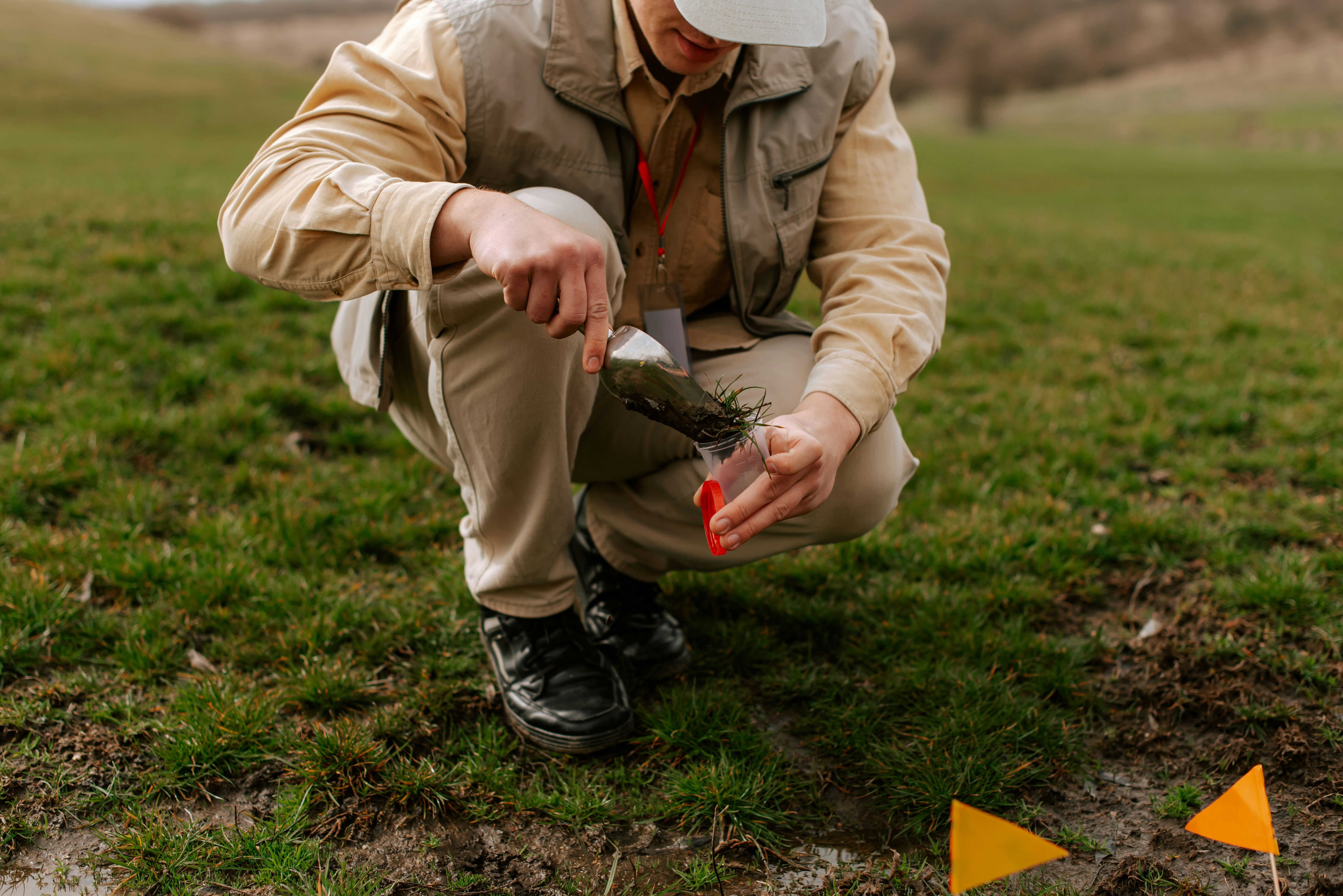
To know whether your lawn genuinely needs feeding, take a soil test through your state’s extension service. Don’t just thoughtlessly obey a bag’s schedule. The test will show if your soil lacks nitrogen, phosphorus, or any other nutrient. Most established lawns already hold enough phosphorus. If your soil test shows that to be the case, choose a phosphorus-free product—a zero as the middle number on the fertilizer label.
Never spread fertilizer before rain: a storm soon after application can wash soluble phosphorus off the surface in far higher concentrations than usual. Keep fertilizer and clippings off the driveway and sidewalk, where they run straight into a storm drain, and leave clippings on the grass, where they naturally return nitrogen to the soil as they break down.
Compost is worth a word here, because switching to it isn’t automatically reef-safe. Used to build and maintain soil, compost improves how well the ground absorbs water and reduces how much fertilizer a lawn needs over time. But compost (especially from animal manure) carries phosphorus too, and applying it heavily year after year, or right before a storm, loads the same nutrient into runoff that synthetic fertilizer does. The rule is the same for both: match the amount to what the soil needs, and keep it off pavement.
Your one step this week
Begin your plan with two moves. First, find out what care the yard around your home actually gets: check the products stored in the garage, or ask whoever handles it—your service, your landlord, your property manager—for the schedule and the labels. Second, establish a reef-safe schedule for the applications of chemicals or compost to your land. Skip the fertilizer if the lawn doesn’t need it, switch to a phosphorus-free product if your soil test shows you already have enough phosphorus, and avoid spreading just before a heavy rain. The same standards apply to the pots on a balcony or a garden bed: keep unnecessary nitrogen and phosphorus out of any soil to ensure you’re not contributing to the global problem.
A reef-safe yard is not a single purchase or a one-time fix; it is a mindset and standards you hold for the ground in your care and add to over the season. For the fuller framework—organic landscaping, water-wise practices, and the pathways they belong to—visit www.suspra.com or pick up Sustainable Practices: Your Handbook for Effective Action from your favorite bookseller (or online at www.sustainablepractice.life/store). To keep reading now, our pieces on a cleaning swap that protects every river downstream, turning your driveway into a rain sponge, and protecting the oceans through everyday choices each carry a piece of this plan further.
Find out this week what fertilizers your yard is fed, and do what you can to keep water cleaner all the way from leaf to reef.
References and Resources
What You Can Do to Help Protect Coral Reefs — U.S. Environmental Protection Agency (reducing stormwater runoff with rain gardens, rain barrels, and green infrastructure protects reefs; land-to-reef connection)
What can I do to protect coral reefs? — NOAA National Ocean Service (if you live inland, protect your watershed; fertilizer use is a daily choice affecting reefs; conserving water reduces runoff)
Threats to Coral Reefs — U.S. Environmental Protection Agency (corals are adapted to low nutrient levels; excess nitrogen and phosphorus, sediment, pesticides and herbicides, and pathogens from sewage and animal waste each harm reefs)
Terrestrial Runoff and Poor Water Quality Threaten Florida’s Coral Reef — NOAA National Centers for Coastal Ocean Science (land-based runoff and elevated nitrogen and phosphorus stress corals, harming their bleaching tolerance, growth, and reproduction)
The Mississippi/Atchafalaya River Basin (MARB) — U.S. Environmental Protection Agency (the basin drains 41% of the contiguous United States and all or part of 31 states)
Below Average Summer 2025 ‘Dead Zone’ Measured in Gulf — NOAA National Centers for Coastal Ocean Science (the 2025 hypoxic zone measured 4,402 square miles; excess nitrogen and phosphorus feed algae that decompose and deplete oxygen)
What You Can Do: In Your Yard — U.S. Environmental Protection Agency (apply fertilizer only when necessary, never before rain, and time it to active growth: spring and fall in cool climates, summer in warm ones)
Use Phosphorus-Free Fertilizer to Keep Lawns Green, Waters Clean — Maine Department of Environmental Protection (all stormwater eventually reaches our waters; most soils already hold enough phosphorus; use phosphorus-free fertilizer unless a soil test or new seeding calls for it)
How Can I Manage My Lawn to Reduce Nutrient Pollution? — Penn State Extension (test your soil before buying or applying fertilizer, and apply only the minimum the results call for)
Phosphorus and Water Quality — Oklahoma State University Extension (homeowners who fertilize without a soil test build up high soil-test phosphorus that becomes a runoff source; fertilizer, pet waste, and clippings left on pavement wash directly into storm drains)
Agricultural Phosphorus and Water Quality — University of Missouri Extension (a runoff-causing rain soon after a surface application can raise soluble phosphorus in runoff far above normal levels)
Five Reef Friendly Actions — Surfrider Foundation, Ocean Friendly Gardens (native plants, naturally built soil, and landscapes shaped to slow and retain rainwater reduce urban runoff; water-intensive, non-native plantings demand more fertilizer and pesticides)
Related One Step Articles
Making Waves: Protecting Our Oceans Through Everyday Choices — Sustainable Practice, One Step This Week (where all that downstream water ends up, and how daily habits reach it)
Permeable Pathways: Transform Your Driveway Into Nature’s Rain Sponge — Sustainable Practice, One Step This Week (a plan step in its own right: slowing and soaking up runoff before it reaches a storm drain)
Spring Clean Your Water: A Cleaning Swap That Protects Every River Downstream — Sustainable Practice, One Step This Week (another household choice that protects the water far past your property line)
Join Sustainable Practice
Expand your positive impact on Earth by becoming a sustainable practitioner today! www.sustainablepractice.life
Sustainable Practice empowers you to protect our planet in practical ways. Share this article with a neighbor—or whoever mows the grass where you live—and create one more reef-safe yard this week.