Where Do Flushed Medications Actually Go?
EPA found at least one pharmaceutical in the treated wastewater from every one of 50 large U.S. wastewater plants it sampled.
Open your medicine cabinet, and you will probably find something you no longer need: a few painkillers left over from a dental procedure, a prescription your doctor changed, a bottle of something that expired sometime last winter. Once you know you won't use it, the question becomes where it should go.
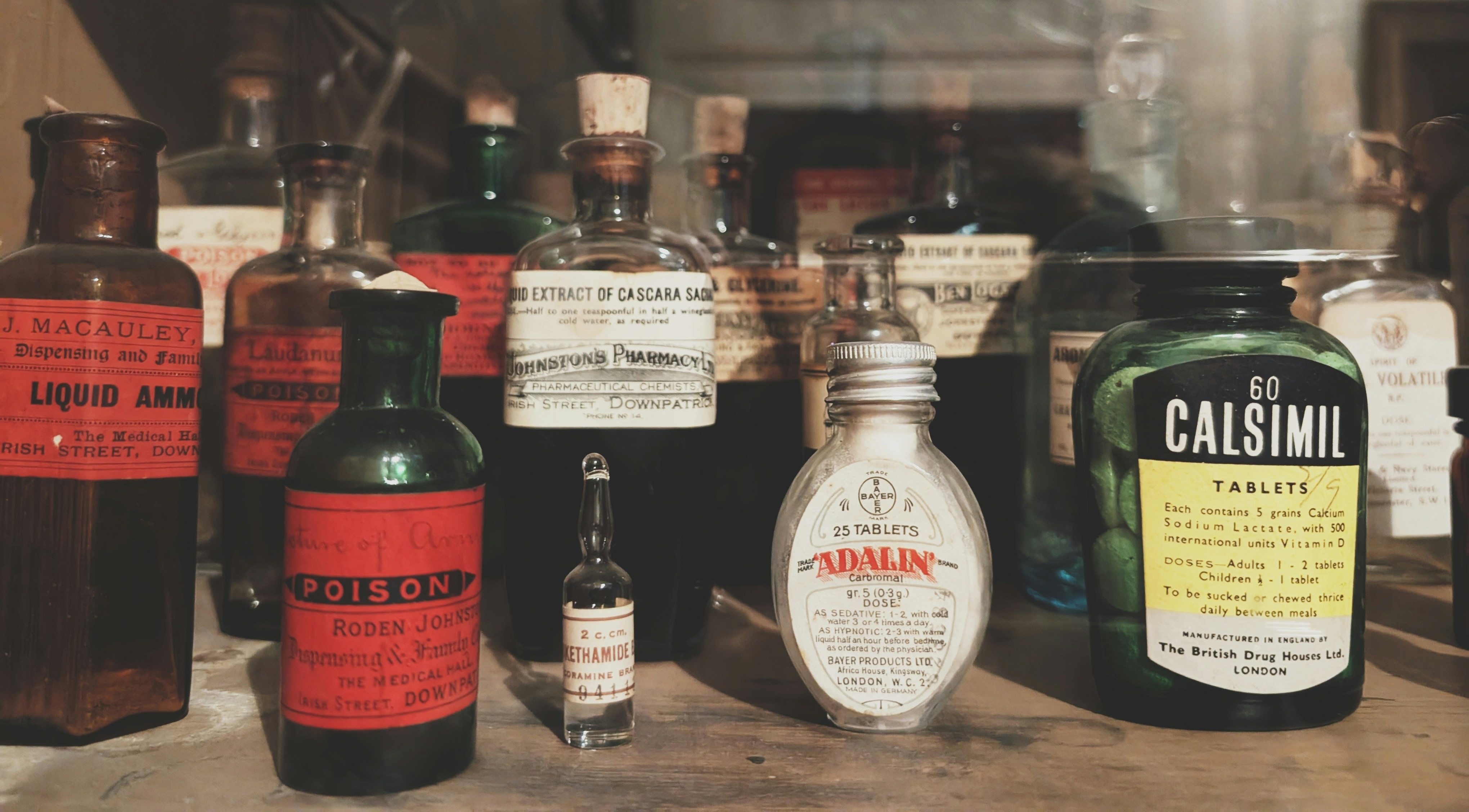
One place it should not go is down the sink or the toilet.
A drain, after all, is simply a pipe that connects your home to your environment. Whatever leaves your house travels to a treatment plant and, from there, usually to a nearby river on its way to the ocean. If you’re reading this on the fourth Sunday of September, today is a fitting moment to think about this issue because it’s World Rivers Day. That celebration exists to draw attention to the value of rivers and to encourage better care of them around the world. Few household habits connect a home to a river as directly as what we pour down the drain.
So this week’s step on the Water pathway is to find a safe take-back option for the medicine you no longer need.
Why pharmaceuticals turn up in streams
Wastewater treatment plants handle most of what you flush down a toilet or send down a kitchen sink: suspended solids and biodegradable organic matter. Pharmaceuticals are a harder problem. Conventional treatment plants generally can't remove them, so some biologically active compounds pass through treatment and continue into rivers and lakes.
EPA measured how routinely this happens. In a 2014 study of 50 very large municipal treatment plants across the United States, researchers tested the treated wastewater for 56 active pharmaceutical ingredients and found at least one in every plant’s effluent.
The pattern holds farther downstream. USGS scientists sampled 444 small streams across four regions of the country and detected two or more pharmaceuticals at least once in 95 percent of streams whose watersheds included some urban land use. At more than 60 percent of all sites, at least one pharmaceutical showed up in at least one sample at a concentration that could be of potential concern for fish.
Improper disposal is not the only route these compounds take into the water. Medicines we take pass through our bodies and enter sewage in urine and feces, and there is no household fix for that. But flushing unused medicine adds pharmaceuticals to the waste stream directly. Unlike the doses we actually need, the extra waste amounts are a problem we can simply stop contributing to.
Use the take-back route first
For most unused or expired medicine, the best answer is a drug take-back program. Both the FDA and EPA recommend a take-back location or a prepaid mail-back envelope as the first choice.
Take-back is far easier to find than it used to be. The DEA reported in May that more than 16,500 pharmacies, hospitals, businesses, and other sites around the country accept medication for disposal year-round, and many police departments keep collection boxes in their lobbies. Use the DEA’s Public Disposal Location Search to find the nearest one by ZIP code.
If nothing convenient turns up, the next DEA National Prescription Drug Take Back Day is Saturday, October 24, 2026, from 10 a.m. to 2 p.m. The April 2026 event collected 642,410 pounds of unwanted and expired medication at 4,417 sites, and the DEA says the program has taken in more than 21 million pounds from American homes since it began in 2010.
What if you cannot get to a take-back location at all? FDA maintains a short flush list of medicines that can be especially dangerous if taken, accidentally or intentionally, by someone they were not prescribed for. For those, best practice is to keep them in a household hazardous waste collection box until you can arrange take-back. For everything else, the FDA says most medicines can go in the household trash once mixed—without crushing—with something unappealing such as dirt, cat litter, or used coffee grounds, then sealed in a container or bag.
While you’re looking, check the garage
A medicine cabinet clean-out can turn into a larger one, and the same principle applies to whatever else you find. Leftover paint, pesticides, solvents, pool chemicals, and motor oil can contain hazardous ingredients. None of those belong in a household drain or a storm drain. Putting them down a drain can contaminate septic systems, wastewater treatment systems, groundwater, streams, rivers, lakes, and the ocean.
Your options vary widely by community. Some places run permanent household hazardous waste facilities. Others hold collection events a few times a year. Used motor oil is often accepted separately by garages and recycling centers. Check with your local solid-waste agency, public works department, or environmental agency to learn what’s available in your neighborhood.
Your one step this week
Set aside fifteen minutes and gather the expired or unused medicine you no longer need. Then use the DEA’s Public Disposal Location Search to find a year-round drop-off location, and plan to stop there the next time you are already out.
If nothing nearby is convenient, put October 24 on your calendar for National Prescription Drug Take Back Day when special collections may be happening near you.
If you want to go a little farther after going through the medicine cabinet, pick one leftover chemical product from the garage, basement, or shed that you have never known what to do with, and find out what your community accepts as household hazardous waste.
Safe disposal will not clear every pharmaceutical from our waterways. The medicines people legitimately take will keep entering wastewater, and better treatment technology still matters. But unused medicine is a source we control completely. Disposing of it at a take-back facility keeps it out of the drain and also keeps an old prescription from being taken by accident or misused.
World Rivers Day is a good reminder that the water leaving our homes does not disappear. It joins a larger system — treatment plants, groundwater, streams, lakes, and rivers — that ties us to the people and wildlife downstream.
For more ways to protect water at home and in your community, read Sustainable Practices: Your Handbook for Effective Action, visit www.suspra.com, and explore the related Water pathway stories below.
References and Resources
How Pharmaceuticals Enter the Environment — U.S. Environmental Protection Agency (explains how pharmaceuticals enter municipal and septic wastewater systems; conventional wastewater treatment is generally not designed to remove pharmaceuticals; summarizes the 2014 study of 50 large treatment plants)
Concentrations of Prioritized Pharmaceuticals in Effluents from 50 Large Wastewater Treatment Plants in the U.S. — U.S. Environmental Protection Agency / Water Research (56 active pharmaceutical ingredients were measured in effluent from 50 very large U.S. wastewater treatment plants)
Pharmaceuticals Common in Small Streams in the U.S. — U.S. Geological Survey (study of 444 small streams; two or more pharmaceuticals were detected in 95 percent of streams with some urban land use, and more than 60 percent of sites had at least one compound at a concentration of potential concern for fish in at least one sample)
Disposal of Unused Medicines: What You Should Know — U.S. Food and Drug Administration (take-back and mail-back are preferred disposal options; guidance for medicines when those options are unavailable)
FDA’s Flush List for Certain Medicines — U.S. Food and Drug Administration (identifies the limited group of medicines that FDA says may be flushed when take-back is not readily available)
The Limited Role of the Food and Drug Administration’s Flush List — U.S. Environmental Protection Agency (take-back is preferred even for medicines on FDA’s flush list; provides the disposal hierarchy for other medicines)
National Prescription Drug Take Back Day — October 24, 2026 — U.S. Drug Enforcement Administration, Diversion Control Division (confirms the October 24, 2026 event, 10 a.m. to 2 p.m., and links to year-round disposal locations)
DEA’s National Prescription Drug Take Back Day Removes 642,410 Pounds of Unwanted Medications — U.S. Drug Enforcement Administration (April 2026 results; more than 21 million pounds collected since 2010; more than 16,500 year-round disposal locations)
Household Hazardous Waste (HHW) — U.S. Environmental Protection Agency (guidance for paint, oils, pesticides, and other potentially hazardous household products; warns against pouring them down drains, onto the ground, or into storm sewers)
World Rivers Day — World Rivers Day (observed on the fourth Sunday of September; promotes awareness and stewardship of rivers worldwide)
Related One Step Articles
Spring Clean Your Water: A Cleaning Swap That Protects Every River Downstream — Sustainable Practice, One Step This Week (what household cleaning products can send down the drain, and how to choose better alternatives)
From Leaf to Reef: Managing Nutrient Run-off From Your Yard — Sustainable Practice, One Step This Week (how fertilizer and yard care can affect water well beyond your property)
The Water You Eat: What Your Dinner Has to Do with World Water Day — Sustainable Practice, One Step This Week (the water use hidden in the food we eat)
Join Sustainable Practice
Expand your positive impact on Earth by becoming a sustainable practitioner today! To learn more, visit www.sustainablepractice.life
Sustainable Practice empowers you to protect our planet in practical ways. Share this article with someone who has an old prescription sitting in a cabinet, so you can help them keep unused medicine out of the unmanaged waste stream and out of literal streams, too.