The Water You Eat: What Your Dinner Has to Do with World Water Day
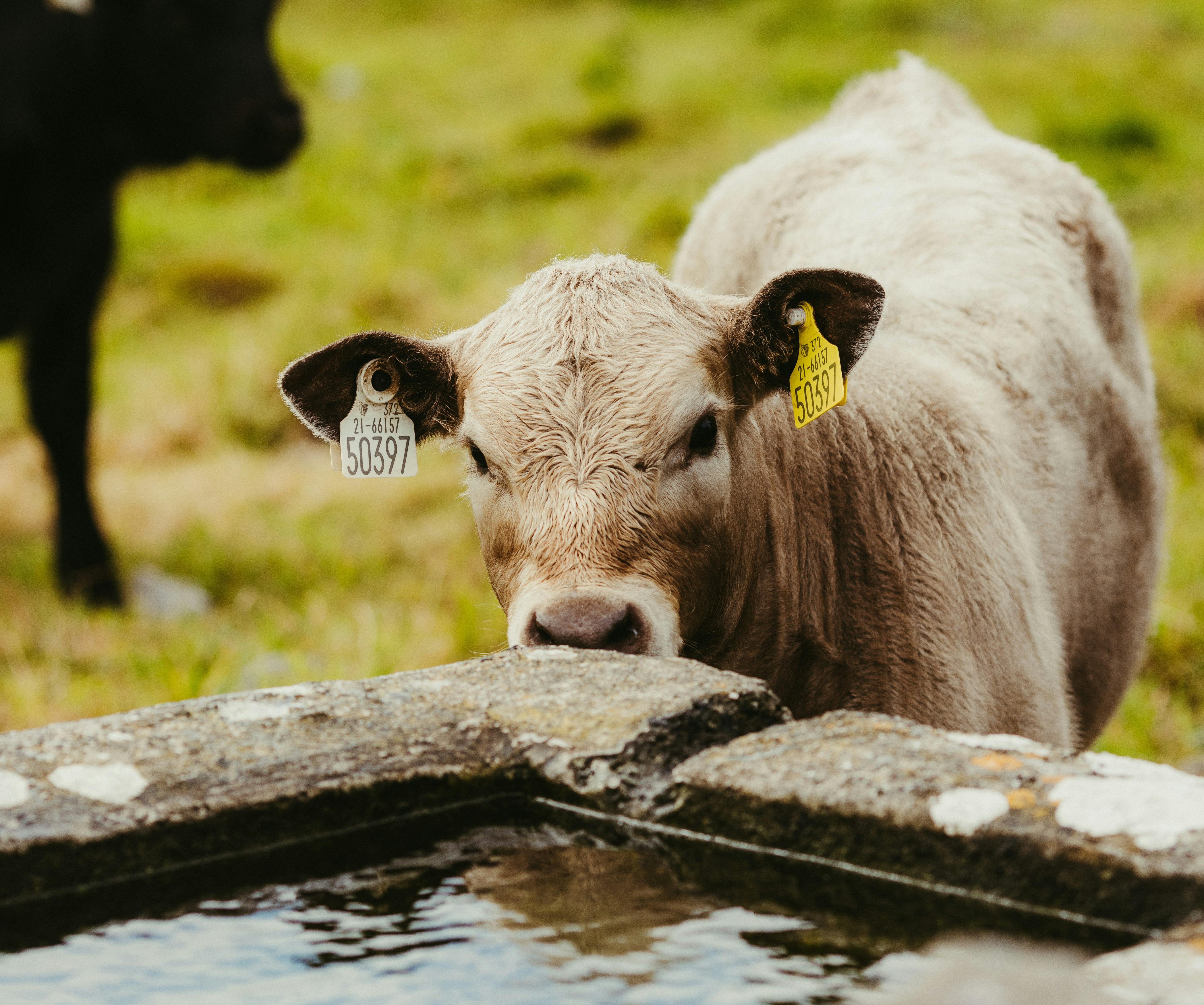
To produce a single pound of beef, it takes about 1,800 gallons of water—a massive footprint of rainfall, irrigation, and runoff that you can trim with a simple dietary step this week.
You probably know the basics of saving water at home: fixing leaky faucets, taking shorter showers, running full loads of laundry, and so on. Those habits truly matter and are worth cultivating. But the water flowing through your pipes accounts for only a fraction of your total water “footprint.” The biggest share is invisible: all the “virtual water” required to provide the food on your plate.
This Sunday, March 22, is World Water Day, a United Nations observance held every year since 1993 to focus attention on the global freshwater crisis. Wherever you live and whatever your circumstances, the water footprint of your diet is one of the most powerful levers you have for protecting freshwater resources.
This week’s One Step sits at the intersection of two pathways in the Sustainable Practice framework: Water and Food. The Water pathway covers the efficient use and protection of water resources—not just how much comes out of your tap, but the vast quantities used upstream to grow, process, and transport what you consume. The Food pathway addresses sustainable eating, growing, and food system practices. Where these two pathways overlap, you’ll find a high-impact, low-effort opportunity for positive change.
The Water Hidden in Your Food
A “water footprint” is the total volume of freshwater consumed at every stage of a food product’s life, from field to fork. The concept was developed by geographer John Anthony Allan and later quantified in groundbreaking research by Mesfin Mekonnen and Arjen Hoekstra at the University of Twente. Their work, published in the journal Ecosystems and through the Water Footprint Network, mapped the water footprint of hundreds of foods using global production data.
Across the board, animal-based foods carry substantially larger water footprints than plant-based foods with comparable nutritional value. A single pound of beef requires roughly 1,800 gallons of water to produce. About 98% of that goes to growing the grass, forage, and grain that cattle eat over their lifetime. By comparison, a pound of tofu requires around 303 gallons. Fruits average about 116 gallons per pound, and cereals roughly 197 gallons. A pound of potatoes takes about 35 gallons.
Per gram of protein, beef uses about six times more water than pulses like lentils and beans. Chicken and eggs are better than beef, but still about 1.5 times more water-intensive than plant proteins.
Diet is the single largest component of most people’s individual water footprint — larger than showers, laundry, and lawn watering combined. A person eating a meat-heavy diet consumes roughly 5,000 liters of virtual water (necessary to grow the food, but not visible to the end consumer) per day, according to research from MIT’s Abdul Latif Jameel Water and Food Systems Lab. Someone eating a vegetarian diet uses about half that amount. In the United States, agriculture accounts for approximately 80% of all consumptive water use, and a significant share of that goes to producing animal feed.
One Step This Week: Try Meatless Monday
Your sustainable step for this World Water Day week is to go meatless for one day. Monday is the natural choice—there’s a reason the Meatless Monday campaign, launched in 2003 by the Johns Hopkins Center for a Livable Future, chose that day. Research suggests people are more receptive to healthy changes at the start of the week, and Monday provides a built-in weekly reset.
A 2024 study from the Meatless Monday Resource Center at Johns Hopkins found that adopting a healthy meatless day in industrialized countries saved an estimated 18,335 liters of “blue” water (freshwater from rivers, lakes, and aquifers used for irrigation) per person per year. That’s equivalent to the water used in about 38 hours of continuous showering.
Skipping a single beef burger saves roughly 660 gallons of water, mostly for the feed those cattle consumed. According to Hoekstra’s research, people in industrialized countries who shift toward a vegetarian diet can reduce their food-related water footprint by 36%.
You don’t have to become fully vegetarian to make a big difference. The point is to start somewhere. One day a week is a manageable, meaningful way.
Here’s how to make this Monday count:
Plan one or two meals in advance. You’re more likely to stick with a meatless day if you’re not standing by the stove at 6 p.m., wondering what to cook. Think about meals you already enjoy that don’t feature meat: pasta with marinara, bean burritos, vegetable stir-fry with rice, lentil soup, or a hearty grain bowl.
Lean into protein-rich plants. Beans, lentils, chickpeas, tofu, and tempeh are some of your choices. A pot of black bean chili or a chickpea curry will leave you full without missing the meat — and the water savings are enormous compared to their animal-protein equivalents.
Keep it simple. This doesn’t have to be about elaborate new recipes (unless you want it to be). Scrambled eggs with vegetables for breakfast, a hummus wrap for lunch, and pasta e fagioli (pasta and beans) for dinner — that’s a meatless day without breaking a sweat.
Use the Water Footprint Calculator. The free tool at watercalculator.org lets you see how your specific food choices affect your personal water footprint.
The Ripple Effect
One meatless day per week reduces your meat consumption by about 15%. Multiply that across a household of four, and over a year, you’re looking at tens of thousands of gallons of water that didn’t need to be pumped from aquifers or diverted from rivers to irrigate feed crops. And the benefits extend beyond water: Meatless Monday also reduces greenhouse gas emissions, preserves land, and—according to research from the World Health Organization’s Global Nutrition Report—leads to better personal health outcomes.
World Water Day comes once a year, but your dinner happens every night. This week, let one meal be the start of a new pattern. For more steps you can take along the Water and Food pathways — from rain gardens to seasonal eating to reducing food waste — explore the Sustainable Practices Handbook at www.suspra.com. And if this topic sparked your curiosity, revisit our recent article *Spring Clean Your Water*, which covers the other side of the equation: what goes down the drain.
One meatless day. Thousands of gallons saved. That’s a step worth taking!
References and Resources
Key Research
Mekonnen, M.M. and Hoekstra, A.Y. (2012). “A global assessment of the water footprint of farm animal products.” Ecosystems, 15(3): 401–415. https://www.waterfootprint.org/resources/Mekonnen-Hoekstra-2012-WaterFootprintFarmAnimalProducts_1.pdf
Hoekstra, A.Y. (2012). “The hidden water resource use behind meat and dairy.” Animal Frontiers, 2(2): 3–8. https://research.utwente.nl/en/publications/the-hidden-water-resource-use-behind-meat-and-dairy/
Hoekstra, A.Y. and Mekonnen, M.M. (2012). “The water footprint of humanity.” Proceedings of the National Academy of Sciences, 109(9): 3232–3237. https://doi.org/10.1073/pnas.1109936109
Johns Hopkins Center for a Livable Future (2024). “Benefits of a Meatless Day for Climate and Water.” https://meatlessmonday.publichealth.jhu.edu/sites/default/files/2025-03/benefits-of-a-meatless-monday-for-climate-and-water.pdf
Tools
Water Footprint Calculator: https://watercalculator.org/
Water Footprint of Food Guide (100+ foods): https://watercalculator.org/water-footprint-of-food-guide/
Organizations and Campaigns
World Water Day (UN-Water): https://www.unwater.org/our-work/world-water-day
Meatless Monday (Johns Hopkins Center for a Livable Future): https://meatlessmonday.publichealth.jhu.edu/
Water Footprint Network: https://www.waterfootprint.org/
FoodPrint — The Water Footprint of Food: https://foodprint.org/issues/the-water-footprint-of-food/