Take an Electric Drive, Leave Your Doubts Behind
Once a country’s new-car sales reach 5% electric, adoption tends to grow as EVs become more common. Take a free test drive this month. It could convince you to adopt cleaner, quieter transportation.
Peggy’s note: Your writers of One Step This Week, Fred and Peggy, founders of Sustainable Practice, both drive EVs and have no concern about range, driving in cold weather, or finding charging locations. Meet with an EV driver near you this month! And check our references and resources at the end of this article that may also answer any questions you might have.
This week our recommended step is to take a personal stake in bending the electric vehicle adoption curve in a positive direction. New-car markets can creep under five percent electric for years, but once they cross that line, the curve tends to bend, and adoption accelerates. Norway crossed the 5% threshold in 2013, and now almost all new vehicles sold there are electric. The United States crossed its own five-percent threshold in 2022, then reached ten percent the next year.
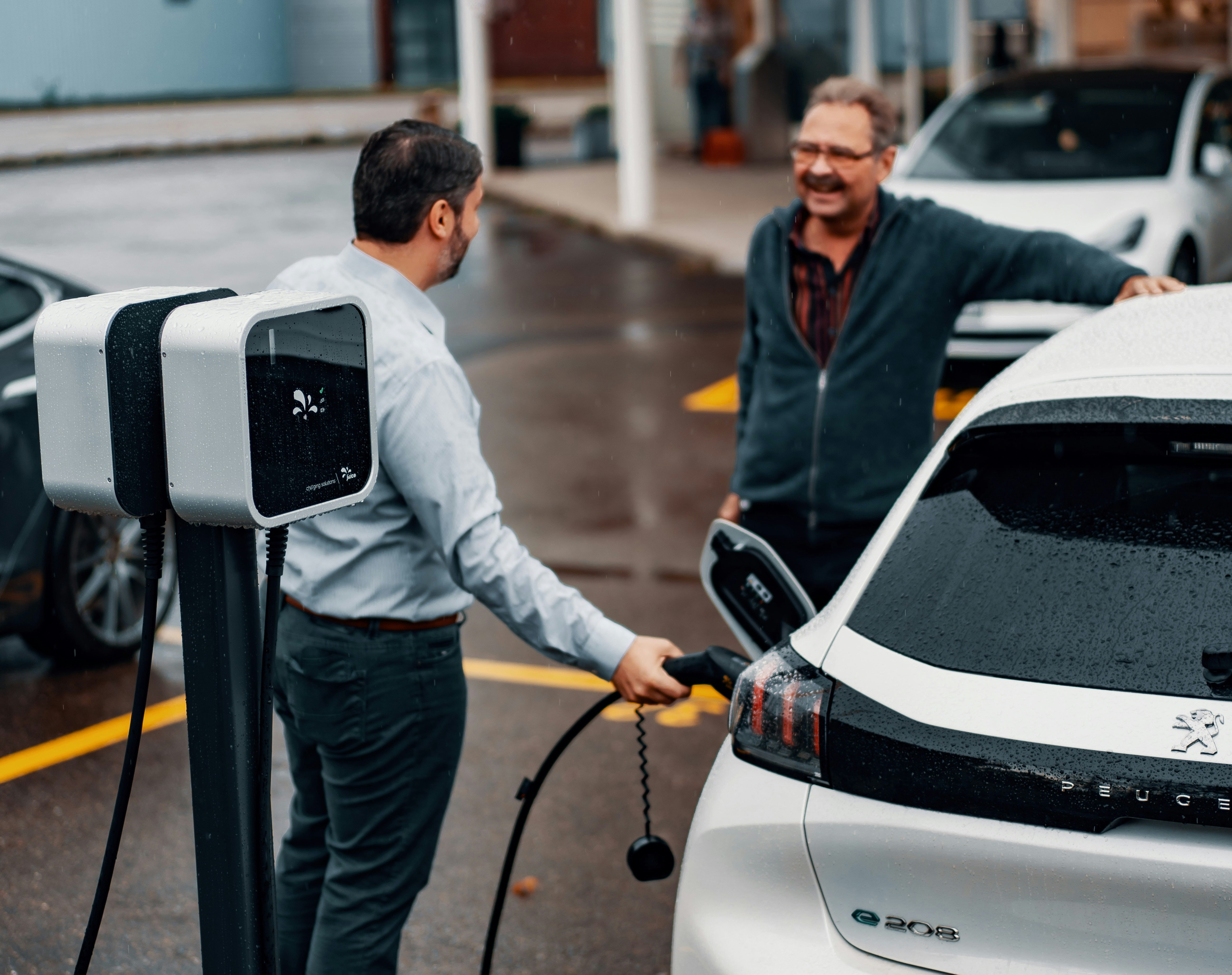
National Drive Electric Month runs through October 12, featuring free test drives with no salesperson, no obligation, just an EV owner handing you the keys for twenty minutes. When you take an electric drive in a recent model EV, whatever doubt you’re carrying about range, cost, or cold weather performance, you’re likely to leave behind. Search here for an event near you: https://driveelectricmonth.org/
This is a step on the Movement pathway, which covers how sustainably we get from place to place. Suggested strategies include traveling fewer miles, using muscle power for trips you can, and driving electric when you need a car. The job of transitioning our planet’s vehicle fleet from gas to electric happens one person at a time, when a driver becomes curious enough to find out what a fully electric car is actually like.
How fast a complete fleet transition can happen
Norway shows what’s possible: a country that completed the transition to electric vehicles about a decade after it took it seriously. It crossed the 5% EV threshold way back in 2013, and by 2020 more than half its new cars sold were electric. By 2025, it was 96 percent.
“But I like my car. Isn’t the greenest car the one already built?”
That’s a reasonable instinct: manufacturing anything carries an environmental cost. Keeping what you own usually beats replacing it. But a 2026 study in Science ran that math for cars across more than 400 gasoline and electric models, and found the opposite holds. Retiring a working gas car in its first year and replacing it with a battery electric vehicle (BEV) cut cumulative pollution 58 percent over 16 years, with the EV’s manufacturing footprint paid back in about three years. Ninety-two percent of the scenarios they modeled favored early retirement over driving the gas car until it dies. The reason: only about 20 percent of the energy in a gallon of gasoline ever moves the car forward; the rest is wasted as heat, year after year. Exceptions include plug-in hybrids and gas cars driven under roughly 4,300 miles a year. For most drivers, the best time to replace a gas-powered car is “as soon as you can.”
“Aren’t EVs much heavier than fuel-burning cars?”
Skeptics have a valid point here, too. A Hyundai Kona Electric weighs about 800 pounds more than its gas twin, and a Ford F-150 Lightning tips the scales at near 6,000 pounds, versus roughly 4,000 for the gas version. Heavier cars wear tires faster: Michelin puts the difference at up to 20 percent. But keep the bigger picture in mind: an EV wears through tires a little faster but makes up for it by reducing far more pollution over its useful life.
“Can we recycle batteries?”
This is a good question. The short answer is, yes, we can. Redwood Materials, founded by Tesla’s former battery chief, processed 20 gigawatt-hours of lithium-ion batteries in 2024 alone, recovering more than 95 percent of the lithium, cobalt, nickel, and copper from them. The real complication isn’t that batteries can’t be recycled. It’s that most EV batteries are still on the road: fewer than 0.5% built since 2016 have failed outside a recall, so there aren’t many old ones to recycle at scale yet. That’s a supply problem, not a technology problem.
Nobody said you have to buy new
If your rule is “always buy used, never new,” 2026 is a good year to follow that rule— electrically. The average used EV now sits close to price parity with a used gas car, with 44 percent of used EVs sold this spring going for under $25,000. New EVs still carry a price premium, but the used market has caught up.
Charging, briefly
Public charging has grown fast: the United States now has 250,000 dedicated public electric vehicle charging ports at 80,000 locations, up about 20 percent from last summer, not to mention the millions of existing electric outlets that can charge an EV. Nearly three-quarters of American car trips cover 10 miles or less anyway, well within range of any EV charged overnight at home.
Your one step this week
Find a National Drive Electric Month event at driveelectricmonth.org before October 12. You can search by zip code for ones near you. Take a ride, ask the owner your questions, and see whether your doubts disappear. If you already drive an electric car, volunteer to bring your car, give rides, and answer questions.
If a ride convinces you that an EV will work for you, learn how to choose the best model for your needs. See below for more resources, pick up a copy of Sustainable Practices: Your Handbook for Effective Action, or visit www.suspra.com to explore more along the Movement pathway. The more you know, the more confidence you’ll have that you are on the right path toward the future you want for our planet.
References and Resources
Thinking About Trading Your Car in for an EV? There’s a Compelling New Reason to Do It Now — UC Santa Barbara, reporting on Campbell & Geyer, Science (2026) (retiring a working gasoline car in its first year and switching to a BEV cut cumulative emissions 58% over 16 years, with manufacturing emissions paid back in about 3 years; 92% of 400+ modeled vehicle scenarios favored early retirement)
Electric Vehicles Are on the Road to Mass Adoption — RMI (the United States passed 1% EV adoption in 2017, 5% in 2022, and 10% in 2023, following the same S-curve pattern seen in Norway, China, and Europe)
Norway Is Nearly at 100% EV Sales and 107 Municipalities Hit the Goal in 2025 — citing the Norwegian Electric Vehicle Association (Norway’s 2025 EV sales share; Karasjok, Norway’s coldest municipality, registered 100% electric new car sales)
National Drive Electric Month — Plug In America, Electric Vehicle Association, Sierra Club, EVHybridNoire, and Drive Electric USA (2026 events run September 11–October 12; zip-code event finder)
Carry That Weight? Electric Vehicles Outweigh Gas Cars but Aren’t Main Culprit of Road Wear — PolitiFact (EV-to-gas weight comparisons; infrastructure engineers on heavy trucks as the primary cause of road damage)
Satisfaction Gap Widens Between EV and ICE Tires — WardsAuto, citing Michelin and J.D. Power (EV tires can wear up to 20% faster than tires on gas vehicles)
From the Road to Redwood: Electric Vehicle Battery Recovery — Redwood Materials (95%+ recovery of critical battery minerals; 20 GWh of lithium-ion batteries recycled in 2024)
Electric Vehicle Myths — U.S. Environmental Protection Agency (EV battery failure rates under 0.5% since model year 2016; 73% of U.S. trips under 10 miles and 98% under 75 miles)
2026 Will Be the “Year of the Used EV,” Analyst Says — CNBC, citing Cox Automotive (used EV and gas car prices nearing parity; average used Nissan Leaf and Chevy Bolt prices)
The Number of EV Chargers in Each State — The Motley Fool (over 80,000 U.S. charging stations and 250,000 ports as of mid-2026, up roughly 20% year over year)
Related One Step Articles
Charge Ahead: Drive into a Sustainable Future by Leasing or Buying an EV — Sustainable Practice, One Step This Week (the natural next step once a test drive has you convinced)
Smart Moves: Your Guide to Earth-Friendly Transportation — Sustainable Practice, One Step This Week (how driving electric fits alongside walking, biking, and trip planning in the whole Movement pathway)
Let Your Car Slip Through the Air — Sustainable Practice, One Step This Week (for the vehicle already in your driveway, while you decide about the next one)
Join Sustainable Practice
Expand your positive impact on Earth by becoming a sustainable practitioner today! You’ll see new and more benefits on our site: www.sustainablepractice.life
Sustainable Practice empowers you to protect our planet in practical ways. Share this article with someone who’s skeptical about EVs. A free test drive might be the fastest way for someone to decide to live more sustainably, enjoy driving, and protect the Earth.
Note: How does Sustainable Practice use AI? We use AI for research to make our materials more trustworthy, not less. We never publish anything we haven't personally reviewed, edited, and written to our standards and specifications. You can trust our human use of current resources, our 30+ years of lived experience in the sustainability field, and our judgment of the science we rely on. Sustainable Practice is trustworthy and pledges to bring you valuable information with every publication.
Fred Horch and Peggy Siegle, Principals, Sustainable Practice