Thanksgiving Alert! Don’t be a Turkey. Keep Grease Out of your Pipes
Hot drippings pour like water down the drain, but harden quickly in pipes. This Thanksgiving, save your fats, oils and grease in a jar, and you’ll prevent the most common cause of sewer blockages.
Ask a plumber which day of the year they brace for, and you’ll probably hear the Friday after Thanksgiving (the trade has a name for it: “Brown Friday”). Roto-Rooter says its calls that day run about 50 percent above an average Friday; the whole four-day weekend averages 21 percent above any other Thursday-to-Sunday stretch. Some of that is back-to-back showers for houseguests, but much of it comes from the roasting pan.
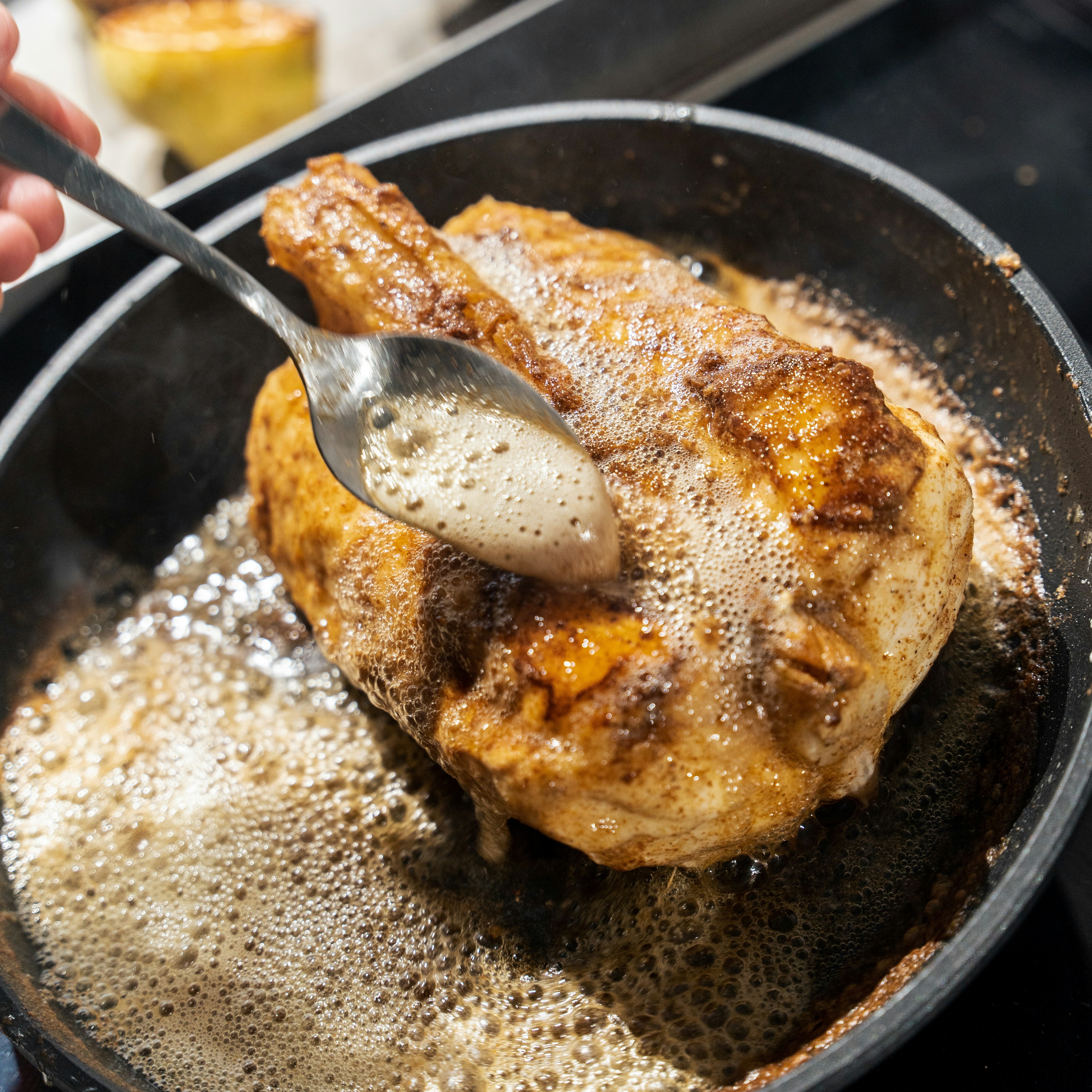
Turkey drippings, the sausage fat from the stuffing, butter melted off the rolls, or peanut oil from a fried bird: all of it leaves the stove hot and runny, and can rinse right away down the drain. Then it reaches the sewer pipe, cools, and solidifies into a dense, waxy substance that adheres to the pipe.
Peggy’s Note: It’s Thanksgiving week, and Sustainable Practice’s Fred Horch and I are grateful for our community of Sustainable Practitioners. Thank you for practicing sustainable living!
What grease becomes under the ground
Grease in a sewer does more than congeal like cold gravy. Engineers at North Carolina State University found that the hard deposits lining sewer pipes are, chemically, soap. Fats break down into free fatty acids, and those acids react with calcium from wastewater and concrete pipe walls to form calcium soaps. When Kevin Keener and colleagues analyzed deposits collected from 23 U.S. cities, 84 percent were rich in saturated fatty acids and calcium, and most had a hard, sandstone-like texture with distinct layers, as if built up one dinner at a time. Add the food scraps and even wipes that snag on that crust, and you get what London’s sewer crews made famous as the “fatberg.”
Those blockages reach well beyond your kitchen. EPA estimates that 23,000 to 75,000 sanitary sewer overflows occur in the United States each year, releasing 3 billion to 10 billion gallons of untreated sewage into streets, basements, streams and beaches. In its report to Congress, EPA identified grease from restaurants, homes, and industry as the most common cause of reported sewer blockages. In New York City, the Department of Environmental Protection found grease responsible for 60 percent of confirmed sewer backups.
Restaurants must install grease traps. Your kitchen sink almost certainly doesn’t have one, which is why many sewer utilities have anti-grease campaigns aimed squarely at households.
The Water pathway runs under your sink
This week’s step belongs to the Water pathway: using water efficiently and protecting the rivers, lakes, groundwater and coastlines that sustain us. A sewer is shared water infrastructure. Your grease joins up with your neighbors’ to choke a main three blocks away, then overflows into the creek behind the elementary school. Earlier Water steps we wrote about had you cutting how much water you use. This one is about keeping it clean.
Hot water and detergent only move the problem
The familiar trick is to chase the grease with a kettle of boiling water and a squirt of dish detergent. That just carries the grease farther down the line, where it cools and sticks somewhere harder and costlier to reach. A garbage disposal doesn’t help either. It chops food into smaller pieces, but it does nothing to keep fat out of the plumbing.
Grease makes a good fuel
Used cooking oil is a sought-after feedstock for biodiesel and renewable diesel. A life-cycle analysis from Argonne National Laboratory found that fuels made from used cooking oil, tallow, and distillers corn oil produce 79 to 86 percent lower greenhouse gas emissions than petroleum diesel. Burning one gallon of diesel releases about 10.2 kilograms of carbon dioxide, so each gallon of fryer oil that becomes fuel instead of a clog avoids roughly 8 kilograms of emissions or more. A turkey fryer holds several gallons. That’s a real climate dividend from a single afternoon of cooking.
Check into whether any used oil collection facilities are in your community. If not, you can create your own oil recycling system by soaking paper towels in your own used cooking oil, storing them in sealed jars, and using them as fire starters. Whether in a wood stove at home or a fire pit at a campground, these are handy ways to help your fire get going and dispose of your grease and oil sustainably.
Your one step this week
Set up a grease station in your kitchen today.
Pick a container. An empty coffee can, a glass jar, or the jug the oil came in. Park it next to the stove with a roll of paper towels and a rubber spatula.
Separate first. Pour the drippings through a fat separator so the flavorful juices go into the gravy, and only the fat goes into the jar.
Cool, then contain. Let fat cool before you pour or scrape it into the container. When it’s full or solid, seal it. Then put it in your compost (if your system can handle greasy items) or use it in your wood stove or outdoor fires.
Wipe before you wash. Run a paper towel around greasy pans, platters, and the roasting rack before they go anywhere near the sink or dishwasher. Keep the towel for composting or fire starting.
Strain the sink. Drop a mesh strainer in the drain and keep poultry skin, potato peels, rice, pasta, and stuffing out of the disposal. Compost at home what your setup allows, and find a friend or a service with better facilities to compost the rest.
Recycle the big batches. If you fry a turkey, let the oil cool completely, funnel it back into its original jug, and take it to a drop-off. Many communities run collections right after the holiday. Arlington, Texas, runs a Holiday Grease Roundup through January, and Hillsborough County, Florida, has 29 drop-off sites. Search “cooking oil recycling” with your town’s name or check your utility’s website. Keep motor oil and other automotive fluids out of the jug: these collections are usually for cooking oil only.
One more thing: tape a note above the sink for the guests who volunteer for dishes. Something like “Grease goes in the jar, not the drain” will keep the helpers from undoing your work.
None of this asks you to cook differently or skip a single dish. Just use a jar, a paper towel, and about thirty seconds per pan. If every household on your street does the same, the sewer main beneath it carries one less layer of that soap this year, and your sewage will continue to have a straight shot to your local treatment facility.
When you’re ready to go deeper into protecting the water that sustains your community, explore the Water pathway in Sustainable Practices: Your Handbook for Effective Action or visit www.suspra.com. The related articles below make good next steps.
References and Resources
‘Brown Friday’: Day after Thanksgiving is plumbers’ busiest day of the year — KTVU FOX 2, November 26, 2025, reporting Roto-Rooter figures (service calls up 50 percent on the day after Thanksgiving; 21 percent increase over the Thursday-to-Sunday holiday weekend; tips to keep grease and drippings out of drains)
Researchers find fat turns into soap in sewers, contributes to overflows — North Carolina State University, on He, X., et al. (2011), “Evidence for Fat, Oil, and Grease (FOG) Deposit Formation Mechanisms in Sewer Lines,” Environmental Science & Technology 45(10): 4385–4391 (hardened sewer deposits are calcium-based fatty acid salts formed when free fatty acids react with calcium)
Properties Influencing Fat, Oil, and Grease Deposit Formation — Keener, K. M., Ducoste, J. J., & Holt, L. M. (2008), Water Environment Research 80(12): 2241–2246 (FOG deposits are the reported cause of 50–75 percent of U.S. sanitary sewer overflows; samples from 23 cities; 84 percent high in saturated fatty acids and calcium; hard, layered, sandstone-like texture)
Report to Congress on Impacts and Control of CSOs and SSOs: Fact Sheet — U.S. Environmental Protection Agency, 2004 (23,000 to 75,000 sanitary sewer overflows a year in the U.S., releasing 3 billion to 10 billion gallons of untreated wastewater)
Controlling Fats, Oils, and Grease Discharges from Food Service Establishments — U.S. Environmental Protection Agency, EPA-833-F-12-003 (citing EPA’s 2004 Report to Congress: grease from restaurants, homes and industrial sources is the most common cause, 47 percent, of reported blockages)
Proper Disposal of Cooking Oil and Grease — NYC Department of Environmental Protection (pour cooled grease into a container, seal it and discard with regular garbage; wipe pots and pans with a dry paper towel before washing)
Fats, Oils, and Grease — City of Columbia Heights, Minnesota, Public Works (garbage disposals don’t keep grease out of plumbing; hot water and grease-dissolving products only pass it farther down the line)
Life Cycle Greenhouse Gas Emissions of Biodiesel and Renewable Diesel Production in the United States — Xu, H., Ou, L., Li, Y., Hawkins, T. R., & Wang, M. (2022), Argonne National Laboratory, Environmental Science & Technology (fuels from used cooking oil, tallow and distillers corn oil achieve 79–86 percent lower life-cycle GHG emissions than petroleum diesel)
Greenhouse Gas Equivalencies Calculator: Calculations and References — U.S. Environmental Protection Agency (10,180 grams of CO2 per gallon of diesel combusted)
International evolution of fat, oil and grease (FOG) waste management – A review — Wallace, T., Gibbons, D., O’Dwyer, M., & Curran, T. P. (2017), Journal of Environmental Management 187: 424–435 (FOG from food service and homes causes blockages that lead to sewer overflows, property flooding and water contamination; reviews prevention programs and uses for recovered FOG)
Holiday Grease Roundup — City of Arlington, Texas (example of a post-Thanksgiving cooking oil collection; cooking oil and grease only, no motor oil)
Here’s what to do with your Thanksgiving cooking oil — WUSF (Hillsborough County, Florida, has 29 cooking oil drop-off locations; check your city or county recycling information for sites near you)
Related One Step Articles
Less Food Waste Posthaste — Sustainable Practice, One Step This Week (a practical primer on trimming everyday food waste, holiday leftovers included)
The Water You Eat — Sustainable Practice, One Step This Week (the water hidden in what’s on your plate)
Join Sustainable Practice
Expand your positive impact on Earth by becoming a sustainable practitioner today! www.sustainablepractice.life
Sustainable Practice empowers you to protect our planet in practical ways. Share this article with whoever’s hosting Thanksgiving this year, and set out the grease jar before the turkey goes in.