The Coat Closet Swap
About 30 percent of the clothes in a typical closet haven’t been worn in a year. On America Recycles Day, look in the closet for clothes you no longer want, and swap with your neighbors.
The first truly cold morning of the season often heralds a small household crisis. Somebody’s boots pinch. The snow pants stop at mid-shin. One mitten has gone missing, as mittens do, while the other sits on the radiator waiting for news of its twin.
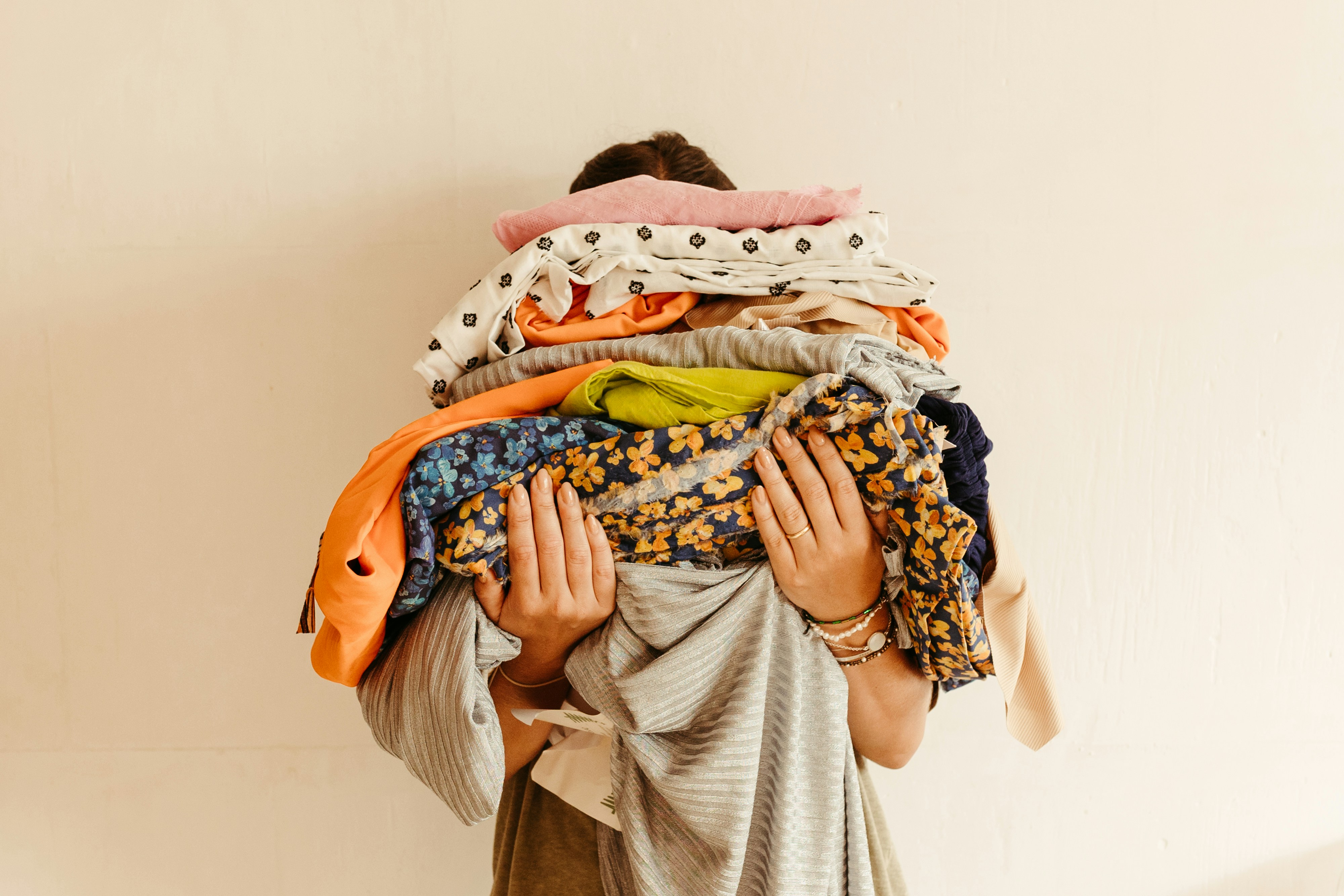
Almost nothing is truly worn out. It just no longer fits anyone in your home. And it isn’t only the kids’ things. When WRAP, the UK’s waste and resources charity, looked at people’s wardrobes, it found that about 30 percent of the clothing hadn’t been worn in at least a year. Nearly a third of the average closet, in other words, is a swap waiting to happen.
Where your old snow pants fit in
This week’s step belongs to the Goods pathway. We’re considering the life cycle of the things we own and deciding to buy less, choose well, keep things in use, and manage waste wisely. It leans on Community, too, growing networks of people who practice sustainability together, because a hand-me-down needs a friend on the receiving end. Earlier steps on this pathway took you to repair cafés and tool libraries. This one starts in your mudroom.
Discarded clothing is the main source of textiles in American trash. In 2018, EPA counted 11.3 million tons of textiles going to landfills. Reuse is the best approach to keeping textiles out of landfills. A 2018 review of 41 life-cycle studies found strong support for reuse and recycling over landfills and incinerators, and found that reuse beats recycling.
Reuse and recycling aren’t the same thing, though people often use the words that way for clothing:
Reuse means the item stays a garment. Wearing it longer, repairing it, passing it on, buying secondhand, swapping or renting all count. All the land, water, and energy already spent making clothing keep doing their job.
Recycling means breaking the garment down into fiber or material. For textiles, this is usually downcycling into rags, insulation, or stuffing. Turning old clothes into new clothes (“fiber-to-fiber”) is still rare. The widely cited estimate is that under 1% of clothing material gets recycled into new clothing, because blended fabrics, dyes, and trims are hard to separate.
So “reuse beats recycling” means keeping a shirt in use as a shirt saves far more than shredding it. It’s also worth knowing that much clothing dropped in a donation bin is sold for reuse, often overseas, and only the leftovers go to textile recycling. Reuse keeps a garment a garment; recycling breaks it down, and for clothing it rarely becomes new clothing.
Researchers at the Technical University of Denmark quantified the benefits of reuse. After surveying more than 200 secondhand shoppers, they found that 60 to 85 of every 100 used items purchased prevented a new item from being manufactured. Collecting clothes for reuse reduced total sulfur and nitrogen pollution by about 28 percent for a cotton T-shirt. It cut the nutrient runoff that feeds algae blooms in rivers and coastal waters by about 25 percent, and toxic impacts on human health by 24 to 45 percent, depending on the garment.
The European Environment Agency calculated that the textiles European households bought in 2022 required more ground than a tennis court for manufacturing, with over 80 percent of it outside Europe. Few people think about it, but a huge amount of our planet’s surface must be devoted to the processes that let wealthier people shop often for new clothes. Every new coat you don’t buy leaves its share of Earth alone.
Used winter gear delivers one more quiet benefit. Polyester fleece sheds the most plastic microfibers in its first few washes; in a 2020 laboratory study, release fell to a steady, low level by about the eighth wash. A hand-me-down fleece has already done its heaviest shedding in someone else’s machine.
Keep the loop short
The same review that favored reuse flagged one way to undo it: if people drive far to give or get secondhand goods, the trips can cancel out the benefit unless the item enjoys a long second life. So treat this as a neighborhood project. Offer outgrown items to a family on your street or in your kid’s class. Give clothing you no longer wear to a group you can reach on foot, or add it to an errand you’re already running, and skip the forty-minute drive across the county unless you have a large collection of items you want to give for reuse. You can be sure that giving clothing for reuse is good for the planet and helps another family keep it in use.
Your one step this week
Give the coat closet half an hour this weekend.
Empty it. Pull out every coat, snowsuit, pair of snow pants, boot, hat, mitten, and fleece layer in the house. Anyone who’s grown since March tries on anything in doubt.
Sort three ways: fits now; fits someone in this house next year; done with us.
Get the “done” pile ready. Check zippers, snaps, and liners, then wash and dry everything. A five-minute fix like a new zipper pull or a resewn button can move an item from “rag” to “gift.”
Pass it along close to home. Offer it to a family you know with a younger child, post it in your local Buy Nothing group (a hyper-local gift economy run through Facebook or the Buy Nothing app, where nothing is bought, sold, or traded), or bring it to a school or community coat swap. Bag items by size and label the bags so the next family can find what they need in seconds.
Ask before you buy. List what your household is still missing, sizes included, and post an “ask” in that same group, or try a children’s consignment shop, before you set foot in a big-box store.
If your family brings home ten secondhand pieces this winter instead of ten new ones, the Danish findings suggest six to eight new garments never get made, along with the cotton fields, dye baths, and factory exhaust behind them. The ten you hand down will do the same for someone else.
There’s a quieter payoff, too. The family that takes your son’s outgrown parka this week may hand you a pair of size-two boots next November. Swaps build exactly the sort of relationships the Community pathway is about: small, reliable exchanges between people who live near each other and start to look out for one another.
So before the next cold snap, open that closet, fill one bag for the family down the street, and post one ask before you buy one new thing. Then tell us how it went.
When you’re ready to go further, from repair to borrowing to buying less in the first place, explore the Goods pathway in Sustainable Practices: Your Handbook for Effective Action or visit www.suspra.com. The related articles below are good next steps.
Join Sustainable Practice
Expand your positive impact on Earth by becoming a sustainable practitioner today! www.sustainablepractice.life
Sustainable Practice empowers you to protect our planet in practical ways. Share this article with the parents at the bus stop, and start a coat closet swap on your own street this week.
References and Resources
Valuing Our Clothes: The True Cost of How We Design, Use and Dispose of Clothing in the UK — WRAP (around 30 percent of clothing in the average UK wardrobe has not been worn for at least a year, most commonly because it no longer fits)
America Recycles Day — U.S. Environmental Protection Agency (observed each November 15)
Textiles: Material-Specific Data — U.S. Environmental Protection Agency (discarded clothing is the main source of textiles in municipal solid waste; 11.3 million tons of textiles landfilled in 2018)
Environmental impact of textile reuse and recycling – A review — Sandin, G., & Peters, G. M. (2018), Journal of Cleaner Production 184: 353–365 (review of 41 studies; reuse and recycling generally reduce impacts compared with incineration and landfill, and reuse is more beneficial than recycling; customer transport can outweigh the benefits of reuse unless the use phase is sufficiently extended)
Environmental benefits from reusing clothes — Farrant, L., Olsen, S. I., & Wangel, A. (2010), International Journal of Life Cycle Assessment 15: 726–736 (100 secondhand garments purchased replace 60–85 new garments; collecting clothes for reuse cut acidification about 28 percent and nutrient enrichment about 25 percent for a cotton T-shirt, and human toxicity 24–45 percent across the garments studied). Full text
Circularity of the EU textiles value chain in numbers — European Environment Agency (323 square meters of land per person to produce the textiles European households consumed in 2022; over 80 percent of that land use outside Europe)
Microfiber release from real soiled consumer laundry and the impact of fabric care products and washing conditions — Lant, N. J., et al. (2020), PLOS ONE (polyester fleece released the most microfibers in its first few washes, falling to a steady low level from about the eighth wash)
Give, Lend, Share, & Receive Through the Buy Nothing Project — Earth911 (how to find, join or start a local Buy Nothing group through the app or Facebook)
Related One Step Articles
The Fix Is In: Finding Community Repair Help When You Can’t DIY — Sustainable Practice, One Step This Week (where to take the zipper you can’t fix yourself)
Share More, Own Less: Your Guide to Tool Libraries and the Sharing Economy — Sustainable Practice, One Step This Week (the same neighbor-to-neighbor idea, applied to everything in your garage)