Leave a Trace
Whether your nearest park is a national icon or a quarter-acre public space with a playground down the street, you can pitch in to help maintain it and honor all the lives it improves.
You know the park with the broken swing, the trail with the eroded hairpin curve, or the flowerbed nobody’s weeded since spring. Every town has one. Somebody’s going to fix it eventually, and more often than not, that somebody is a volunteer wearing a temporary parks department name tag rather than an employee on the clock. The budget is tight, and the paid employee has more tasks than they can handle.
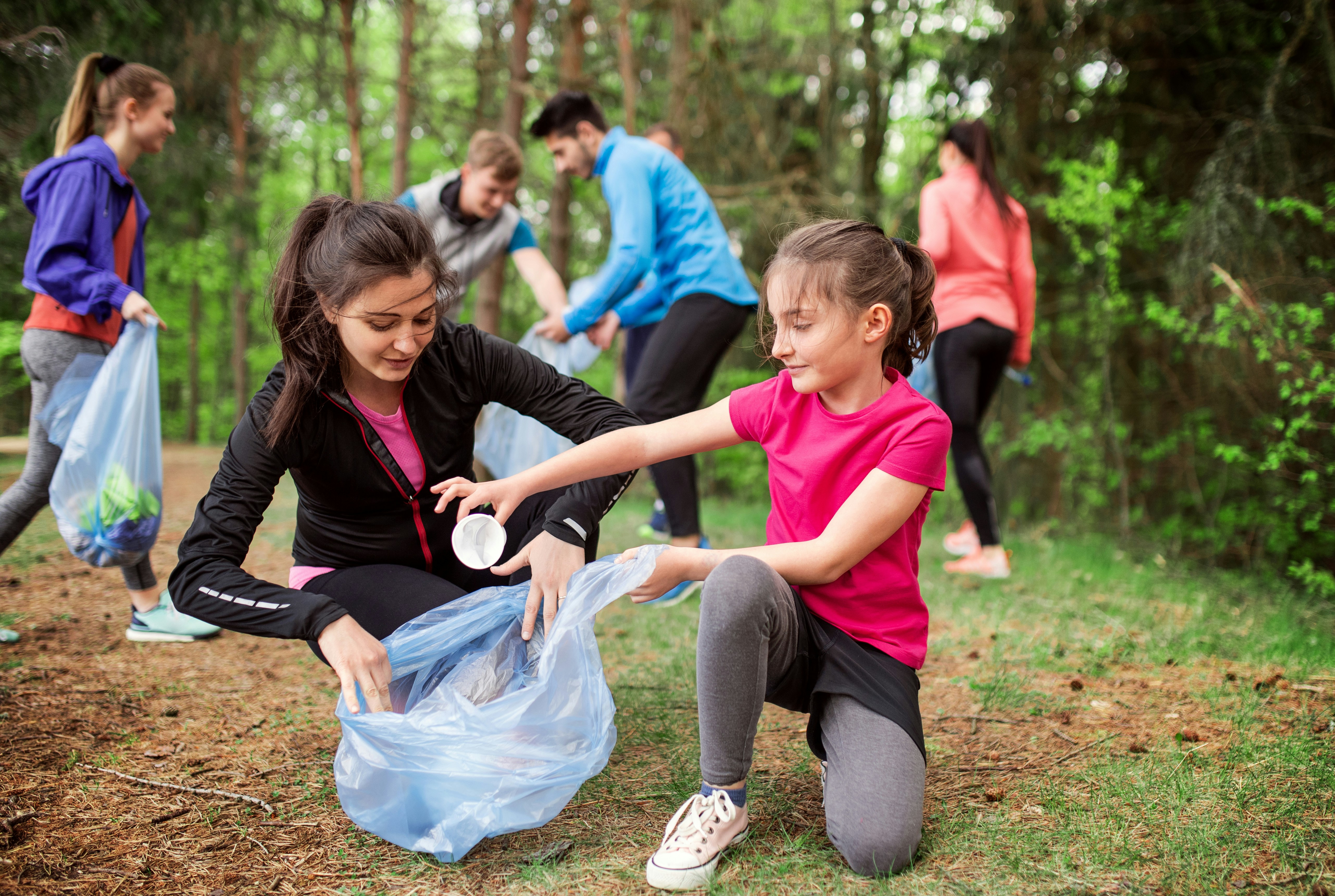
This week, we at Sustainable Practice are nudging you to become that somebody who volunteers, because National Park Week wraps up today, nine days dedicated to the National Park Service’s 110th birthday. But nothing about this week’s step requires a national park. A state park does the job just as well. So does the rec center two blocks over, or the ballfield where your kid plays Saturday soccer. The typical U.S. community has a park for roughly every 2,400 residents, and each one needs the same thing: more hands to keep that park a great resource for the community.
This is a step along the Community pathway: sustainable practices built on growing networks of people who look after the planet together rather than going it alone. It reaches into Habitat too. A lot of what park volunteers actually do (pulling invasive vines, planting a tree, watching for the return of a nesting bird) is stewardship of the wild neighbors sharing that ground, not just service to the people who visit it. The action this week is simple: sign up for one volunteer shift with a park or at a level of government that is realistically within your reach.
Start with the fact that paid staff are spread thinly at every level. Nationally, the National Park Service’s own accounting puts its deferred maintenance and repair backlog at $24.237 billion as of the end of fiscal year 2025: trails, roads, buildings, and utility systems that need work faster than budgets can fund that work, even with park visits totaling nearly 323 million in 2025, just off 2024’s record of nearly 332 million. States carry their own version of similar statistics. California’s state park system alone logged 798,877 volunteer hours in 2024, worth an estimated $32 million by the state’s own accounting, and about 7 percent of those hours went specifically to habitat restoration, invasive species removal, and wildlife monitoring, not visitor services. Local parks and recreation departments, the ones running your neighborhood ballfields and trails, are where most people already think to look first. Four in five adults told the National Recreation and Park Association they see their local park system as a natural place to volunteer, and the jobs most commonly asked of them are about as unglamorous as it gets: picking up litter, planting trees, raking leaves for composting.
At the national level specifically, nearly 300,000 people donate more than 6.5 million hours a year through the National Park Service’s Volunteers-In-Parks program, work the agency values at more than $185 million annually. Put in 250 hours, and you earn a Volunteer Pass good for free entry to more than 2,000 federal recreation sites for a year.
A 2015 study of volunteer stewards at municipal parks in the Portland, Oregon area, published in Environmental Education Research, found that people who came back six or more times a year reported significantly more pro-environmental behavior at home (removing invasive plants, planting natives, using greener products) than people showing up for the first time. Volunteers logging ten or more shifts a year were also significantly more likely to contact elected officials about conservation issues. The frequency of volunteering, done alongside other volunteers, seems to make the real difference. One shift is just where that starts.
You don’t need any particular skill to help. Most park volunteer work is ordinary: pulling weeds, painting a fence, staffing an information table, entering data, keeping an eye on what’s blooming or nesting. The National Park Service’s own volunteer materials state it plainly: the amount of time you give is entirely up to you, from a couple of hours to a lifetime.
Your one step this week
Start with whichever park is easiest for you to reach. For a city or county park, check your local parks and recreation department’s website or call them; most keep a running list of workdays and ask for nothing more than a body that shows up. For a state park, search “[your state] state parks volunteer”; most state systems run something close to California’s program. For a national park, Volunteer.gov lists openings by location. Pick one listing that fits a free morning or afternoon you may have in the next few weeks (trail work, an invasive species pull, a shift at a visitor desk, whatever’s listed as needed) and sign up. Bring a friend or your family if the listing allows it; a shared shift is the Community pathway working exactly as intended.
If it turns out to be something you’d do again, put a second day on your upcoming availability calendar before you leave the first volunteer day. That’s the piece the research points to: the value compounds if you are a repeat volunteer; in a way one afternoon alone can’t.
A park gave you something the first time you stood in one, whether that was a national icon or the swing set at the public playground at the end of your street. This week is a chance to give something back, to the people who use it and the wild things that live there too, alongside others who feel the same pull. Sustainable Practices: Your Handbook for Effective Action and www.suspra.com go deeper into how the Community pathway multiplies individual effort into lasting change, and our One Step archive at www.SustainablePractice.Life has more ways to turn a single action into an ongoing practice. Today’s the day you can decide to start and encourage others to join you.
Note: How does Sustainable Practice use AI? We use AI for research so that our materials are more trustworthy, not less. In no case do we publish anything we have not personally reviewed, edited, and written to our standards and specifications. You can trust our human use of current resources, our 30+ years of lived experience in the sustainability field, and our judgment of the science we rely on.
References and Resources
National Park Week — U.S. National Park Service (National Park Week runs August 22–30, 2026, marking the NPS’s 110th birthday on August 25)
By the Numbers: Infrastructure — U.S. National Park Service (deferred maintenance and repair backlog reached $24.237 billion across the National Park System at the end of fiscal year 2025)
Visitor Use Data — U.S. National Park Service (323 million recreation visits in 2025, down slightly from a record 331.9 million in 2024)
National Park Service and National Park Foundation recognize outstanding employees, volunteers and partners — U.S. National Park Service, news release (nearly 300,000 volunteers contribute more than 6.5 million hours annually, valued at more than $185 million)
Volunteers-In-Parks — U.S. National Park Service (program history dating to 1970, the 250-hour Volunteer Pass benefit, and Volunteer.gov as the way to find openings)
Volunteers In Parks Program Information — California State Parks (30,794 volunteers logged 798,877 hours in 2024, valued at more than $32 million; 7.3% of hours went to natural resource management, including habitat restoration and invasive species removal)
2026 NRPA Agency Performance Review — National Recreation and Park Association (the typical U.S. park and recreation agency offers one park for every 2,437 residents served)
Local Parks Are A Popular Spot for People of All Ages to Volunteer — National Recreation and Park Association (80% of adults look to local parks and recreation for volunteer opportunities; the top activities are picking up litter, planting trees, and raking leaves for composting)
Environmental identity, pro-environmental behaviors, and civic engagement of volunteer stewards in Portland area parks — Dresner, Handelman, Braun & Rollwagen-Bollens, Environmental Education Research (2015) (volunteers participating six or more times a year at municipal parks reported significantly more private pro-environmental behavior; those at ten or more times a year showed significantly higher civic engagement)
Volunteer.gov — U.S. federal government (portal to search and sign up for volunteer opportunities at national parks and other federal lands)
Related One Step Articles
Stress Less, Grow Stronger: Volunteering for Community Resilience — Sustainable Practice, One Step This Week (why volunteering itself is a sustainability practice, not just a nice extra)
New Year, New Tradition: Resolutions That Inspire Change — Sustainable Practice, One Step This Week (more on the Community pathway and how individual action ripples outward)
Go Native: Transform Your Yard for a Healthier Landscape — Sustainable Practice, One Step This Week (bring the same invasive-removal, native-planting work home between park shifts)
Join Sustainable Practice
Expand your positive impact on Earth by becoming a sustainable practitioner today! www.sustainablepractice.life
Sustainable Practice empowers you to protect our planet in practical ways. Share this article with someone who has a favorite park, and let them know it could use their hands, not just their footsteps.