The Warmest Air in Your House Is Trapped at the Ceiling
A 30-watt ceiling fan can make your home feel much warmer all winter—if it’s spinning the right way
Right now, as temperatures plunge across much of the country, the warmest air in your home is hovering uselessly above your head. While you shiver on the couch and nudge the thermostat higher, a layer of air up to 15 degrees warmer than you’re feeling pools against your ceiling, doing nothing for your comfort.
This phenomenon—called thermal stratification—is gravity driving up your heating bill. Cold air is denser than warm air, so gravity pulls it down, leading you to turn up your thermostat. As heavy cold air sinks, it displaces lighter warm air, squeezing valuable heat up to your ceiling and out of your house. While your heating system dutifully supplies warm air, denser, colder outdoor air constantly forces its way inside and pushes it up and out of the way.
The coldest air in any room settles right where you live: at floor level. In rooms with high ceilings, researchers have measured temperature differences exceeding 20°F between floor and ceiling. Even in rooms with standard ceiling heights, a 5- to 10-degree difference is common. Your feet are cold in 65-degree air while the paint on your ceiling basks in balmy 75-degree air. This week, we invite you to move toward sustainability along the energy pathway by taking a step that optimizes efficiency while solving the “icy toes” problem.
The Ceiling Fan Fix
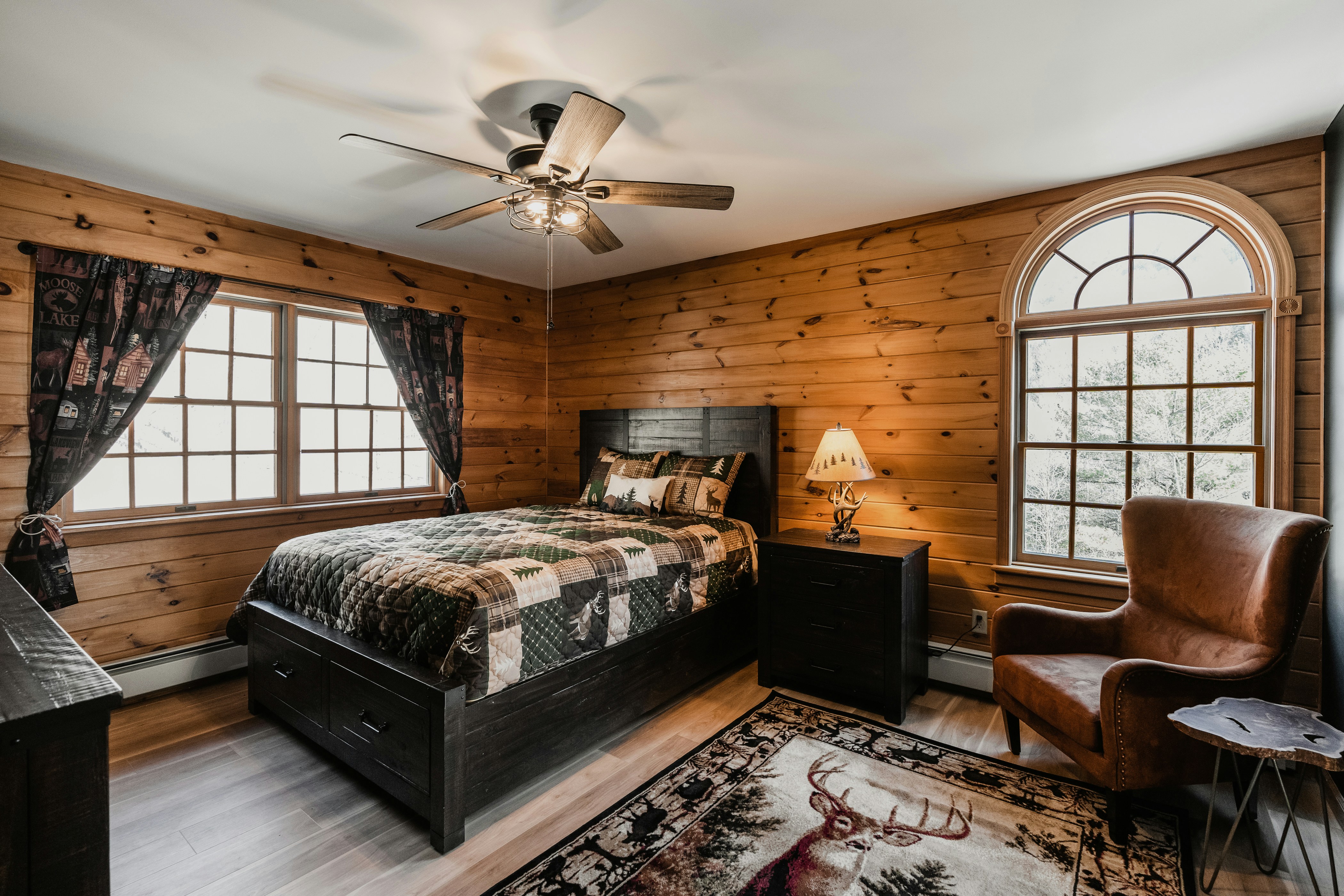
If you have ceiling fans with a reversing switch, you already own a solution to high heating bills. A small toggle on the motor housing—one you may never have noticed—reverses the blade direction on most ceiling fans. Flip it, and you transform a summer cooling device into a winter heating ally.
In summer, ceiling fans should spin quickly to push air straight down, creating a wind-chill effect on your skin. In winter, reversing rotation and slowing the speed creates a gentle updraft that draws cool air up and pushes warm ceiling air down along the walls, redistributing it throughout the room without creating a cooling breeze. Your ceiling fan can counteract gravity’s tendency to sort your air by temperature.
The U.S. Department of Energy notes that this adjustment can meaningfully reduce heating costs if you can lower your thermostat setting without feeling any colder—some studies suggest 10 percent or more in rooms with high ceilings, where stratification is most pronounced. A ceiling fan running on low uses just 15 to 30 watts—roughly the same as two or three LED light bulbs—while your furnace consumes thousands of watts each time it cycles on. By keeping already-heated air circulating where you can feel it, the fan reduces how often your heating system has to work and how high you need to set your thermostat for comfort.
One Step This Week
Find the direction switch on each ceiling fan in your home. It’s usually a small toggle on the side of the motor housing, just above the blades. You may need a step stool.
If the fan is spinning, turn off the fan and wait for the blades to stop completely–this is a good opportunity to clean the dust off!
Locate the direction switch on the motor housing
Flip the switch to reverse the blade direction
Turn the fan back on at its lowest speed
Stand beneath it—you should not feel a breeze blowing down on you
If you feel a downdraft under the fan, you’ve got it backwards. The winter setting creates such gentle air movement that you’ll barely notice anything except that the room feels more evenly warm.
If you’re having a hard time telling which way the fan should spin, look at the fan blades’ motion through the air. You’ll notice that the blades are at an angle, either a forward slash (/) or a backward slash (\). If they look like a backward slash (\), set your fan to spin clockwise (to the right, looking up at it) so air gets pushed toward the ceiling as the blade moves. The fan will create an updraft right below it, sucking up cold air from the floor to mix and move in loops along the ceiling, down the walls, and back to the floor.
Some newer fans have remote controls or wall switches that control direction—check your manual or look for a “reverse” button. Smart ceiling fans can even be programmed to change direction automatically based on temperature.
A note on older fans: Not all ceiling fans have a reversing switch. Some budget models and older installations only spin in one direction. If your fan lacks this feature, you can still benefit from running it on low speed during winter—even a downward airflow, if gentle enough, helps mix stratified air. Just don’t stand or sit directly under the fan because moving air has a “wind chill” effect that makes you feel colder. Alternatively, consider upgrading to an ENERGY STAR-certified fan with a reversible, high-efficiency motor that uses up to 60 percent less energy than a conventional fan motor.
Why This Matters for Sustainability
This practice aligns with the Energy pathway to sustainability—the actions that use energy more efficiently, reduce waste, and tap clean, renewable sources. The Energy pathway has a natural progression: before generating more energy, first make efficient use of what power we already have.
Ceiling fan reversal is a perfect example. Your heating system has already used lots of energy to heat air that is now trapped along your ceiling and being forced out of your home. Letting that warmth escape without enjoying it while you generate more heat to replace it is pure waste. A ceiling fan gets the most value out of the warm air your home has worked so hard to create.
The average American household spends over $1,000 annually on heating. Even a modest cost reduction adds up over a heating season, achieved with no additional equipment and a one-minute adjustment twice a year.
Beyond the Fan Switch
Once you understand how gravity sorts air by density, you start noticing other ways to work with physics to improve comfort and save money:
Check your vents. If your heating system has ceiling registers, the warm air they deliver tends to get displaced upward almost immediately by denser cool air near the floor. Directing vents downward or using floor registers helps warm air mix into the space you occupy before gravity separates it out.
Mind your stairwells. In two-story homes, the upstairs often sizzles while the downstairs freezes. Cold air seeps in and pools on the ground floor, pushing warm air up through the open stairwell to visit the upper floor on its way out. A ceiling fan at the top of the stairs, set to summer mode (blowing down rather than sucking up warm air), can push warm air back down, equalizing temperatures between floors. While you walk up the stairs, you’ll feel a cool breeze, but your lower floor will stay a bit warmer.
Run fans only when they help. If you’re not there to enjoy the warm air, there’s no reason to run a fan. Think of a fan just like a light–turn it off when you’re not using it.
Layer up low. Slippers, area rugs, and throws address the symptom—cold feet and legs—while your ceiling fan addresses the cause.
Your Comfort, Your Choice
The little power your ceiling fan uses on low speed pales in comparison to the massive amounts your furnace consumes. Every time the fan keeps warm air circulating long enough to delay a furnace cycle, you save energy—not by freezing your socks off, but by using science to your advantage.
This week, while cold weather keeps heating systems working overtime, take a minute to reverse your ceiling fans to move that warm air trapped at your ceiling back down to the floor to keep your toes toasty!
References and Resources
Government and Research Sources
U.S. Department of Energy: Fans for Cooling — Federal guidance on ceiling fan use in summer and winter, including direction settings and energy savings potential
ENERGY STAR Ceiling Fans — Certification program for efficient ceiling fans, which use up to 60% less energy than standard models
Thermal Destratification (Wikipedia) — Overview of stratification science and destratification technology, including research citations
Building Science
HPAC Engineering: Destratifying Heat with Fans — Technical article documenting 5°F to 30°F temperature differentials and energy savings from destratification
Manufacturer Resources
Hunter Fan: Ceiling Fan Direction for Summer and Winter — Manufacturer guidance with illustrations on switch location and seasonal settings
Related One Step Articles
Chill Without the Bill: Sustainable Cooling — How to use fans in the summer
Your New Year’s Energy Resolution: Smart Temperature Settings — How to set your thermostat wisely
Seal the Deal: Boost Energy Efficiency with a Sealed and Insulated Attic and Basement — How to keep warm air inside longer, with or without a fan
Super Insulation: Your Energy Hero — How to keep your home warmer in winter and cooler in summer
This article explores a step on the Energy pathway—one of seven pathways to sustainability in the Sustainable Practice framework for sustainability practitioners. For comprehensive guidance on sustainable practices along every pathway, visit www.suspra.com.