Your New Year's Energy Resolution: Smart Temperature Settings
Get a free month of utility bills every year by setting back your thermostat every day.
Before reading about an ideal New Year’s Resolution, we at Sustainable Practice want to remind you that there are just a few more days to get 20% off a yearly paid subscription for the new year. There is still a gift opportunity or your chance to get extra benefits with a paid subscription to One Step This Week. Check the offering by clicking the link below until December 31!
https://SustainablePractice.substack.com/31a86639
As winter settles in and heating bills rise, a practical way to reduce your energy use and boost your sustainability impact is right on your wall: your thermostat. Setting it thoughtfully can yield surprisingly significant benefits—the Department of Energy's research shows that smart temperature management can save 10% on your annual heating and cooling costs. That’s like winning a contest that pays your utility bills for more than a month every year for life! Let's explore how to cash in your lottery ticket by optimizing your home's temperature settings for both comfort and sustainability.
Beginner: The Basic Steps
The Department of Energy recommends these fundamental temperature settings:
68°F (20°C) when you're home and awake
60°F (16°C) when you're asleep or away
These levels balance comfort with energy efficiency. The guidelines can be the goal, but you can get there one degree at a time. While they might seem cool at first, most people adjust within a week, especially if they:
Keep throw blankets handy in living areas
Wear warm socks, slippers, and a sweater indoors
Keep active by getting up and walking around frequently (which is also good for your health!)
Use draft stoppers under doors
Open curtains during sunny days to let in natural warmth
Close curtains at night to retain heat
You can set back your thermostat manually or install a programmable thermostat to do the setback for you automatically.
Intermediate: Level Up Your Savings
Once you're comfortable with basic temperature settings, try these more advanced strategies:
Upgrade to programmable thermostats if you haven’t already done so.
Program your thermostat to adjust automatically. A typical winter weekday schedule might look like this:
6:00 AM: 68°F (wake up)
8:00 AM: 60°F (leave for work)
5:00 PM: 68°F (return home)
10:00 PM: 60°F (bedtime)
Create different schedules when you're home more often.
Set temperatures 1°F lower each week until you find your comfort threshold. Some people are comfortable as low as 65°F during the day and 58°F at night.
Use ceiling fans on low speed in reverse (clockwise) to push warm air down from the ceiling.
Advanced: The Energy Expert’s Approach
Ready to maximize your heating efficiency? Try these expert-level strategies:
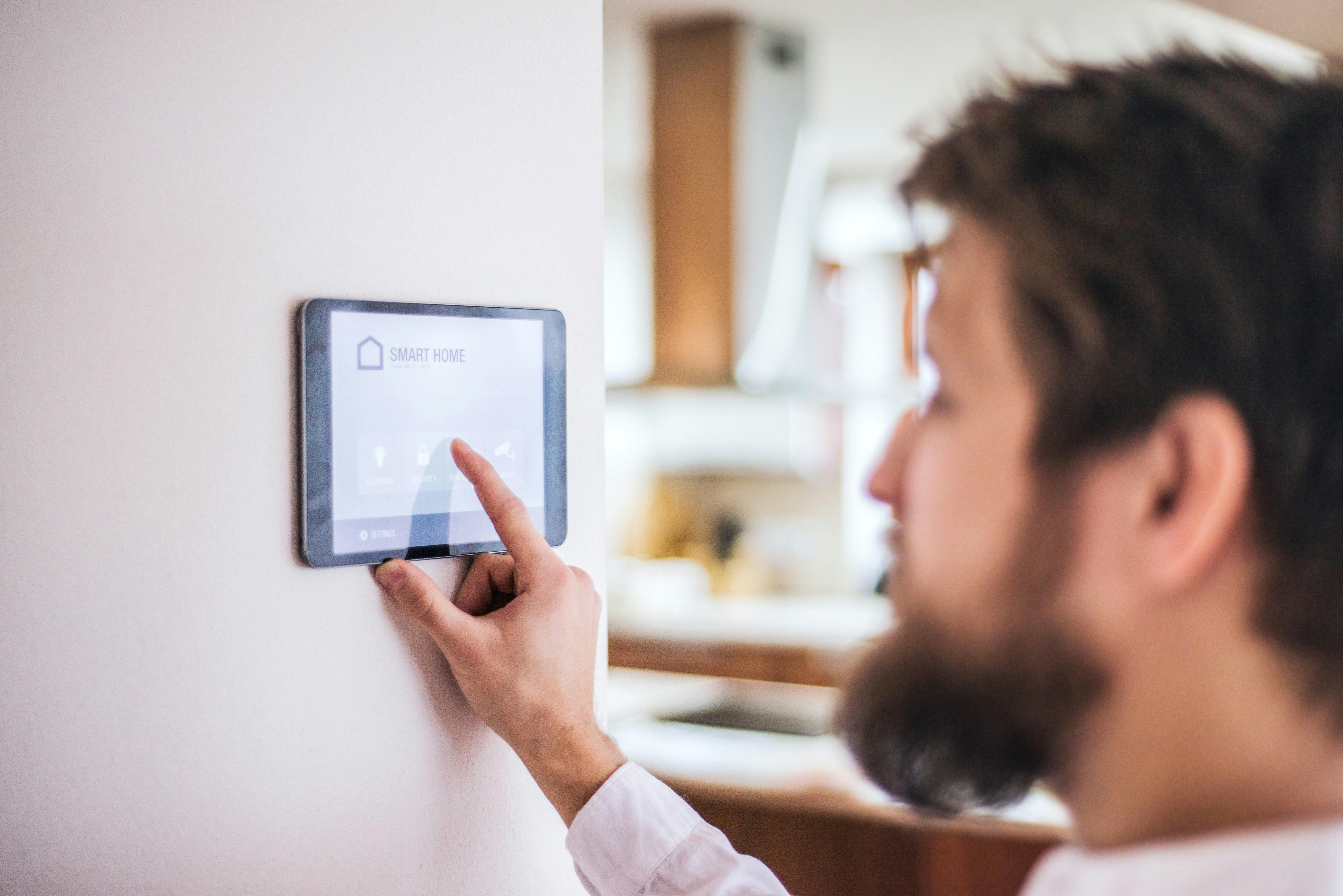
Install a smart Internet-connected thermostat that learns your patterns and automatically adjusts for optimal efficiency. According to the Environmental Protection Agency, people save an average of 8% on their utility bills simply by installing a smart thermostat that meets Energy Star criteria—see how far above average you can go!
Create separate heating zones in your home, keeping less-used rooms cooler.
Carefully consider where you place your thermostats—make sure you are measuring temperatures where it matters to you.
Track your energy use through your utility's online portal or a home energy monitor to see the impact of your temperature adjustments.
Expert: The Systems Thinker’s Strategy
For those ready to take a deep dive:
Have everyone in your home record their personal thermal comfort level several times a day for a week, from -3 being very cold, zero being just right, +3 being very hot, and the location in the home when they experience this feeling.
Use this data to determine when your home is being over- and under-heated and which areas need to be better regulated. Consider factors like outdoor weather conditions that could be used to calibrate your heat settings.
Build a better thermal management system (or hire an expert to build one for you) using a platform like Home Assistant to adjust the temperature setpoint throughout the day.
[Thermostats] do not take into account or adjust for human data or personal comfort preferences. Further, because these systems do not adjust for variable factors—such as heat from direct sunlight—in a space, the air temperature is not uniform, and people can experience varied thermal sensations. People would be more comfortable if [thermostats] could respond in real-time to their varying comfort levels and fluctuations throughout the day.
—Is There a Better Way to Control Room Temperature?
Technical Note: Understanding Temperature Settings on Energy Savings
Each degree Fahrenheit you permanently lower your thermostat in the winter can reduce your heating bill by approximately 1%. This means the difference between heating your home to 68°F versus 72°F should yield about 4% savings.
Exactly how thermostat settings translate into energy savings depends on how you heat your home. If you burn fuel, your objective is to minimize fuel consumption. The idea is that setback at night allows one long burn in the morning to get back up to temperature, rather than a lot of short burns all night to hold indoor temperature as nighttime temperature dips. The coldest time of day is usually early morning, so if you can allow your heating system to get a good night’s rest, you can extend its life and conserve fuel. Just like a fuel-burning car gets better gas mileage on the highway than in stop-and-go city traffic, a fuel-burning furnace gets better fuel economy with fewer longer burns rather than more frequent shorter burns each day.
Burning fuel safely and efficiently is an incredibly difficult process to control; modern high-efficiency furnaces are amazing feats of engineering. Fortunately, the difficult task of burning fuel to heat homes is becoming increasingly unnecessary and pointless. Switching to electricity for heat delivers safety, reliability, and efficiency benefits that are impossible to achieve with any fuel-burning system.
The key to smart heating with electricity is heat pumps. The current technology used in most heat pumps—including refrigerators, air conditioners, and electric heating systems—is vapor compression. In these systems, electricity is used to operate a pump that compresses a refrigerant vapor inside a tube.
When a compressor pump runs in a heat pump system designed to heat a home, the refrigerant gas is forced under high pressure from outdoors to indoors, where this gas releases heat that passes from the tube to the indoor heat exchanger. This release of heat causes the hot gas inside the tube to condense into a warm liquid. Then, the pump pressure forces the warm liquid through an expansion valve into a low-pressure section of the tube outdoors. This lowers the temperature of the vapor, which then absorbs heat from ambient air in the outdoor heat exchanger so that inside the tube, cold refrigerant vapor evaporates into a cool gas. The compressor pump pressurizes this gas, heating it and sending it back indoors through the tube to release more heat through the indoor heat exchanger.
A heat pump that is heating your home is like an inside-out deep freezer. If the outdoor temperature is 0°F and you have a refrigerant system that can lower this to -50°F, you can use the heat you’ve taken from outdoor air and put it into indoor air.
In addition to pump motors, heat pumps also have fan motors to blow air across their indoor and outdoor heat exchangers. Outdoors, once you’ve lowered the air temperature right around your heat exchanger to -50°F (or whatever temperature your system can achieve), you can use a fan to replace this very cold air with relatively warm 0°F air (or whatever temperature it is outside right now).
Note that if the outdoor air temperature is above 32°F and you’re running your heat pump, you might end up making ice as the water vapor in the air condenses and freezes. This ice may act as an insulator between your refrigerant and the outdoor air. Your outdoor unit will likely have some way to detect ice build-up and melt it, either by running a heater built into the outdoor heat exchanger or temporarily reversing the flow of refrigerant to melt off the ice. This defrosting cycle uses energy; while it’s happening, your heat pump can’t use efficient vapor compression to deliver heat into the building. Some units compensate by using low-efficiency resistance heaters so that you don’t experience any lapses in heat while the vapor-compression cycle is on defrosting hiatus.
Most operating guides recommend “set and forget” with heat pumps, but energy savings are possible if you are willing to put in the effort to study your system’s operating profile and keep careful records. By setting your thermostat to run the pump motor and fan motors at a slower speed, or to keep the pump and fans from running at all, or minimizing the amount of defrosting necessary, you can save energy. However, since heat pumps are already 300% to 400% more efficient than fuel-burning systems, the relative savings are smaller. Since you’re already saving an enormous amount of energy by simply not burning fuel, most people feel that the incremental gains of operating their heat pump at peak efficiency is not worthwhile.
In very efficient homes (with great air sealing, insulation and solar gain) the heating load is so low that heat pumps are not even needed. In these homes, a simple length of wire that heats up by resisting electricity flows across it is all that is needed to maintain indoor temperature. The less electricity you send through this resistive heater, the more you save.
Conclusion
Setting temperatures wisely is one of the easiest ways to improve your sustainability while saving money. Start with the basic Department of Energy recommendations, then adjust based on your comfort level and circumstances. Every degree matters!
References and Further Reading
Programmable Thermostats, United States Department of Energy
Smart Thermostats, ENERGY STAR
Are Smart Thermostats Worth It?, Consumer Reports
Is There a Better Way to Control Room Temperature?, American Scientist
Awaken your home, Home Assistant
The one small but powerful tool you should install with your ductless heat pump, Efficiency Vermont
Heat Pump Integrated Control Performance Review, Guidehouse Inc.