No Yard? You Can Still Grow Food!
All you need are a few pots of soil, seeds or seedlings, a sunny spot, and one weekend to start
You don't need a yard to grow your own food—walk into any hardware store or nursery and you'll find seedling tables loaded with tomatoes, peppers, basil, and lettuce waiting for a sunny window, balcony, or patio pot. But about a third of U.S. households rent, so where are all those seedlings going?
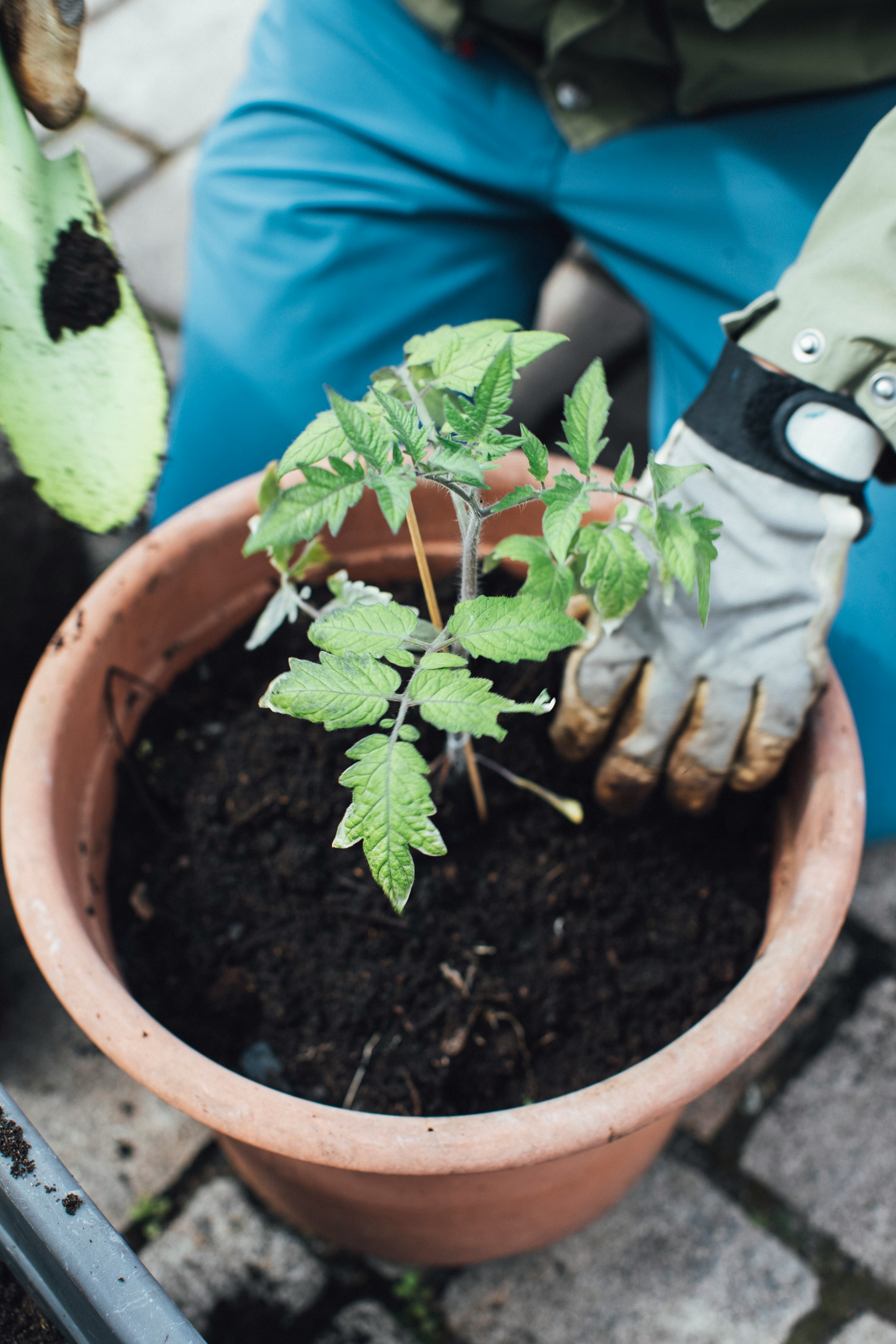
If you haven’t been let in on the secret, containers allow everyone to grow food. If you have one sunny window, one balcony rail, or one square of patio concrete, you can have a vegetable garden this summer. This week’s one step: pick two or three things you like to eat that you can grow, get them into pots this weekend, and start enjoying them fresh from your garden in just a few weeks.
Why a Few Pots Are Worth the Trouble
This step lives in the Food pathway of the Sustainable Practice framework — the one focused on how we eat, grow, and source what we put on our plates. The food we buy in a grocery store has, on average, traveled around 1,500 miles before reaching us, according to research from the Leopold Center for Sustainable Agriculture. That figure was based on produce arriving at the Chicago terminal market, and similar studies in Austin and Maryland found averages between roughly 1,100 and 1,700 miles. Wherever you live, the produce in front of you has likely traveled farther than you have in the last week.
Those miles matter for two reasons. The first is the pollution: most trucks burn diesel fuel, planes burn jet fuel, and a head of lettuce shipped 1,500 miles carries a heavier carbon footprint than one cut from a balcony pot ten feet from your kitchen. Worth noting: food miles aren’t the largest piece of the food-impact puzzle — what we eat (more plants, less red meat) matters more than how far it travels. So growing and eating your own vegetables is doubly good! But the second reason is more personal than planetary. Vitamins begin breaking down within hours of harvest. A UC Davis review by postharvest researcher Diane Barrett, Maximizing the Nutritional Value of Fruits & Vegetables, summarizes published research on vitamin C losses in refrigerated produce: green peas lose about 15 percent over seven days at typical refrigerator temperatures, and green beans can lose as much as 77 percent over the same week. Once produce moves through harvesting, packing, trucking, distribution, and storage on a store shelf, much of that decline has already happened, even before you buy produce from a grocer.
Your own pot of greens you cut yourself for tonight’s dinner has all its nutrients–and you can taste it. Your salad is fresher, your basil is more fragrant, and your tomato actually tastes like a tomato.
What to Grow When You’re Starting Out
Pick two or three things you’ll actually eat. The most reliable container crops, according to extension services at the University of Maryland, Oregon State, and Cornell, are the ones that mature quickly and don’t mind tight quarters: salad greens, herbs, cherry tomatoes, peppers, radishes, bush beans, and chard. If you have only a windowsill, basil, parsley, mint, and chives are nearly foolproof. If you have a sunny balcony or porch, a single five-gallon bucket can hold one cherry tomato plant — varieties like ‘Patio,’ ‘Tiny Tim,’ or ‘Sweet 100’ are bred for containers — and will produce dozens of tomatoes through the summer.
Two principles will save you most of the trouble new gardeners run into:
First, the bigger the container, the better. A five-gallon bucket gives a tomato or pepper plant enough root space to really produce. A soil depth of 12 inches is a good minimum for almost anything other than greens and herbs. Besides not allowing an extensive root system to develop, smaller containers dry out fast, especially on hot afternoons.
Second, prepare potting soil carefully. Plain dirt from outside compacts in pots, drains poorly, and can carry diseases. Potting mix designed for containers is lighter, drains better, and holds moisture without becoming a brick. You can buy a pre-mixed bag of potting mix to fill a couple of mid-sized pots and use that soil year after year, adding compost for nutrients.
Sun is the third variable. Most vegetables need at least six hours of direct sun a day. Leafy greens and herbs are more forgiving and will produce in four. Before you buy anything, spend a Saturday watching how the sun shines on your balcony or windowsill. North-facing windows in the northern hemisphere usually won’t grow much beyond mint and chives. South- or west-facing spots can grow almost anything.
A Weekend Setup
Here’s what a single starter weekend can look like: A trip to a gardening friend’s home, hardware store, garden center, or anywhere you can find two or three pots at least 12” tall (anything with drainage holes works — you can drill holes in a five-gallon bucket in two minutes), a bag of potting mix, and either a few seedling starts or a packet of seeds. For most of the country, the frost risk has passed by early May, or is just about to. Lettuce and radish seeds can go directly into the potting soil in your container. Tomatoes and peppers do better as transplants this time of year — buy them as seedlings.
Place the pots where they’ll get the most sun. A pro tip is to place a tray below your pot and water from the bottom by filling the tray with water and letting it wick up through the holes into your container until the water stays in your tray and no longer gets sucked up. From then on, add water to the tray whenever the top inch feels dry — usually daily in summer for smaller pots, every couple of days for larger ones. That’s the whole setup. Plants started this weekend can feed you by mid-June.
If you live in an apartment building, check whether your building has a shared rooftop or courtyard space. Most landlords will say yes to a pot on the porch even when they’d say no to a permanent garden bed. If you genuinely have no outdoor space and no sunny window, a community garden plot is the next step out: most cities have them.
One Pot Is Enough to Start
Container gardening sits at the entry point of a much larger Food-pathway journey — one that can grow into community gardens, raised beds, season-extending cold frames, or eventually a yard of your own. The Sustainable Practices Handbook lists Gardening with Containers as a foundational step precisely because it builds the skills, the patience, and the connection to a food system that the rest of the pathway depends on.
This week, plant something, even just a basil plant on a windowsill or a single pot of cherry tomatoes on a fire escape. Once you get the gardening bug, you’ll be feeding your family and neighbors for years to come.
For more on the Food pathway and other small steps with measurable impact, visit www.suspra.com or explore the Sustainable Practices Handbook.
References and Resources
University of Maryland Extension. “Growing Vegetables in Containers.”
https://extension.umd.edu/resource/growing-vegetables-containersOregon State University Extension. “Container gardening: Grow vegetables even without yard space.” https://extension.oregonstate.edu/news/container-gardening-grow-vegetables-even-without-yard-space
Rutgers New Jersey Agricultural Experiment Station. “FS055: Container Gardening with Vegetables.”
https://njaes.rutgers.edu/FS055/Cornell Botanic Gardens. “Grow your own vegetables with container and small-space gardening.” https://cornellbotanicgardens.org/grow-your-own-vegetables-with-container-and-small-space-gardening/
Pirog, R., et al. Leopold Center for Sustainable Agriculture, Iowa State University. Food, Fuel, and Freeways.
https://dr.lib.iastate.edu/entities/publication/51ef6421-3062-487f-af1a-29125328f7a5ATTRA / National Center for Appropriate Technology. “Food Miles: Background and Marketing.”
https://attra.ncat.org/publication/food-miles-background-and-marketing/Barrett, D.M. UC Davis Postharvest Technology Center. “Maximizing the Nutritional Value of Fruits & Vegetables.”
https://postharvest.ucdavis.edu/publication/maximizing-nutritional-value-fruits-vegetablesBouzari, A., Holstege, D., & Barrett, D.M. (2015). “Vitamin retention in eight fruits and vegetables: a comparison of refrigerated and frozen storage.” Journal of Agricultural and Food Chemistry, 63(3), 957–962.
https://pubmed.ncbi.nlm.nih.gov/25526594/U.S. Census Bureau. “Quarterly Residential Vacancies and Homeownership, First Quarter 2026.”
https://www.census.gov/housing/hvs/files/currenthvspress.pdfSustainable Practice
www.suspra.com