Pedal Power: Two Wheels, Three Wheels, Zero Emissions
A 30-minute spring tune-up is your ticket to the cleanest way to travel
The most energy-efficient vehicle ever invented might be leaning against a wall in your garage right now, tires soft, chain stiff, maybe with a fine layer of winter dust on the saddle. A bicycle or tricycle converts human energy into forward motion more efficiently than any other machine on Earth—and even more efficiently than walking—yet most of us in North America leave ours sitting idle for months at a time.
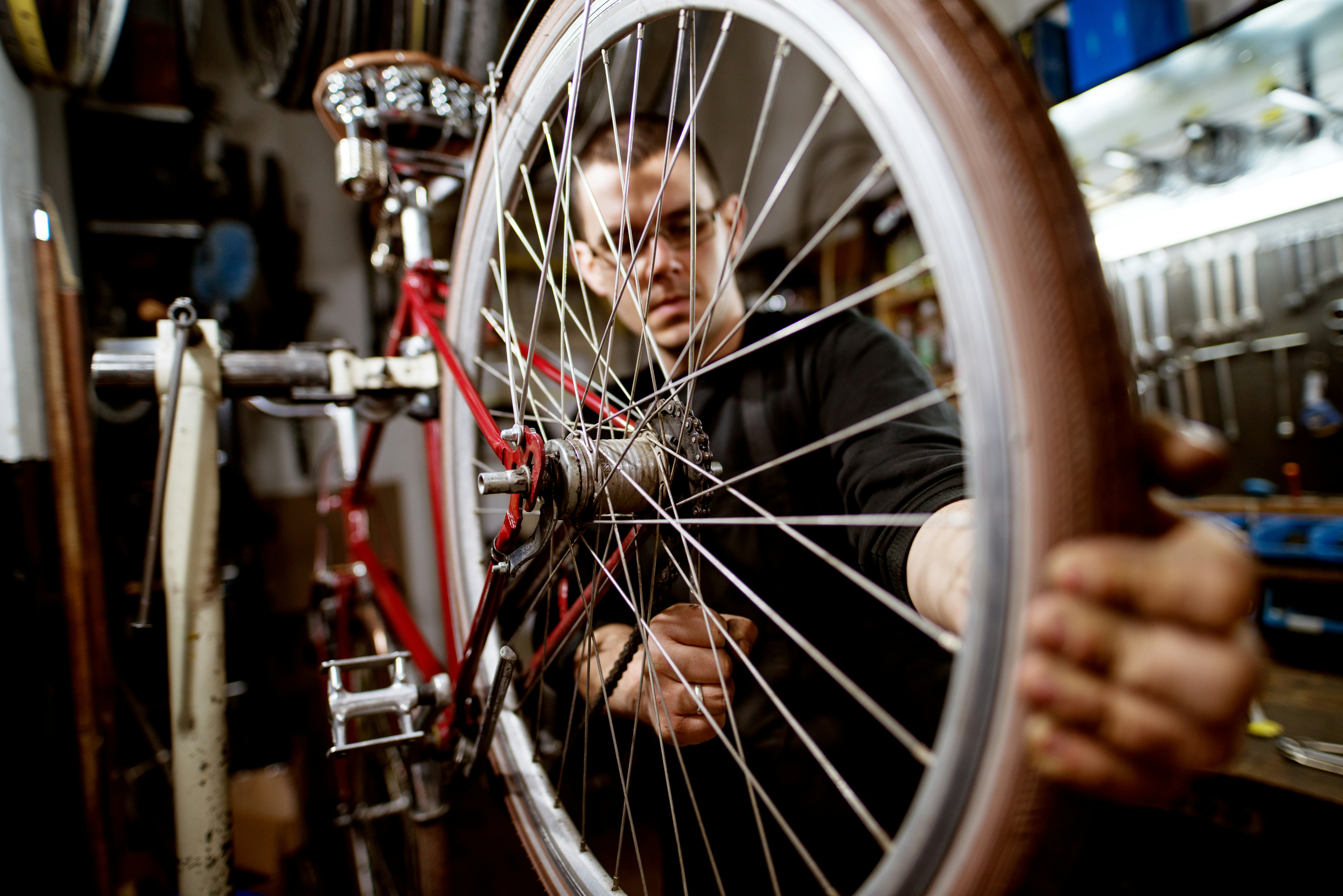
More than half of all daily trips in the United States are three miles or less, according to a study conducted for the Bureau of Transportation Statistics. Three miles is a fifteen-minute bike ride at a leisurely pace, using far less effort than walking or jogging that same distance. Those short car trips—to the post office, the grocery store, the coffee shop—produce about 400 grams of CO₂ per mile from a typical gasoline car, according to the Environmental Protection Agency. A bicycle, accounting for its full lifecycle including manufacturing and the food needed to fuel the rider, produces roughly 21 grams of CO₂ per passenger-kilometer—about one-tenth of a car’s emissions for the same distance. Replace even a few of those short drives each week with bike trips, and you’re cutting your personal transportation emissions for those miles by around 90 percent.
"Speaking of movement forward, Sustainable Practice will be growing our library of resources with our 2026 edition of Your Earth Share: Seven Pathways to Sustainable Living, available later this month. For more information about other upcoming changes, visit our website at www.SustainablePractice.Life. We’re glad to have you with us as we help sustainable practitioners like you expand your positive impact on Earth. Now, on to one step toward sustainable movement."
This week’s one step: get your cycle road-ready with a spring tune-up, and start riding it for your short trips.
Making Progress on the Movement Pathway
Cycling sits squarely on the Movement pathway in the Sustainable Practice framework—the set of practices covering sustainable transportation and travel. How we get from place to place is one of our biggest daily environmental decisions. Transportation accounts for the largest share of U.S. greenhouse gas emissions—29 percent by economic sector, according to the EPA—and more than half of those emissions come from personal vehicles. Every trip you shift from driving to cycling is a direct, measurable improvement in your environmental impact on Earth.
But the benefits aren’t only environmental. A landmark study published in Environmental Health Perspectives quantified what happens when people switch from cars to cycles for short daily trips. The health gains from increased physical activity—three to fourteen months of additional life expectancy—far exceeded the risks from traffic accidents. A meta-analysis of seven large population studies found that cycling roughly 270 minutes per week was associated with a 24 percent lower risk of death from all causes compared with not cycling. And a large Danish cohort study following more than 53,000 people for 20 years found that participants who took up cycling had a 26 percent lower risk of heart disease than those who never cycled.
You don’t need to become a Lycra-clad road warrior. You just need a bike or trike that works.
The 30-Minute Spring Tune-Up
A bike that’s been sitting since last fall may need some attention before you ride it. Most of what it needs takes half an hour and no special expertise. Here’s what to do, roughly in order.
Clean it. Wipe down the frame with a damp rag and mild soap. Clean the chain, chainrings, and rear cassette with a degreaser and an old toothbrush or rag. A clean bike is easier to inspect, and you’ll spot problems you’d otherwise miss under a layer of grime.
Inflate the tires. They’re almost certainly flat or low after months of sitting. Inflate them to the pressure printed on the sidewall—you’ll find it stamped into the rubber itself. While you’re at it, look for cracks in the sidewall, cuts in the tread, or anything embedded in the rubber. If the tires look cracked or worn through, replace them before you ride.
Inspect the brakes. Squeeze each brake lever and make sure the pads engage firmly and evenly against the rim (or rotor, if you have disc brakes). If the pads are thin or glazed, replace them—brake pads are inexpensive and straightforward to swap. If the levers feel spongy or pull all the way to the handlebars, the cables may need tightening, or the hydraulic fluid may need attention.
Lubricate the chain. Apply bicycle-specific chain lube to each link while slowly turning the pedals backward. Then wipe off the excess with a clean rag. A dry chain wears out faster, shifts poorly, and makes your pedaling less efficient—which means you’re working harder for the same distance.
Check the bolts. Give your handlebars, stem, seat post, and wheel axles a gentle wiggle. Anything loose should be tightened. If you have a torque wrench and your bike’s manual, use the manufacturer’s specifications. If not, snug is fine—just don’t overtighten, especially on carbon components.
Spin the wheels. Lift each wheel off the ground and spin it. It should rotate freely without wobbling side to side. A slight wobble means the wheel may need truing—a job best left to a bike shop unless you have a spoke wrench and some experience.
Test-ride it. Take a short loop around your block or driveway. Shift through all the gears. Brake from a moderate speed. Listen for any clicks, grinding, or rubbing. If something feels off, a local bike shop can do a professional tune-up—typically $60 to $100.
Making It Stick
The tune-up is this week’s step, but the real payoff comes from actually riding. Pick one regular short trip—your commute to work, a weekly grocery run, a kid’s school drop-off—and try doing it by bike for the next two weeks. Two weeks is long enough to work out the logistics (where to lock up, what to carry, which route feels safest) and short enough that you can tough it out to the end even if it’s harder than you anticipated. Give it your best effort!
If three miles sounds like a lot, consider that 28 percent of all daily trips are under one mile. That’s a five-minute ride. You might actually get there faster on a bike than in a car once you factor in finding a parking spot.
And if hills, distance, or physical limitations make a regular bicycle impractical, e-bikes have changed the equation entirely. An e-bike uses roughly as much electricity per mile as one to three LED light bulbs use per hour—producing single-digit grams of CO₂ per mile on the average U.S. electrical grid (or none if you recharge your e-bike with solar power). That’s still over 90 percent cleaner than driving, and the pedal assist means hills flatten out and headwinds magically disappear.
E-bike commuters consistently report that their bikes replace car trips, not exercise. Buying an e-bike might be a wise financial investment: you can save money on both car payments and gym memberships!
Your One Step This Week
Pull your bike or trike out this weekend. Give it thirty minutes of attention—clean, inflate, lube, check. Then ride it somewhere you’d normally drive. That’s it. One trip on wheels, powered by your own legs, produces a fraction of the emissions you’d create sitting behind a steering wheel.
For more on the Movement pathway—including practices for walking, biking, public transit, e-bikes, and electric vehicles—visit www.suspra.com or pick up the Sustainable Practices Handbook. Our May 2025 article on biking to work and our July 2023 piece on e-bikes pair well with this one. You’ll find the full archive at sustainablepractice.life.
Spring doesn’t last forever, but a well-tuned bike and the right gear can carry you through every season.
References and Resources
Research
U.S. Department of Energy. “FOTW #1230: More than Half of all Daily Trips Were Less than Three Miles in 2021.” https://www.energy.gov/eere/vehicles/articles/fotw-1230-march-21-2022-more-half-all-daily-trips-were-less-three-miles-2021
European Cyclists’ Federation (2011). “Cycle More Often 2 Cool Down the Planet: Quantifying CO₂ Savings of Cycling.” https://www.peopleforbikes.org/statistics/environmental
de Hartog, J.J., et al. (2010). “Do the Health Benefits of Cycling Outweigh the Risks?” Environmental Health Perspectives, 118(8), 1109–1116. https://pmc.ncbi.nlm.nih.gov/articles/PMC2920084/
Kelly, P., et al. (2023). “Benefits, Risks, Barriers, and Facilitators to Cycling: A Narrative Review.” Frontiers in Sports and Active Living, 5, 1168357. https://www.frontiersin.org/journals/sports-and-active-living/articles/10.3389/fspor.2023.1168357/full
Harvard T.H. Chan School of Public Health. “Bicycling.” The Nutrition Source. https://nutritionsource.hsph.harvard.edu/bicycling/
Our World in Data. “Which Form of Transport Has the Smallest Carbon Footprint?” https://ourworldindata.org/travel-carbon-footprint
PeopleForBikes. “Tackling Climate Change One Ride at a Time.” https://www.peopleforbikes.org/news/tackling-climate-change-one-ride-at-a-time
More Resources for Sustainable Practitioners
Sustainable Practice at www.sustainablepractice.life and www.suspra.com