Less Work, Better Dirt in Your Garden
Every time you turn your soil, you’re undoing the work nature already did for you
Spring is here in the northern hemisphere, and that means millions of gardeners are reaching for their shovels and rototillers, ready to “prepare” the soil for planting. It’s one of the most deeply ingrained rituals in gardening. It also happens to be unnecessary—and, according to a growing body of research, actively counterproductive.
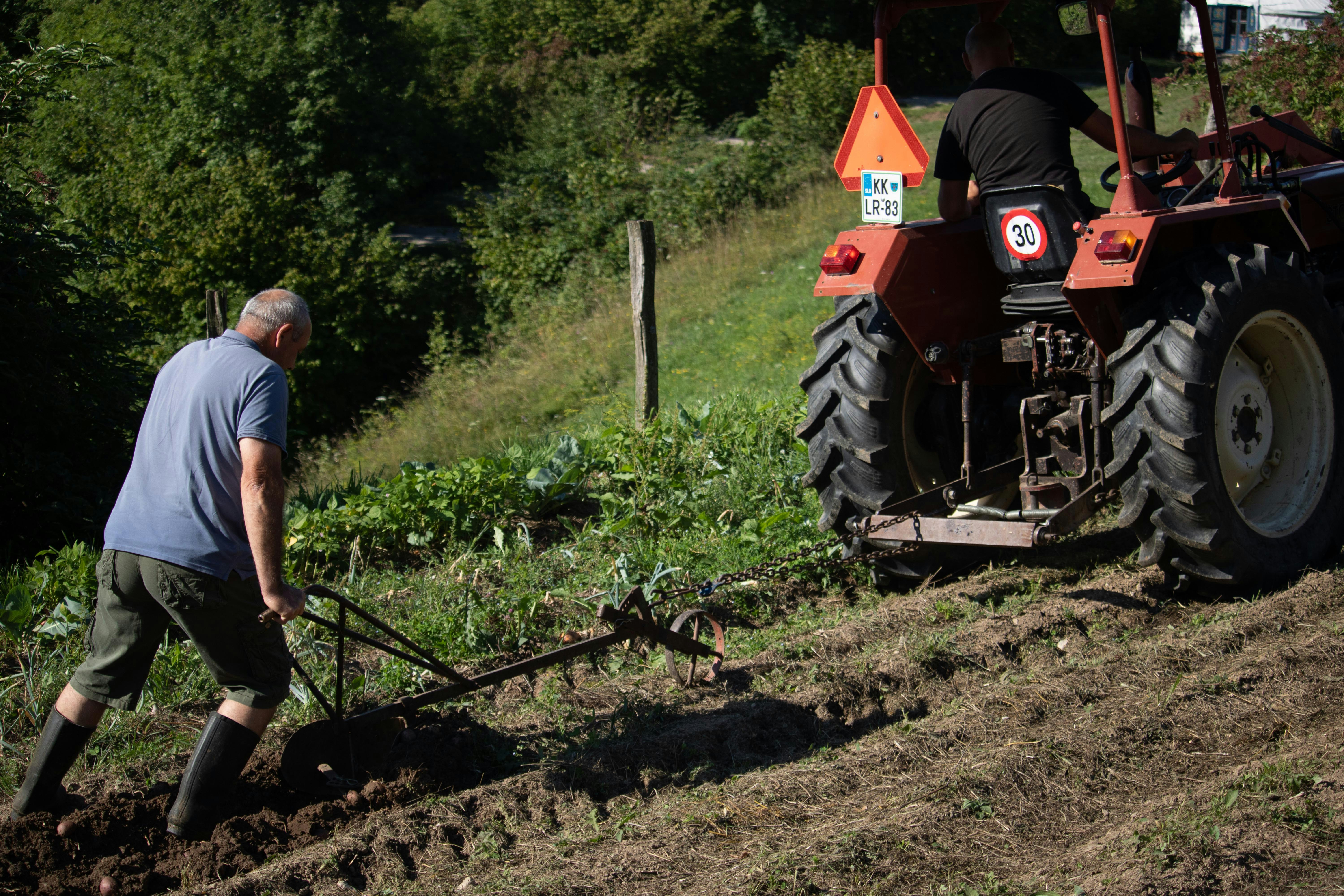
Soil is alive. A single tablespoon of healthy garden soil contains more microorganisms than there are people on Earth. Those organisms—fungi, bacteria, protozoa—form networks that deliver nutrients to plant roots, suppress disease, and hold carbon underground where it belongs. When you dig or till, you tear those networks apart. You break up the soil aggregates that store carbon and moisture. And you expose buried organic matter to oxygen, which converts it to carbon dioxide and releases it into the atmosphere.
This week’s one step: start a no-till garden bed. It’s easier than conventional gardening, it produces better results over time, and it keeps carbon in the ground instead of sending it into the air.
Why Lots of Digging Hurts More Than It Helps
No-till gardening (meaning no back-breaking digging or plowing before planting) sits at the intersection of the Food and Habitat pathways in the Sustainable Practice framework. The Food pathway covers sustainable eating, growing, and food system practices—including how we cultivate the soil that feeds us. The Habitat pathway addresses sustainable land use and nature protection, and healthy soil is the foundation of every terrestrial ecosystem.
Research from Michigan State University’s Kellogg Biological Station—one of the longest-running agricultural experiments in the country—found that a single pass with a plow can reduce soil aggregation to levels normally seen after fifty or more years of continuous tillage. Those aggregates are where soil stores its carbon. Break them open and the carbon escapes. A long-term field experiment on China’s Loess Plateau, running from 2007 to 2019, measured CO₂ emissions under different tillage methods and found that no-till management reduced average CO₂ flux from the soil by 14.5 percent compared to conventional plowing.
Tilling also devastates earthworm populations. According to Colorado State University Extension, deep and frequent tillage can reduce earthworm numbers by as much as 90 percent. That matters because earthworms are the construction crew of healthy soil—they aerate it, improve drainage, cycle nutrients, and pull organic matter down from the surface. Research from the Soil Association in the UK found that soils without earthworms can be 90 percent less effective at absorbing water, leading to more runoff, erosion, and flooding.
A 2024 study published in the journal Agriculture compared no-dig and conventionally dug garden plots over three years. The no-dig plots had 24 percent more earthworms and 48 percent more soil organic carbon than the dug plots.
What No-Till Looks Like in Practice
The idea is simple: instead of turning organic matter into the soil, you layer it on top and let soil organisms do the mixing for you—just as they do on a forest floor. The most common home-garden method is called sheet mulching (sometimes “lasagna gardening”), and you can set one up this weekend.
To start a new no-dig bed on a lawn or weedy patch:
Mow or cut the existing vegetation as low as possible. Lay overlapping sheets of plain cardboard (tape and staples removed) directly on top to smother weeds and grass. Water the cardboard thoroughly. Then add layers of organic material on top: compost, aged manure, straw, shredded leaves, grass clippings—alternating nitrogen-rich “green” materials with carbon-rich “brown” ones. Aim for a total depth of about eight to twelve inches. Finish with a two- to four-inch layer of compost on top, and you can plant directly into it.
If you already have garden beds, no-dig is even simpler. Stop tilling. Each fall or early spring, spread an inch or two of compost on the surface. That’s it. When you plant, dig only the small hole needed for each transplant’s roots. Stirrup hoe (i.e., slice them with a hoe that has a weeding loop that looks like a stirrup) weeds by hand when they’re small—you’ll find there are far fewer of them because you’re not bringing buried weed seeds to the surface.
Where to find materials for free or cheap: Many arborists will deliver wood chips at no cost (check getchipdrop.com). Coffee shops often give away spent grounds. Neighbors bag leaves every fall that make excellent brown layers. Your own kitchen scraps—minus meat and dairy—can go right into the layers.
The Evidence from the Garden
British gardener Charles Dowding has run side-by-side dig vs. no-dig trials at his market garden, Homeacres, for thirteen consecutive years—same crops, same compost, same bed sizes. The only difference: one bed gets dug each year, the other doesn’t. Over that period, the no-dig bed has produced roughly 12 percent more food by weight. The gap tends to widen over time, as the undisturbed soil biology matures. Dowding also reports consistently fewer weeds and less slug damage on the no-dig beds—benefits he attributes to the intact soil ecosystem supporting natural pest predators.
His results aren’t a controlled academic trial, and he’s upfront about that. But the pattern is consistent across thirteen seasons: leaving the soil alone and feeding it from the top produces as much or more food than digging, with less labor.
That last point matters if you’ve ever dreaded the annual rototilling ritual. No-dig gardening is physically easier. There’s no heavy turning of soil, no wrestling with a tiller, no aching back afterward. As Cornell Cooperative Extension and Oregon State University Extension both note, sheet mulching is one of the most accessible soil-building methods available—people of many ages and physical abilities can do it.
Your One Step This Week
This is the perfect weekend to start. If you want a new garden bed, lay cardboard and start building layers wherever you’d like to grow food or flowers this season. If you already garden, put the tiller away and spread compost instead. Either way, you’re working with the soil rather than against it—and keeping carbon where it belongs.
For more on the Food and Habitat pathways—including dozens of practices for growing food sustainably, building healthy soil, and protecting the ecosystems around your home—visit www.suspra.com or pick up the Sustainable Practices Handbook. Last week’s article on the water hidden in your food, and our March 23, 2025 piece on soil blocking for seed starting, pair well with this one. You’ll find the full archive at sustainablepractice.life.
Earth Day is April 22, but many people are extending the celebration for the month leading up to it. A nice thing you might do for the Earth this April is to stop digging it up!
References and Resources
Research
Kellogg Biological Station Long-Term Ecological Research. “Lessons from Long-Term Research: Comparing No-Till to Conventional Tillage Over 30 Years.” Michigan State University. https://www.canr.msu.edu/resources/lessons-from-long-term-research-comparing-no-till-to-conventional-tillage-over-30-years
Dowding, C. Dig/No Dig Trial results (2013–present). https://charlesdowding.co.uk/blogs/homeacres/dig-no-dig-trial-2019-2022
Sun, B., et al. (2020). “No tillage increases soil organic carbon storage and decreases carbon dioxide emission in the crop residue-returned farming system.” *Journal of Environmental Management*, 261, 110261. https://www.sciencedirect.com/science/article/abs/pii/S0301479720301961
Kowalska, J., et al. (2024). “Comparative Effects of No-dig and Conventional Cultivation with Vermicompost Fertilization on Earthworm Community Parameters and Soil Physicochemical Condition.” *Agriculture*, 14(6), 870. https://www.mdpi.com/2077-0472/14/6/870
Colorado State University Extension. “Earthworms.” https://extension.colostate.edu/resource/earthworms/
Soil Association. “Why Are Worms Important?” https://www.soilassociation.org/causes-campaigns/save-our-soil/meet-the-unsung-heroes-looking-after-our-soil/why-are-worms-important/
Practical Resources
Cornell Cooperative Extension. “Lasagna Gardening.” https://warren.cce.cornell.edu/gardening-landscape/warren-county-master-gardener-articles/lasagna-gardening
Oregon State University Extension. “Sheet Mulching and Lasagna Composting with Cardboard.” https://extension.oregonstate.edu/catalog/em-9559-sheet-mulching-lasagna-composting-cardboard
Chip Drop. Free arborist wood chips. https://getchipdrop.com/
More Resources for Sustainable Practitioners
Sustainable Practice at www.sustainablepractice.life and www.suspra.com