Save a Bird Today: The Window Fix Anyone Can Do
Simple markers on glass can save millions of birds—and March is the perfect time to act
If you’ve ever heard that sickening thud against a window and walked outside to find a bird on the ground beneath it, you probably assumed it was a one-off collision, unfortunate but rare. Most of us think that. And most of us are wrong, because the same window that caught one unlucky chickadee is likely catching others when we’re not home to hear it.
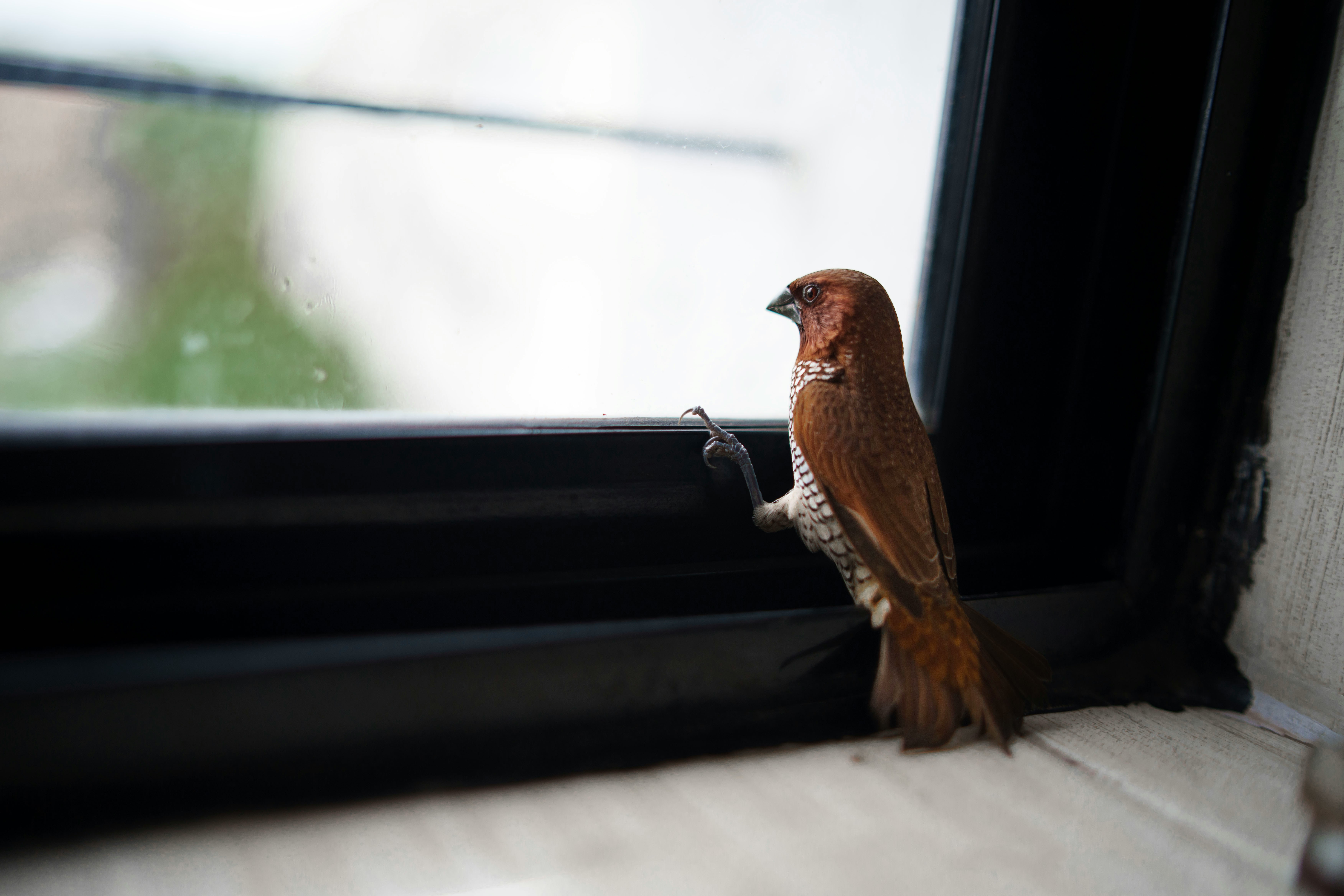
In the United States alone, between one and three billion birds die each year from flying into glass. That range comes from a 2024 peer-reviewed study led by ornithologist Daniel Klem at Muhlenberg College, published in The Wilson Journal of Ornithology—and it represents a 350 percent increase over the previous best estimate from 2014. Klem’s team observed more than 1,300 strikes over five years and discovered that half of all collisions leave no evidence. No feathers, no smudge, no body. The bird hits, falls, and is carried off by a predator or crawls away to die unseen. Of the birds that survive the initial impact but are left stunned, roughly 70 percent eventually die from their injuries, according to data from ten rehabilitation facilities across the Northeast and Great Lakes.
These aren’t frail or sickly birds. Window collisions kill indiscriminately—cardinals, woodpeckers, hawks, warblers, hummingbirds. While glass-covered skyscrapers seem like the biggest problem, they account for less than one percent of collision deaths. According to Loss et al. (2014), the vast majority happen at buildings we don’t think of as dangerous: low-rise commercial buildings of four stories or fewer cause about 56 percent of building-strike deaths, residential homes about 44%, with skyscrapers rounding down to approximately zero of the total across the United States. The American Bird Conservancy estimates that each U.S. home kills an average of two birds per year—a small number per house that becomes enormous when multiplied across 130 million homes.
This week, as birds begin their global northward spring migration and the world marks World Wildlife Day on March 3, we’re walking the Habitat pathway—the set of sustainability practices focused on buildings, land, and the natural world around us. The one step we’re asking you to take is both affordable and effective: make your windows visible to birds.
Why Birds Can’t See Glass
Birds have excellent vision—better than ours in many ways. They can detect ultraviolet light that we can’t see. But evolution didn’t prepare them for plate glass. A clear window looks like open air, an invitation to fly through to explore the space beyond. A reflective window is worse: it mirrors trees and sky, creating a phantom habitat that birds fly toward at full speed. As Klem puts it, even a perfectly clear pane covering a darkened interior acts like a mirror on the outside. Birds see potential habitat or a hiding place where there is only a hard surface.
During spring and fall migration, millions of birds pass through neighborhoods they’ve never navigated before. Right now, in early March, that migration is ramping up across much of North America. The birds arriving in your yard this month don’t know your windows.
Your One Step This Week: Apply the 2x2 Rule
The fix is straightforward. Birds need visual cues that tell them glass is a solid surface, not open sky. If you have taken down the exterior window screens for winter, now is the time to put them back on. That is the easiest way to solve the problem: birds see the screens and know they can’t fly through your windows. But if you don’t have exterior screens, then you’ll need to consider the “2x2 rule.”
Research shows that markings covering as little as five percent of a window’s surface can prevent up to 90 percent of strikes—but only if those markings are spaced closely enough. The American Bird Conservancy calls this the “2x2 Rule”: place markings no more than 2 inches apart, both horizontally and vertically, on the outside of the glass.
That last detail matters. A 2023 study from William & Mary, published in PeerJ, found that window films applied to the interior of double-paned glass did nothing to reduce collisions. The exterior reflection hides whatever you’ve put on the inside.
You have several good options, ranging from free to about $30 per window.
Tempera paint. Grab a jar from the art supply aisle and paint dots, stripes, or whatever design you like on the outside of your problem windows. Tempera is nontoxic, lasts through rain, and washes off easily when you want to change things up. Cost: a few dollars.
ABC BirdTape. Designed and tested by the American Bird Conservancy, this translucent tape lets light through while making the glass visible to birds. A 50-foot roll of three-quarter-inch tape runs about $20 and covers several windows. Apply horizontal strips, 2 inches apart, to the exterior.
Feather Friendly markers. Small adhesive dots transfer onto the glass exterior in a grid pattern. They’re subtle enough that you barely notice them from inside, but birds see them clearly. These are endorsed by both the American Bird Conservancy and the Fatal Light Awareness Program.
Acopian BirdSavers. These are vertical cords hung about four inches apart in front of the glass, sometimes called “zen curtains.” You can order them premade or build your own with parachute cord; the BirdSavers website provides free instructions.
Window screens. If you’ve been removing your screens for winter, put them back on. Exterior screens break up reflections and give birds something visible to avoid. This alone is a significant help—and it costs nothing if you already own the screens.
You don’t have to treat every window in your house. Start with the ones that reflect the most vegetation, the ones near bird feeders, and any glass where you’ve noticed strikes before. Walk around the outside of your home at different times of day and look at your windows from a bird’s perspective. Where you see sky and trees reflected back at you, birds see an invitation to fly.
Five More Ways to Protect Bird Populations
Making windows bird-safe is your one step this week, but it fits into a broader set of actions that protect the birds around your home. Here are five more, listed roughly by impact.
Keep cats indoors. This is the single most important thing any pet owner can do for birds. A landmark 2013 study in Nature Communications by Loss, Will, and Marra estimated that free-ranging domestic cats kill between 1.3 and 4.0 billion birds annually in the United States—making cats the number-one direct, human-caused source of bird mortality, ahead of even window collisions. The majority of that toll comes from feral and unowned cats, but pet cats allowed outdoors still kill hundreds of millions of birds each year. Indoor cats live longer, healthier lives, too: the average indoor cat lives roughly 12 to 18 years, compared to 2 to 5 years for outdoor cats. If your cat craves the outdoors, consider a “catio” (an enclosed patio), a leash, or a window perch. Your cat stays safe. The birds stay alive. Everyone wins.
Turn off unnecessary lights at night. Many songbirds migrate after dark, navigating by stars and the Earth’s magnetic field. Bright artificial lights disorient them, sometimes fatally. During peak migration in spring and fall, turn off decorative and unnecessary exterior lighting, close blinds on upper floors, and consider motion-sensor switches for security lights. Programs like Lights Out in cities across the country have documented meaningful reductions in bird deaths simply by dimming buildings during migration season.
Plant native species. Native plants support the native insects that most birds depend on to feed their young. Doug Tallamy’s research at the University of Delaware has shown that a native oak can support over 500 species of caterpillars, while a nonnative ginkgo supports roughly five. When you replace even a small patch of lawn or ornamental plantings with native shrubs and flowers, you’re building the food web that sustains local and migratory birds alike.
Manage feeder placement. If you feed birds, place feeders either within three feet of your windows or more than 30 feet away. Feeders in the in-between zone create dangerous flight paths toward glass. Close feeders give birds too little momentum to be hurt if they do hit; far feeders give them time to recognize and avoid the glass.
Support shade-grown coffee (if you have a caffeine habit). Most of the world’s coffee is now grown in full-sun monocultures that replace the tropical forests where migratory songbirds spend their winters. Shade-grown and Bird Friendly-certified coffee (look for the Smithsonian Migratory Bird Center seal) comes from farms that maintain forest canopy, preserving critical wintering habitat. Your morning cup can be part of the solution. Or, if you’re really committed to bird welfare, cut down on your coffee habit and donate the money you save to conservation efforts that protect bird nesting and foraging habitat even more effectively than coffee farms can.
The Bigger Picture
North America has lost roughly three billion breeding birds since 1970—a 29 percent decline documented by Rosenberg and colleagues in a 2019 study published in Science. Window collisions are one significant piece of that loss, alongside habitat destruction, pesticide use, and cat predation. But unlike some of those challenges, window collisions have a simple, affordable, proven fix. You can do it this weekend with a jar of paint and ten minutes.
This Tuesday, March 3, is World Wildlife Day. The 2026 theme focuses on medicinal and aromatic plants, but the day’s deeper message applies to the natural world as a whole: we depend on healthy ecosystems, and healthy ecosystems depend on birds. Birds pollinate plants, disperse seeds, control insect populations, and indicate the overall health of the environments we share with them. When bird populations decline, we lose more than birdsong.
If bird-safe windows are new to you, the American Bird Conservancy’s website (abcbirds.org) is the best place to start. For a deeper dive into the Habitat pathway and dozens of other science-based sustainability practices you can implement at home, visit www.suspra.com or pick up a copy of the Sustainable Practices Handbook. And if this article has been useful, forward it to a friend who feeds birds or loves their garden—they might not know their windows are part of the problem.
Those cardinals at your feeder deserve a safe flight home. A few dollars and a few minutes can help make that happen.
References and Resources
Primary Research
Klem, D., Saenger, P.G., & Brogle, B.P. (2024). Evidence, consequences, and angle of strike of bird–window collisions. The Wilson Journal of Ornithology, 136(1), 113–119. https://www.tandfonline.com/doi/full/10.1676/23-00045
Loss, S.R., Will, T., Loss, S.S., & Marra, P.P. (2014). Bird–building collisions in the United States: Estimates of annual mortality and species vulnerability. The Condor, 116(1), 8–23. https://bioone.org/journals/the-condor/volume-116/issue-1/CONDOR-13-090.1
Loss, S.R., Will, T., & Marra, P.P. (2013). The impact of free-ranging domestic cats on wildlife of the United States. Nature Communications, 4, 1396. https://www.nature.com/articles/ncomms2380
Swaddle, J.P., Brewster, B., Schuyler, M., & Su, A. (2023). Window films increase avoidance of collisions by birds but only when applied to external compared with internal surfaces of windows. PeerJ, 11, e14676. https://peerj.com/articles/14676/
Rosenberg, K.V., et al. (2019). Decline of the North American avifauna. Science, 366(6461), 120–124. https://www.science.org/doi/10.1126/science.aaw1313
Practical Resources
American Bird Conservancy — Preventing Glass Collisions: https://abcbirds.org/solutions/preventing-collisions/
Acopian BirdSavers — DIY Instructions:
https://www.birdsavers.com
Feather Friendly — Window Markers:
https://www.featherfriendly.com
ABC Solutions for Homes (includes BirdTape): https://abcbirds.org/strategies/solutions-for-homes/
Cornell Lab of Ornithology — Cats and Birds FAQ: https://www.allaboutbirds.org/news/faq-outdoor-cats-and-their-effects-on-birds/
Muhlenberg College — Preventing Bird-Window Collisions:
https://www.muhlenberg.edu/academics/centers-and-institutes/acopian-center-for-ornithology/preventing-bird-collisions/
More Resources for Sustainable Practitioners
Sustainable Practice: www.suspra.com