Eat the Season: Why Winter Root Vegetables Are a Win for Earth
Meals featuring what’s actually in season are more sustainable—and often tastier—than out-of-season produce
Walk into most North American supermarkets this week, and you’ll find strawberries from Mexico, asparagus from Peru, and blueberries from Chile—all looking freshly picked under artificial lights. What you won’t see is the trail of refrigerated trucks, cargo planes, and cold-storage warehouses that kept those summer fruits alive through a northern winter. A 2022 study published in Nature Food found that transporting fruits and vegetables generates nearly twice as much air pollution as growing them, largely because produce requires energy-intensive, temperature-controlled shipping. Globally, food transportation accounts for roughly 19% of all food-system air pollution, including emissions from tractors, fertilizers, pesticides, building heating systems, and electricity used during processing. Fruit and vegetable transport alone is responsible for more than a third of that total.
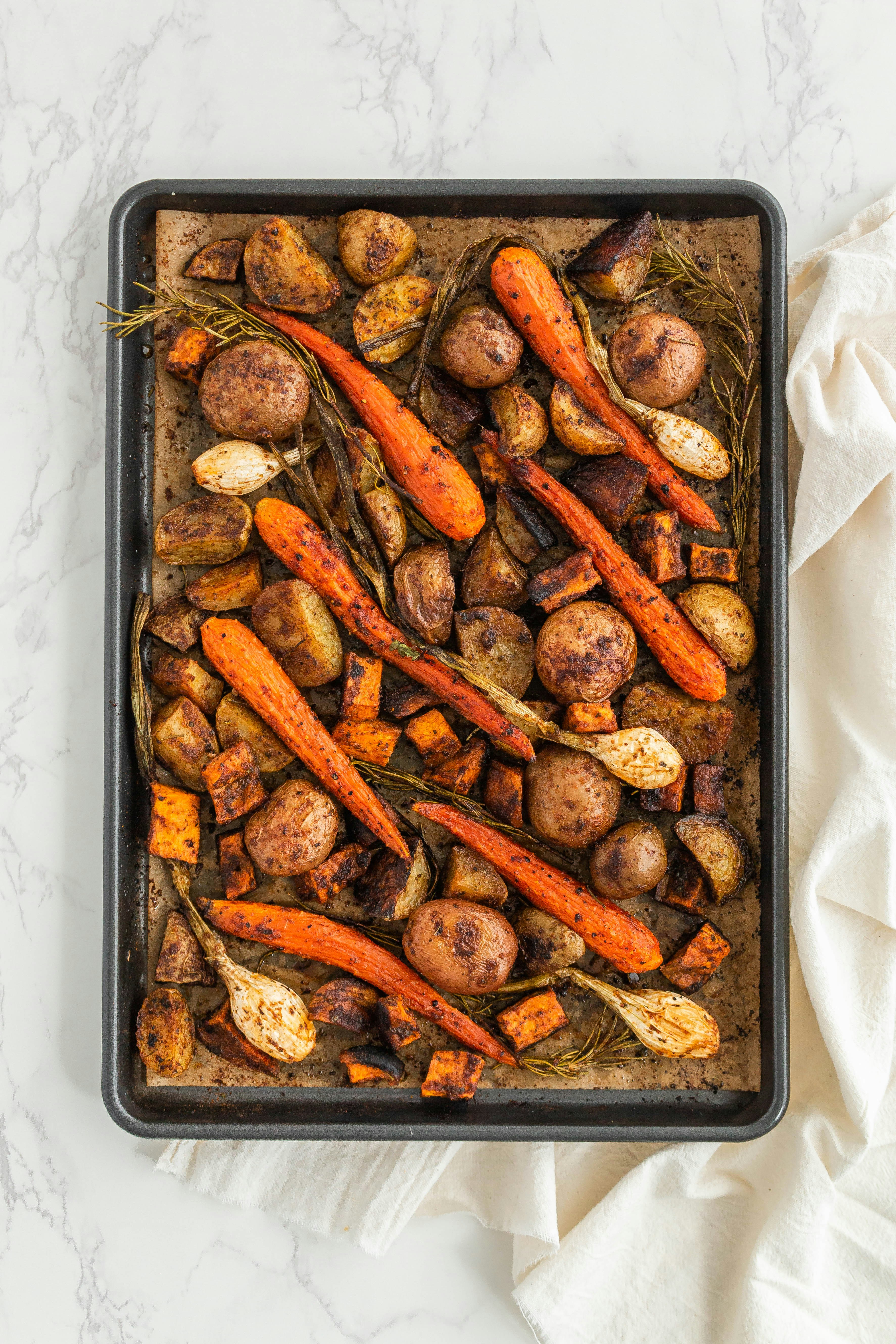
Meanwhile, available at your local farmers’ market or sitting in the “unsexy” corner of the produce aisle, root vegetables have been surviving for months with almost no energy input at all. Carrot, beet, parsnip, turnip, and rutabaga plants were harvested last fall and have been happily living dormantly in storage ever since—no airplanes required. This week, your one step toward sustainability is simple: build one winter meal around seasonal root vegetables.
The Food Pathway
This step follows the Food pathway in the Sustainable Practices framework—one of seven pathways toward a more sustainable life. The Food pathway focuses on what we eat, how we grow it, and the systems that bring it to our plates. Every food choice carries an environmental cost, but not all costs are equal. Choosing what’s naturally available in your climate and season is a low-effort, high-impact shift you can make every day.
Why Roots Win in Winter
Root vegetables evolved to be nature’s storage system. As temperatures drop in autumn, carrots and parsnips convert their starches into sugars—a kind of biochemical antifreeze that protects the plant from frost damage and, as a happy side effect, makes them taste sweeter. Beets concentrate betalains, the antioxidant pigments responsible for their deep ruby color. Turnips mellow from sharp and peppery into something almost buttery. Biology designed these vegetables to last through winter, and they do it brilliantly with minimal human intervention.
A carrot pulled from cold storage in February has probably been grown locally and is simply doing what it would do naturally: waiting for spring. Compare that to air-freighted asparagus, which is responsible for 16 to 19 times more fossil fuel being burned per unit of nutrition than locally produced, in-season alternatives, according to a lifecycle assessment published in Environmental Science & Technology. Even for the same type of vegetable, the gap between in and out of season can be dramatic: lettuce grown in season in an open field requires very little fossil fuel per head, while the same lettuce grown out of season in a heated greenhouse can require ten times as much fossil fuel, driven almost entirely by the energy needed to heat the greenhouse.
The point isn’t that you should never eat a strawberry in February. It’s that shifting even one meal a week toward what’s easily available in your region in every season adds up to a meaningful difference every year.
Your One Step This Week
If you live in a cold climate that’s experiencing winter, commit to making one root-vegetable-centered meal this week. Not a side dish where a few roasted carrots play backup to chicken, but a satisfying, stick-to-the-ribs meal where roots are the star. Here’s how to make it happen.
Visit your farmers’ market or co-op first. Many winter farmers’ markets across the northern United States are open through February and March, selling carrots, beets, potatoes, turnips, parsnips, and rutabagas that were harvested locally and stored without long-distance shipping. If you don’t have access to a winter market, look for locally or regionally grown root vegetables in the produce section of your grocery store. Even conventionally shipped domestic root vegetables have a far smaller ecological footprint than air-freighted produce from another hemisphere.
Pick two or three roots you enjoy—or one you’ve never tried. Carrots and potatoes are familiar territory. But have you roasted parsnips until they caramelize into something that tastes almost like honey? Or mashed rutabagas with butter and a pinch of nutmeg? Celeriac, that knobby, intimidating root, makes one of the silkiest soups you’ll ever eat. Winter is a wonderful season to expand your culinary horizons and spend time next to a warm oven.
Keep it simple. An easy path to a satisfying root vegetable meal is a sheet pan. Cut your roots into roughly equal-sized pieces, toss with olive oil, salt, and whatever spices appeal to you—smoked paprika, cumin, rosemary, or just black pepper—and roast at 425°F for 30 to 40 minutes until the edges go crispy and the centers turn soft. Serve over rice, alongside bread, or toss with cooked grains and a bright vinaigrette. A hearty root vegetable soup is just as straightforward: sauté an onion, add cubed roots, cover with broth, simmer until tender, and blend.
Think beyond dinner. Shredded beets and carrots make a vibrant winter slaw. Roasted root vegetables are excellent in grain bowls for lunch. Leftover mashed turnips or parsnips can be folded into pancakes or fritters for breakfast.
A Note on Timing: Maple Syrup Season Is Here
Speaking of seasonal eating, mid-February marks the beginning of maple sugaring season across New England and the northern United States. As daytime temperatures climb above freezing and nightfall drops back below 32°F, the sap starts flowing in sugar maples. The season runs from roughly late February through early April, and sugarhouses across Vermont, New Hampshire, Maine, Massachusetts, and New York are tapping trees right now. If you live in maple country, visiting a local sugarhouse is one of the great late-winter pleasures—and buying local maple syrup is another way to eat with the seasons. It takes about 40 gallons of sap to produce a single gallon of syrup, a process that has been a New England tradition for centuries. Drizzle it over those roasted root vegetables, and you’ve got a February meal that couldn’t be more local.
The Bigger Picture
Seasonal eating doesn’t require perfection. Nobody expects you to give up bananas or forgo coffee because it doesn’t grow in your zip code. The research is clear, though, that the biggest gains come from avoiding produce that requires either heated greenhouses or air freight to reach your plate out of season. Root vegetables, winter squash, stored apples, cabbage, kale, and onions are all available right now across much of North America with minimal transportation and energy costs.
When you build a meal around what’s in season, you’re doing more than reducing emissions. You’re supporting local and regional farmers who depend on winter sales to make it to spring. You’re eating vegetables at their nutritional peak, since root crops store their vitamins and minerals remarkably well. And you’re reconnecting with a rhythm of eating that humans followed for millennia before refrigerated container ships made every food available everywhere, all the time.
One root-vegetable meal this week. That’s your step. Make it delicious, and you might find it becomes a habit that lasts well beyond February.
For more on sustainable food practices—including meal planning, growing your own food, and reducing food waste—explore the Food pathway in the Sustainable Practices Handbook or visit www.suspra.com.
References and Resources
Li, M., Jia, N., Lenzen, M., et al. (2022). “Global food-miles account for nearly 20% of total food-systems emissions.” Nature Food, 3(6), 445–453. https://www.nature.com/articles/s43016-022-00531-w
Stoessel, F., Juraske, R., Pfister, S., & Hellweg, S. (2012). “Life Cycle Inventory and Carbon and Water FoodPrint of Fruits and Vegetables: Application to a Swiss Retailer.” Environmental Science & Technology, 46(6), 3253–3262. https://pmc.ncbi.nlm.nih.gov/articles/PMC3394405/
European Food Information Council. “Are seasonal fruit and vegetables better for the environment?” https://www.eufic.org/en/healthy-living/article/are-seasonal-fruit-and-vegetables-better-for-the-environment
Massachusetts Maple Producers Association. “Frequently Asked Questions.” https://www.massmaple.org/about-maple-syrup/frequently-asked-questions/
LocalHarvest — Find farmers’ markets and local food near you: https://www.localharvest.org