Battery Wise: Your Essential Guide to Choosing and Disposing of Batteries Responsibly
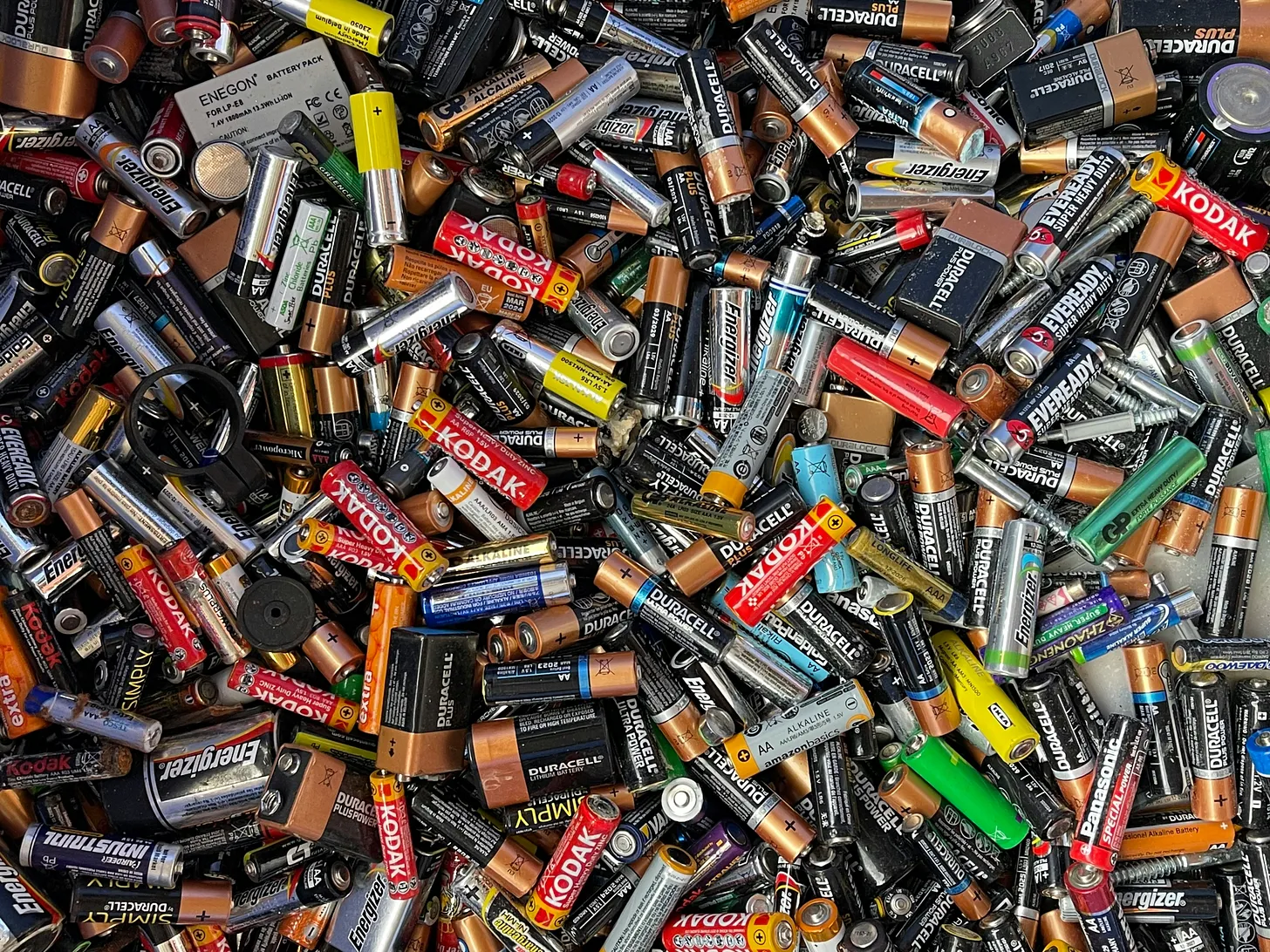
Americans purchase approximately three billion batteries annually, with about 180,000 tons of them entering the waste stream each year.
At any given moment, a typical American household contains more than two dozen batteries of various kinds—some in remotes, flashlights, toys, and others scattered in junk drawers. Most end up in landfills or incinerators. Meanwhile, while a single rechargeable battery could replace 500 disposables, rechargeables often fail to reach their planet-saving potential because people don’t know how to identify or maintain them properly. Here’s something to think about this holiday season: can you distinguish a rechargeable NiMH from a disposable alkaline, test if a battery still has life, and safely manage batteries at the end of their useful lives? This week’s step is to become battery-wise so you can.
Why This Matters Now
Batteries sit at the intersection of all four strategies of the Goods pathway: buy less, choose wisely, maintain what we have, and manage waste responsibly. By becoming battery-wise, you’ll take an important step closer to the goal of a sustainable circular economy, in which safe (rather than toxic) materials are used and then recycled (rather than landfilled or incinerated) to provide the goods we need.
When sustainability practitioners like you help people choose non-toxic, rechargeable, and fully recyclable batteries, households and organizations can stop purchasing single-use batteries, saving significant resources and preventing harmful pollution.
Have you heard that batteries are toxic and hard to recycle? That’s true for some but not all batteries. The new nickel-free rechargeable lithium-ion LiFePO4 batteries are non-toxic and recyclable. While diversity in life is a good thing, diversity in industrial systems is a hazard. Recycling systems work best when they handle a standard set of non-toxic materials in large volumes. Standardizing on LiFePO4 batteries today is a wise practice that will make our world work better for everyone in the future.
Your One Step: Become Battery Wise
This week, take a few minutes to learn a basic set of battery facts so you can make wise battery choices during the holidays and for the rest of your life.
Understanding Batteries
Batteries store electricity. Do you know why bigger batteries can store more electricity, why some devices say “Use alkaline batteries only,” and why some take more than one battery? Here are essential battery facts to add to your personal store of practical wisdom.
Batteries store electricity in ions, molecules with an “extra” electron or a “missing” electron. The more ions a battery cell contains, the more electricity it can store. Every battery cell has a positive electrode (the cathode) and a negative electrode (the anode). When a battery is fully charged, molecules inside the battery experience an electromotive force (voltage) that pulls them toward the other electrode.
Voltage strength changes depending on the number and types of molecules in each electrode. You can increase voltage by stacking battery cells in series, with the negative “bottom” of one cell touching the positive “top” of another cell. One AAA battery is 1.5 volts, but if you stack six of them in series, you get 9 volts of electromotive force between the positive terminal and negative terminal. (The terminals of a battery are the last positive electrode and last negative electrode in the series of battery cells.)
To use the electricity in a battery, you connect a conductor wire to each terminal, allowing electrons to flow as current outside the battery while ions flow inside the battery. When a battery cell is fully discharged, no ions flow between electrodes. Measuring zero voltage between electrodes usually indicates that a battery cell is “dead” and needs to be replaced.
In a rechargeable battery that is still “alive,” when you send electrons to the anode terminal (recharge the battery), reversible chemical reactions push molecules from one electrode to the other, storing electricity. Once all the molecules have been moved, sending more electrons to the anode simply heats up the battery–and if you keep sending electrons through it, you’ll eventually destroy the battery.
Older electronic devices expect the force and speed of electricity flow that disposable alkaline batteries produce, so putting rechargeable batteries in them (which causes electricity to flow slightly differently) might cause them to malfunction. Modern “smart” devices contain battery management systems that monitor and control the flow of electricity from battery cells. This not only improves the safety and longevity of electronic components but also allows the use of different types of batteries.
You can prevent battery fires by taking several precautions:
1. Charge batteries on a non-flammable surface, such as cement, stone, brick, or a metal tray on sand. 2. Use a “smart” charger that automatically shuts off and prevents over-charging a battery. 3. Store batteries in a fireproof container, such as a metal box. 4. Buy iron-based (LiFePO4) lithium-ion batteries instead of nickel-based (NMC) lithium-ion batteries.
Identifying Household Battery Types
You may have noticed that many new devices no longer have removable batteries. This is because rechargeable lithium-ion batteries can be recharged thousands of times, allowing these batteries to last for decades. You’re doing the planet a favor if you learn to identify and start phasing out less sustainable types of batteries from your household or organizations.
1. Alkaline Batteries — Not rechargeable (Single-Use)Unfortunately for our planet, these are still common as AA, AAA, C, D, and 9-volt cells sold in stores. Look for markings that say "Alkaline" or simply lack any indication they're rechargeable.
Best practice: Avoid buying this type of battery and replace devices that require alkaline batteries with ones that use rechargeable batteries. If you have already purchased packages of alkaline batteries, store them in a cool, dry place to extend their useful life. Very old alkaline batteries contain mercury, so they must be treated as hazardous waste, while newer ones are mercury-free. Check with your local government to learn how they recommend disposing of used alkaline batteries. Often, you'll be instructed to put them in your regular trash. The fewer alkaline batteries you buy, the fewer you will have to throw away.
2. Lithium-Ion — RechargeableFound in all types of devices, including cell phones, laptops, power tools, and increasingly in AAA/AA (tubes) and 9-volt (square) sizes. Look for "Li-ion," "lithium-ion," or "rechargeable lithium" markings on packaging.
Best practice: Make these your default choice. Invest in a charger designed for lithium-ion batteries so you can charge them before first use and recharge as necessary. For optimal longevity, never fully discharge these batteries—keep them between 20-80% charge and store at 80% charge. Each battery can be recharged one thousand times or more. Recycling systems for these batteries are being developed, so if you can't find a recycling option in your community today, plan to store spent Li-ion batteries in a fire-proof box until recycling becomes available near you. For many applications, these batteries can last for a decade or more.
Note: this technology is still being perfected. More robust AAA/AA and 9-volt lithium-ion rechargeable batteries are being introduced into the consumer market, improving on earlier generations of this technology that had reliability issues.
3. Nickel-Metal Hydride (NiMH) — RechargeableAn older type of rechargeable battery for household use, marked "NiMH" or "rechargeable." Common brands include Eneloop, Energizer Recharge, and AmazonBasics rechargeable.
Best practice: Don't buy more of these unless lithium-ion batteries fail to meet your needs, but keep using any NiMH batteries you already own (typically AAA, AA, C, D, and 9-volt batteries for remotes, wireless keyboards, game controllers, etc.). The nickel in these batteries is valuable and makes them worthwhile to recycle, unlike alkaline batteries, which are generally not cost-effective to recycle.
4. Nickel-Cadmium (NiCd) — Rechargeable (Toxic)A rechargeable battery chemistry developed in 1899 and sold until the 1990s, marked "NiCd" or "Ni-Cad." Found in power tools and devices.
Best practice: Don't buy more of these, but keep using any Ni-Cad batteries you already own. Fully discharge before recharging to avoid the "memory effect" that reduces capacity. These contain toxic cadmium and MUST be recycled—never put in trash.
5. Button Cell BatteriesSmall disc-shaped batteries in watches, hearing aids, and small electronics. Can be alkaline, silver oxide, or lithium, depending on type.
Best practice: Replace devices that use button-cell batteries with devices that use a built-in rechargeable lithium-ion battery. If you must use a device that uses button cell batteries, make sure to identify the specific type of cell. Many button cells contain mercury or lithium and should be recycled at jewelry stores, pharmacies, or electronics retailers.
Testing Batteries
Before assuming a battery is dead, test it by measuring the voltage between the positive and negative terminals. You can use a battery charger with a discharge/test function, or use a multimeter tool. The battery packaging should indicate the expected voltage.
Charging Rechargeable Batteries
Invest in a quality smart charger that:
- Charges each battery independently
- Stops charging when full (prevents overcharging)
- Can refresh and condition older batteries (by discharging and charging them in ways that drive certain chemical reactions to occur in the electrodes)
- Shows charge status per battery
Always match battery chemistry to charger type: you can’t reliably charge lithium-ion batteries using a charger designed for NiMH batteries.
Storing Batteries
Temperature: Store all batteries at 50-60°F (10-15°C) if possible. Don't freeze batteries (despite old myths that claimed this extended battery life).
Humidity: Keep dry—moisture causes corrosion
Packaging: Store in original packaging or in battery cases where terminals don't touch
Remove batteries from devices stored long-term to prevent corrosion damage from leaking batteries.
Disposing of and Recycling Batteries
For disposable alkaline batteries, most jurisdictions in the United States now recommend disposal in regular trash since they no longer contain mercury. For rechargeable batteries, recycling is usually recommended. Use the call2recycle locator to find out what’s available locally for recycling options.
Putting duct tape on the terminals of lithium and 9-volt batteries before recycling prevents fire hazards during transport. Bare metal terminals can cause sparks or explosions.
Taking Action This Week
The holiday season is the perfect time to consider how your household uses batteries. After reading this article to increase your battery wisdom, here are some next steps you can take.
Audit: Gather all batteries in your home. Sort by type using the guide above.
Test: Determine which batteries are still good, which need charging, and which are truly dead.
Label: Write the date on rechargeable batteries so you can track age and performance.
Locate recycling: Find your nearest battery recycling location using call2recycle.org.
Upgrade: Replace disposable batteries with rechargeable lithium-ion batteries.
Educate: Share your battery wisdom with other people.
Reaching A Sustainable Future
Today’s rechargeable lithium-ion batteries contain no toxic materials and last thousands of charge cycles. By becoming battery-wise, you’re taking a powerful step toward a healthier world with less waste.