Clean, Quiet, Always Ready: Rethinking Home Battery Backup Power
Whole-house battery systems provide cleaner, quieter backup power than fuel-burning generators
What happens in your home during a winter storm when the lights flicker across your neighborhood, then go out? Do you wait in the dark, hoping power comes back on before the food in your fridge goes bad and your pipes freeze? Do you dig out your gas generator and get it started with a cloud of exhaust? Or do you not even notice the utility grid failure while your home seamlessly transitions to battery power—silently, cleanly, instantly? With extreme weather events becoming more frequent and public power grids becoming less stable, backup power has shifted from a luxury to a prudent step for emergency preparedness.
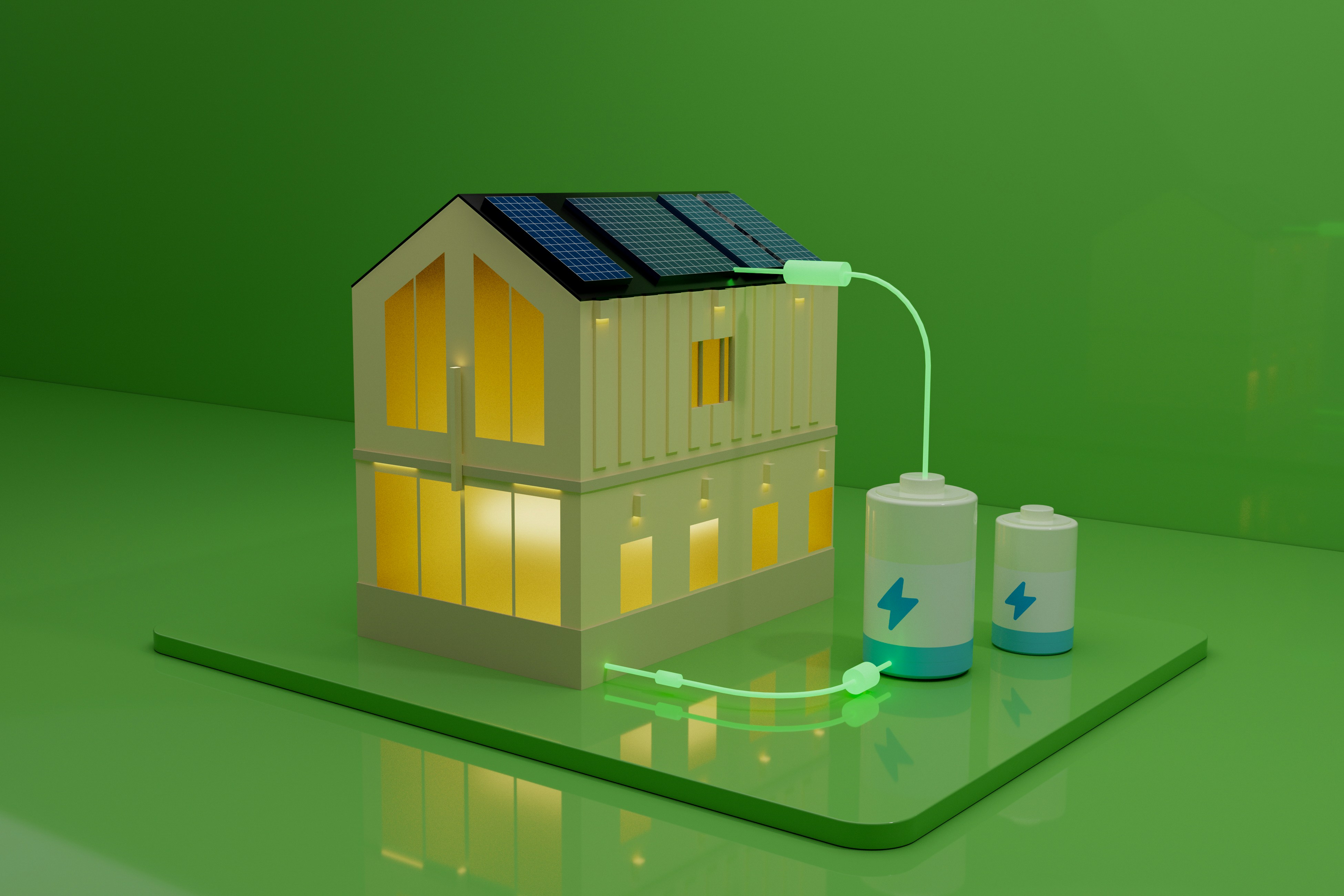
Traditional generators burn fossil fuels, polluting the air in your yard with carbon monoxide, nitrogen oxides, and particulate matter. Battery backup power, especially when paired with solar arrays, eliminates these emissions entirely while providing reliable electricity whenever you need it. With technology advancing rapidly and costs dropping, 2025 marks a turning point when large batteries are becoming more practical for more families.
Sizing Your Battery System: Getting It Right
The first step on the path to power without pollution is to know “How big should my whole-home battery be?” The answer depends on which loads you need to power for how long and how energy-efficient your systems are. To size your battery, you’ll need to understand two concepts:
Watts: how much power you need
Watt-hours: how long you need power
For example, if you want to run one old-fashioned 60-watt lightbulb, you need 60 watts of power. If you want to run that light for one hour, you need 60 watt-hours of electricity (60 watts times 1 hour). To have light for two hours, you’ll need 120 watt-hours (60 watts x 2 hours). Efficiency makes a huge difference: you can unscrew an old-fashioned incandescent 60-watt light bulb and screw in an LED to get the same amount of light for only 10 watts of power. Then, for 60 watts of power, you could run six lights instead of just one. For 120 watt-hours of electricity, you could get 12 hours of light instead of just two.
Step 1: Determine Your Daily Energy Usage
Electricity is sold by kilowatt-hour (kWh): each kWh is 1,000 watt-hours. The average American home uses approximately 30 kWh per day; however, your usage may be higher or lower, depending on factors such as climate, home size, appliance type (gas versus electric), and energy efficiency. Calculate your daily energy consumption by reviewing your energy bill over 12 months, choosing your highest-demand month, and then dividing by 30 to estimate daily usage. For example, if you use 900 kWh per month, your daily usage is approximately 30 kWh.
Step 2: Identify Critical vs. Whole-Home Backup
Critical Loads Only: Focus on essentials like refrigerator, lights, internet, medical equipment, and heating (non-electric only): probably one third or less of your electricity usage is essential (such as keeping food refrigerated), and two thirds or more is “nice to have” (such as drying laundry). Essentials typically require less than 10 kWh of battery capacity for 24 hours of backup. You can stretch this by being careful about your electricity usage while your home is running on battery backup or by upgrading to more energy-efficient systems in your home.
Whole-Home Backup: Power everything in your house, including large appliances and HVAC systems. This typically requires 30 kWh for 24 hours of runtime, depending on usage. Your daily usage, as calculated above, will serve as a guide for determining the amount of battery capacity you need to run all the appliances in your home, including dishwashers, laundry, and air conditioning.
Step 3: Account for Power Requirements
The power output rating of your battery system, measured in watts or kilowatts (thousands of watts), determines the number of appliances your battery can operate simultaneously. Peak power indicates the maximum power your battery can supply for short periods to start high-demand appliances, such as HVAC systems, well pumps, or electric dryers. Continuous power refers to the sustained power output your battery can maintain over extended periods.
Modern whole-house battery systems provide 10 kW or more of continuous power, with peak power of 15 kW or more for starting large appliances. This is usually sufficient because not everything in your home operates simultaneously. The electric motor in your refrigerator’s compressor, for instance, usually only runs for a few minutes every day, and most people don’t turn all the lights on in every room of their house at the same time.
Step 4: Account for Solar Power
If you have a solar array, it can recharge your batteries during the day. If you use 30 kWh per day and generate 30 kWh per day, you can be completely independent of the grid. In winter and during cloudy, foggy, rainy, or snowy weather, solar arrays will generate less electricity per day than during summer and sunny weather. If you have a solar array, you can track its electricity production over an entire year to gain an understanding of the range you can expect on a daily basis.
Selecting the Right System: What to Look For
With dozens of battery systems on the market, how do you choose the right one? Here are the key factors to consider:
Power and Capacity (Electricity Storage)
Whole-house battery backup systems typically cost between $15,000 and $40,000, installed in 2025. Leading systems include:
Tesla Powerwall 3: 11.5 kW power, 13.5 kWh electricity storage
FranklinWH aPower 2: 10 kW power, 15 kWh electricity storage
Enphase IQ Battery 5P: 3.84 kW power, 5.0 kWh electricity storage, modular design, easily expandable
Modularity and Expandability
Almost all modern systems allow you to add more power or more electricity storage over time. This flexibility lets you start small and expand as your needs grow or your budget allows.
Solar Integration
Battery backup systems can be charged from the electrical grid or solar arrays. If you already have a solar array, talk to a systems integrator to learn how to add battery backup to it. Your inverter may already be battery-capable, or you may need to upgrade it. To protect utility workers when power needs to be restored, some older inverters will block power flow through them when they detect a grid power outage, defeating your ability to use your solar array to charge your batteries during an emergency situation.
Warranty and Lifespan
Look for warranties that guarantee capacity retention (typically 70-80% capacity after 10 years) and provide clear throughput guarantees measured in megawatt-hours (millions of watt-hours).
Certification and Safety
UL 9540A certification helps ensure the battery lasts a long time and is fire-safe.
Installation and Maintenance: What to Expect
Installing a whole-house battery system is more complex than plugging in a portable generator.
Professional Installation Required
While many smaller battery systems offer plug-and-play installation, whole-house battery backup systems require professional installation due to electrical code requirements and safety considerations. Expect the installation process to involve:
Electrical panel modifications or upgrades
Installation of a transfer switch or backup controller
Battery mounting (indoor or outdoor, depending on model)
System commissioning and testing
Inspection by local authorities
Installation typically takes one or two days.
Minimal Maintenance
Unlike generators that require annual servicing, oil changes, and fuel management, battery systems need virtually no maintenance. Most manufacturers recommend:
Annual visual inspection
Software updates (often automatic via WiFi)
Cleaning of any exterior vents or cooling systems
Monitoring system performance through the manufacturer’s app
Financial Considerations: Costs, Savings, and Incentives
A federal 30% tax credit can significantly reduce costs, bringing a $20,000 system down to $14,000 after incentives. State and local incentives may provide additional savings. Check your local utility and state energy office for:
Cash rebates for battery installation
Time-of-use rate programs that reward battery owners
Demand response programs that pay you to help stabilize the grid
Operating Costs
Battery systems have minimal operating costs. If charged from solar panels, your energy cost is zero. Even when charging from the grid, electricity costs are typically far lower than those of generator fuel, and smart systems can charge during off-peak hours when rates are at their lowest.
Long-Term Value
Beyond backup power, battery systems provide additional financial benefits:
Peak shaving: Reduce electricity costs by using stored power during expensive peak hours
Solar self-consumption: Maximize the value of your solar panels by storing excess generation
Grid services: Some utilities pay battery owners to provide grid stabilization services
Home value: Battery systems increase property values, especially in areas with unreliable grids
Beyond Backup: Additional Benefits of Battery Systems
Whole-house batteries do far more than just provide backup power during outages. They’re versatile energy management tools that can transform how your home uses electricity.
Energy Independence
A well-sized solar battery system can provide seamless backup power when the grid goes down—offering increased energy independence. This is especially valuable in regions with frequent blackouts or for homes in rural areas. When paired with solar panels, you’re creating your own microgrid, reducing dependence on utility companies and fossil fuel infrastructure.
Peak Demand Management
During hot summer afternoons when electricity is most expensive, your battery can power your home using energy stored during cheaper off-peak hours. This “arbitrage” can significantly reduce your electricity bills, especially in areas with time-of-use rates, where peak electricity costs are many times higher than off-peak power.
Grid Stabilization
As power grids become more stressed, battery systems help balance supply and demand. Some utilities offer programs that allow your battery to be used automatically to help stabilize the grid during peak demand periods, providing you with compensation for this service while maintaining your backup power capability.
Making the Transition: Your Next Steps
Begin by calculating your critical loads and determining the actual amount of backup power you require. Use your utility bills to establish a baseline for energy consumption, then decide whether you need a whole-home backup or just backup for critical circuits.
Get Multiple Quotes
This calculation provides a starting point, but professional load analysis and system design ensure optimal performance and reliability. Contact at least three certified installers to:
Assess your electrical panel and home infrastructure
Recommend appropriate system sizes and brands
Provide detailed quotes, including installation and incentives
Explain warranty coverage and maintenance requirements
Plan for the Future
Battery technology continues to improve rapidly. Even if your budget is limited, you might:
Install the electrical infrastructure (backup panel, transfer switch) for future battery addition
Start with a smaller system and expand capacity later
Begin with a solar array and add batteries when prices drop further
Understanding Battery Backup Technology: How It Works
At the heart of every whole-house battery system lies a simple but powerful concept: storing electricity when it’s plentiful and releasing it when it’s needed. When grid power or solar power is available, the system charges its battery cells. When a grid power outage occurs, the system’s automatic transfer switch detects the loss within milliseconds and seamlessly switches to discharging cells to provide all the electricity that your home needs.
Think of a whole-house battery as a large pool of electric charges. It fills up from either the grid or sunlight. When the grid fails, your battery instantly becomes your home’s primary power source, keeping essential systems running uninterrupted. Unlike generators that create electricity by burning fuel, batteries simply release the electricity they’re storing—with no combustion, no emissions, and no noise.
Why Batteries Beat Generators: The Environmental Case
The environmental difference between battery backup and fossil fuel generators is dramatic and measurable. Fuel-burning generators emit local pollution, including deadly carbon monoxide, and produce noise when in operation. A battery backup system operates quietly and doesn’t burn any fuel: you don’t have to deal with exhaust fumes—a win for the environment, health, and safety.
Portable gas generators typically operate at 10 decibels louder than the recommended safety threshold; therefore, you should wear ear protection when starting them up and when in close proximity to them. By contrast, battery systems operate more than 20 decibels below the safety threshold, simply running a cooling fan to ensure their electronics don’t overheat. So you can carry on a normal conversation even right next to them while they are charging or discharging their cells.
Natural gas (methane) generators, often marketed as “cleaner” alternatives, emit less pollution than other types of fuel-burning generators. However, “cleaner” still means substantial pollution, including deadly carbon monoxide. Natural gas also introduces the possibility of catastrophic explosions that can destroy an entire home and kill people in the vicinity. There is no comprehensive national database that tracks all building explosions, making it hard to get an exact total count for any given year. The National Fire Protection Association estimates that natural gas ignites approximately 4,200 home fires annually, and fire departments respond to around 125,000 residential gas or propane leaks each year in the United States.
Battery systems paired with solar arrays entirely eliminate the risks of local air pollution and explosions, which are unavoidable risks associated with propane and natural gas systems.
The Revolution in Battery Chemistry: LFP Technology
Understanding battery chemistry is crucial for both performance and environmental impact. The battery technology revolutionizing home energy storage is Lithium Iron Phosphate, known as LFP (the "F" is for Fe, the atomic symbol for iron, derived from the Latin ferrum). Whole-home backup batteries use LFP because it is safe, stable, and reliable. This represents a dramatic shift from older lead-acid batteries, which contained lead (a toxic heavy metal) and required intensive maintenance, and from more recent lithium Nickel Manganese Cobalt (NMC) batteries, which could catch on fire and contained toxic and expensive cobalt.
Why LFP Chemistry Matters
LFP batteries offer enhanced safety, a longer lifespan, and a wider operating temperature range compared to other types of batteries.
Safety and Stability: LFP batteries contain an iron phosphate cathode and electrolyte material that does not break down or combust at high temperatures. Robust thermal management and protective measures are built into LFP home battery backups to resist thermal runaway—the chain reaction that can lead to battery fires.
No Toxic Heavy Metals: Lithium, iron, and phosphates are very common in the Earth’s crust, and none are considered toxic heavy metals.
Exceptional Longevity: LFP batteries can withstand over 6,000 charge cycles while maintaining 80% of their original capacity, resulting in approximately twenty years of reliable service. This longevity has profound environmental implications. A battery that lasts two decades means you won’t have to replace it every few years, dramatically reducing the manufacturing impact and waste associated with your backup power system.
Wide Operating Temperature Range: LFP batteries deliver reliable performance whether you’re in Maine’s freezing winters or Arizona’s scorching summers.
Comparing Battery Chemistries
While LFP dominates the residential market, you may encounter other battery types:
Nickel Manganese Cobalt (NMC): NMC lithium-ion batteries offer higher energy density, allowing for more compact system designs, which is critical in applications such as electric vehicles, electric boats, and electric aircraft. They require more sophisticated thermal management systems and are generally more expensive than LFP.
Lead-Acid Batteries: Traditional lead-acid batteries (invented in 1859, becoming a dominant battery technology for more than a century) remain an option for homeowners who prefer to stick with tradition. These batteries contain toxic lead, must be replaced much more frequently than LFP batteries, and are significantly heavier, less powerful per mass and volume, and less reliable. Over a 20-year operating period, they are more expensive than LFP batteries.
Understanding Battery Toxicity and Recyclability
While LFP batteries represent a major environmental improvement, it’s important to understand both their limitations and end-of-life considerations.
The Toxicity Question
The electrolyte (the liquid between the cathode and anode) in LFP batteries is typically lithium hexafluorophosphate and organic solvents, which can produce toxic hydrogen fluoride. The cathode is composed of lithium, iron, and phosphates, while the anode is typically made of carbon. The case is usually plastic. The current collectors are typically made from aluminum for the cathode and copper for the anode; however, research into lighter, more affordable metalized plastic current collectors is ongoing to reduce costs.
The key distinction: LFP batteries contain materials that require careful handling, but they lack the highly toxic heavy metals found in other batteries. The electrolytes and organic chemicals they contain are manageable hazards, not the persistent environmental poisons of lead-acid batteries or the conflict minerals of NMC lithium-ion chemistries.
The Recycling Reality
Battery recycling is an evolving field, marked by both challenges and promising developments. LFP batteries are economically challenging to recycle due to the absence of high-value metals, such as nickel and cobalt. The irony is apparent: the very characteristics that make LFP environmentally superior—no expensive metals, no rare conflict minerals—also reduce the immediate financial incentive for recycling them.
The bottom line: While LFP battery recycling infrastructure is still in development, these batteries are far more environmentally sound than their alternatives, both in use and at end-of-life. As the industry matures, recycling rates are expected to increase substantially.
The Bigger Picture: Batteries and the Clean Energy Transition
Your choice of backup power extends beyond your property line. Every battery system installed represents a meaningful step toward a cleaner, more resilient energy future. As battery adoption grows, several positive developments accelerate:
Recycling infrastructure improves, making end-of-life battery management more sustainable
Manufacturing costs decrease through economies of scale
Grid operators gain flexibility to integrate more renewable energy
Communities become more resilient to grid failures
When you choose a battery backup system over a fossil fuel generator, you’re voting with your wallet for cleaner technology. You’re supporting an industry that’s essential for transitioning away from fossil fuels. And you’re protecting your family’s comfort and safety without compromising your environmental values.
Your Power, Your Choice
The next thunderstorm, wildfire season, or winter freeze will test our electrical infrastructure. When it does, your backup power choice will matter—for your family’s comfort, for your neighbors’ air quality, and for our shared sustainable future.
Traditional generators will keep the lights on, but at what cost? The noise, fumes, fossil fuel consumption, and ongoing maintenance make them increasingly obsolete in a world demanding cleaner solutions. The question isn’t whether battery backup makes sense—it’s whether you’re ready to take this step toward energy independence and environmental responsibility. Every home powered by clean, battery-backed electricity moves us closer to a fossil-fuel-free future for our planet.
References and Resources
Battery Technology and Chemistry
EnergySage: Best Batteries for Whole-Home Backup in 2025 - Comprehensive comparison of battery chemistries and leading systems
EcoFlow: Things You Should Know About LFP Batteries - Technical explanation of lithium iron phosphate technology
Wikipedia: Lithium Iron Phosphate Battery - Detailed technical and historical information on LFP chemistry
Environmental Impact and Recycling
ScienceDirect: Environmental Impact of Recycling LFP Batteries - Research on environmental impacts of different recycling processes
Nature Communications: Battery Recycling Amid China’s EV Ambitions - Analysis of battery recycling’s role in resource security
MDPI: Circular Recycling Strategies for LFP Batteries - Review of hydrometallurgical recycling processes
ACS Energy Letters: Emerging Trends in Battery Recycling - Current challenges and future opportunities
Battery vs. Generator Comparison
EnergySage: Home Battery Backup vs. Generators - Comprehensive cost and environmental comparison
GreenLancer: Solar Battery vs. Generator Debate - Environmental impact assessment
U.S. EIA: Electricity and the Environment - Official data on power generation emissions
System Sizing and Selection
Whole House Battery Backup Guide 2025 - Complete installation and sizing guide
Briggs & Stratton: How to Right-Size Your Battery - Detailed sizing methodology
FranklinWH: Calculate Home Backup Battery Size - Load estimation techniques
Unbound Solar: Battery Bank Sizing Calculator - Off-grid system design principles
Leading Battery Systems
Tesla Powerwall - Official specifications and pricing
FranklinWH aPower - Modular whole-home battery systems
Enphase IQ Battery - AC-coupled battery storage
EcoFlow Whole Home Backup - Portable and whole-home solutions
Battle Born Batteries - LiFePO4 off-grid systems
Incentives and Financial Resources
Database of State Incentives for Renewables & Efficiency (DSIRE) - Comprehensive database of incentives by location