Power Your Life to 100% Clean Energy: From Less Waste to Solar Freedom
With a wise plan, most households can reach 100% solar power while saving money at each step
Your monthly electric bill shows a credit instead of a charge, your home runs entirely on clean electricity, and you're no longer burning any fossil fuel to heat your home or drive your car. Sound impossible? It's not only achievable—it's becoming the norm. Millions of homes now have rooftop solar and electric vehicles, and tens of millions have access to clean energy through community solar programs. With electricity prices rising and solar and battery costs plummeting, going 100% solar powered isn't just environmentally responsible—it's financially smart.
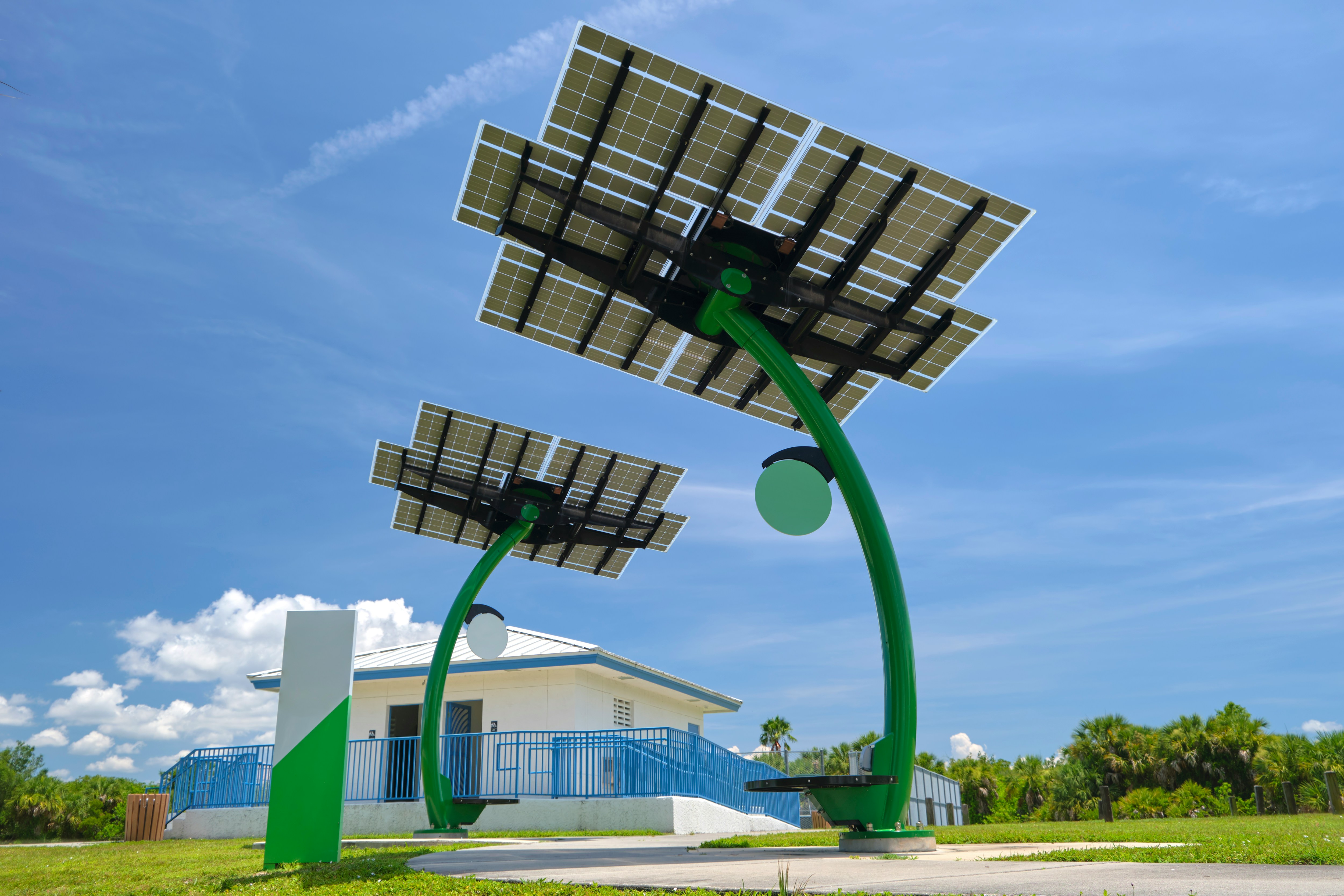
The path to energy independence involves three strategic steps: dramatically reducing your home’s energy waste by swapping out energy hogs and sealing air leaks and improving insulation, dramatically increasing your energy efficiency by upgrading from fossil fuel appliances to electric ones, and generating or purchasing clean electricity generated by solar arrays and stored in batteries. This isn't about returning to a pre-industrial lifestyle—it's about using the best of modern technology to live better on our beleaguered planet.
Understanding How Grid Power Really Works
Before diving into your personal clean energy action plan, let's demystify how the electrical grid works and why you can access solar power even without an array on your roof, over your driveway, or in your yard.
The Grid as a Giant Pool. If your home is connected to the public power grid, when you flip a switch, you're not getting electricity from a specific power plant—you're drawing from a shared pool. Every generating device (whether solar module or coal turbine) keeps this pool “full.” Every consuming device (whether a battery charger or refrigerator) drains from this pool. The grid operator monitors the level of the pool. Its job is to add electrons faster to the pool when the pool starts to dip or slow down the flow when the pool starts to rise. You could think of solar modules on your roof or in a distant solar farm adding “clean” electrons to this pool, while coal and gas plants add “dirty” ones. (In reality, every electron is exactly the same, but they get their force from a clean or dirty source.) The more clean electricity compared to dirty electricity added, the cleaner the entire pool becomes.
Net Metering Magic. When your rooftop solar produces more electricity than your home is using (typically during sunny midday hours), the excess flows back into the grid pool, running your meter backward and creating credits. At night, you draw those credits back. It's like having the entire electrical grid as your battery. If your electric utility allows full net metering, you can zero out your annual electricity bill even though you're still connected to the grid.
Community Solar: Your Share of the Sun. Don't own a sunny spot to put a solar module? Community solar programs let you subscribe to a portion of a large solar array and receive credits on your electric bill. Pay for a solar farm to generate clean electricity and have it delivered through existing power lines. It's like having a Community Supported Agriculture (CSA) box, but for clean electricity instead of vegetables.
Step 1: Waste Less - Your Foundation for Success
Starting with waste reduction is crucial because every kilowatt-hour of electricity you don't use is one you don’t have to generate or buy. Most homes can cut overall energy consumption in half with strategic improvements.
Quick Start Energy Waste Wins:
LED lighting conversion saves energy and reduces cooling loads during summer
Smart power strips eliminate vampire loads from electronics
Programmable thermostats, with proper use, save on heating and cooling costs
Air sealing around windows, doors, and electrical outlets prevents energy waste equivalent to leaving a window open year-round
Major Energy-Saving Investments:
Insulation upgrades in attics, basements, and walls
High-efficiency windows to replace old single-pane windows
ENERGY STAR appliances when replacing old models
Pro Tip: Your biggest energy users are heating, cooling, and water heating, making them the highest-impact candidates for improvement.
Step 2: Electrify Everything - Ditch Burning Fuel at Home
The second step involves replacing fuel-burning appliances with efficient electric upgrades.
High-Impact Electrification Priorities:
Heat pumps for heating to replace electric baseboard heaters or fuel-burning furnaces
Heat pump water heaters to replace fuel-burning or conventional electric ones
Induction cooking to replace gas stoves or conventional electric stoves
Electric vehicles to replace fuel-burning vehicles
Understanding the Timeline: Plan ahead by researching electric upgrades for your current gas appliances, ensuring adequate electrical capacity, and taking advantage of available incentives.
Financial Strategy: Federal tax credits, state rebates, and utility incentives can cover some electrification costs. Check with your accountant about your tax situation.
Step 3: Go Solar - Your Clean Electricity Options
With efficiency improvements and electrification complete, you're ready for the final step: going 100% solar. You have several excellent options, regardless of your housing situation.
Option A: Rooftop Solar (Best Financial Returns)
Is Your Home Solar-Ready? Ideal conditions include:
Sun-facing roof sections with no shade
Roof in good condition (less than 10 years old or recently inspected)
Enough space for 20 modules
If you don’t have a suitable roof, you can build a solar carport, shade structure, or ground-mounted array.
Financial Benefits: If you borrow money over 30 years using your property as collateral, you should save more each month on your electricity bill than you pay each month on your solar loan, making this a cash-flow-positive investment from the start.
Installation Process:
Get quotes from qualified installers (a good place to start looking is EnergySage)
Compare quotes and ask lots of questions
Understand your utility's net metering policy (give your power company a call) before signing contracts
Option B: Community Solar (Perfect for Renters)
How It Works: Subscribe to a portion of a solar farm and receive credits on your electricity bill. You're buying a share of the output of a solar array and taking delivery of electricity from the public grid.
Availability: Currently available in 22 states plus the District of Columbia (see Does Your State Have Community Solar? Find Out Here).
Financial Benefits: Most programs offer a discount on electricity compared to utility rates, with no upfront costs and the flexibility to cancel when moving.
Finding Programs: Check EnergySage Community Solar or contact your utility directly about available programs.
Option C: Green Power Programs and RECs
If community solar isn't available in your state:
Utility green power programs let you purchase renewable electricity directly from your utility, typically for a small premium (an extra cost of $0.01-0.03 per kWh)
Renewable Energy Certificates (RECs) represent the environmental attributes of renewable electricity and can be purchased separately
Third-party green electricity suppliers in deregulated markets offer 100% renewable electricity plans
Verification: Look for Green-e certified programs to ensure you're purchasing legitimate renewable energy, not just marketing claims.
Seems Crazy, But It’s True: It can be more expensive to buy solar electricity from a utility company’s green power offer than to buy solar electricity from a community solar project. If a state does not permit community solar power, opting for the green power offer through the utility program makes solar power more expensive for those buyers. The general rule: community solar is more affordable than regular utility power; utility green power is less affordable than regular utility power. Solar advocates are working to bring the benefits of community solar to more people in more states.
Creating Your Personal Clean Energy Timeline
Year 1: Foundation Building
Complete a home energy audit (many utilities offer free audits)
Install LED lighting, smart power strips, and programmable thermostats
Research solar options and sign up for community solar if available
Plan major appliance replacements with electric alternatives
Years 2 and 3: Major Investments
Install insulation, air sealing, and efficient windows as your budget allows
Replace aging HVAC systems with heat pumps
Install rooftop solar or expand community solar subscription
Upgrade to electric vehicles
Years 4 and 5: Completion and Freedom
Replace remaining gas appliances with electric ones
Add battery storage for energy independence
Share your success story to inspire others!
The Economics of Clean Energy Independence
Upfront Investment Reality: Achieving 100% clean energy typically requires smart investments over several years. Improvements pay for themselves through energy savings.
Long-term Savings: The savings accrue over 30 years, making 30-year mortgages the perfect financial instrument to realize the benefits of long-term saving immediately. Your energy savings should be greater than your loan payments, putting money in your pocket right away and continuing every month forever. Clean energy is a chance to permanently lower your energy costs.
Financing Options:
Property Assessed Clean Energy (PACE) loans are connected to your property tax bill
Utility on-bill financing allows monthly payments through your electric bill
Personal loans often offer competitive rates for energy improvements when secured by real estate (a mortgage or home-equity line of credit)
Solar loans specifically designed for renewable energy installations
Your Clean Energy Action Plan Starts Now
The transition to 100% clean energy isn't a distant dream—it's happening in families around the world today. Homeowners who started their journey five years ago are now enjoying free electricity, cleaner air, and the satisfaction of energy independence.
Start this week by taking one concrete action: schedule a home energy audit, get your first solar quote, research community solar in your area, or simply replace five old light bulbs with LEDs. Each small step builds momentum toward the bigger changes that will transform how you power your life.
The technology exists, the economics work, and the environmental benefits are undeniable. The only question is: when will you begin your journey to clean energy independence? The best time to start was five years ago. The second-best time is right now.
References and Resources
Solar Installation and Financing
EnergySage Solar Marketplace - Compare solar quotes and installer ratings
Database of State Incentives for Renewables & Efficiency (DSIRE) - Comprehensive database of rebates, incentives, and policies
Solar Energy Industries Association (SEIA) - Market data and policy information
Community Solar and Green Power Programs
EnergySage Community Solar - Find and compare community solar programs
Green-e Energy Certification - Certified renewable energy products and verification
EPA Green Power Partnership - Information on utility green power programs
Energy Efficiency and Electrification
ENERGY STAR - Efficiency standards, product databases, and home improvement guidance
Rewiring America - Comprehensive electrification guidance and incentive calculator
Financial Incentives and Programs
Inflation Reduction Act Savings Calculator - Federal tax credit and rebate eligibility
PACE Nation - Property Assessed Clean Energy financing information
Technical Standards and Certification
North American Board of Certified Energy Practitioners (NABCEP) - Solar installer certification verification
Interstate Renewable Energy Council (IREC) - Model policies and best practices for renewable energy