Chill Without the Bill: Sustainable Cooling
Air conditioning can demand nearly 70% of residential electricity during summer heat waves—but passive cooling techniques can cut your need for A/C by 30% or more
Consider this heat wave scenario: it’s 95°F outside, your air conditioner is humming at full blast, and your electricity meter is spinning like a roulette wheel. Across your neighborhood, dozens of A/C units are working overtime, straining the public electrical grid. Meanwhile, just a few blocks away, a cleverly designed home stays comfortably cool using nothing more than smart landscaping, strategic window placement, thermal mass (the ability of a building’s material to absorb, store, and release heat energy), and the natural physics of airflow. As summers intensify, the question isn’t whether we need to stay cool—it’s whether we can do it without cooking our planet in the process.
The Costs of Cooling
Air conditioning has become so ubiquitous that we rarely question its environmental impact. In the United States, cooling accounts for approximately 12% of total home energy expenditures and nearly 70% of peak residential electricity demand during heat waves. A typical “three-ton” (36,000 BTU per hour) central air conditioning system demands about 2,500 watts of electric power, equivalent to illuminating 250 bright LED bulbs simultaneously.
The International Energy Agency projects that the number of air conditioning units worldwide will triple by 2050, potentially making cooling one of the top drivers of global electricity demand. This surge in cooling creates a vicious cycle: more air conditioning means increased electricity consumption, which could lead to more fossil fuel burning, contributing to global warming, and ultimately, a greater need for cooling. Breaking this cycle requires rethinking how we maintain our homes' comfort as well as how we generate electricity.
Note: When considering home energy expenditures, Sustainable Practice can also help with that. In our series of short booklets, “From Good Intentions to Effective Action on Pathways to Sustainability,” we have written “Money That Matters: Your Guide to Sustainable Finances.” From basic financing to expert steps toward more sustainable money practices, visit our resources site at suspra.com and order our 24-page booklet at a very reasonable price.
The Science of Staying Cool Without A/C
Human thermal comfort depends on more than just air temperature. Humidity, air movement, radiant heat from visible surfaces, and our clothing and activity level all influence the “feels like” temperature that our bodies experience. Understanding these factors reveals multiple pathways to comfort that don’t require an air conditioner.
Heat transfer works four ways: conduction (direct contact), convection (air movement), radiation (photons), and evaporation (moisture removal). Traditional air conditioning uses mechanical force to transfer heat using radiation and convection, but passive cooling techniques can harness all four heat transfer methods using natural physics rather than electricity.
The stack effect: Warm air naturally rises while cool air sinks, creating natural ventilation when properly channeled through strategically placed openings. This principle can move air through a home without the use of fans, creating cooling breezes that make 80°F feel comfortable.
Thermal mass: Dense materials, such as concrete, stone, or tile, can absorb heat during the day and release it slowly at night, thereby moderating temperature swings. A well-designed thermal mass system can keep indoor temperatures 10-15°F cooler than outdoor peaks.
Quick Wins: Immediate Cooling Relief
Start with these simple strategies that require no investment but can provide immediate relief:
Create cross-ventilation. Open windows on opposite sides of your home during cooler morning and evening hours to create natural airflow. Even a slight breeze can make 78°F feel as comfortable as 72°F with air conditioning. Close windows and use interior shades during the hottest part of the day to trap the cooler air inside.
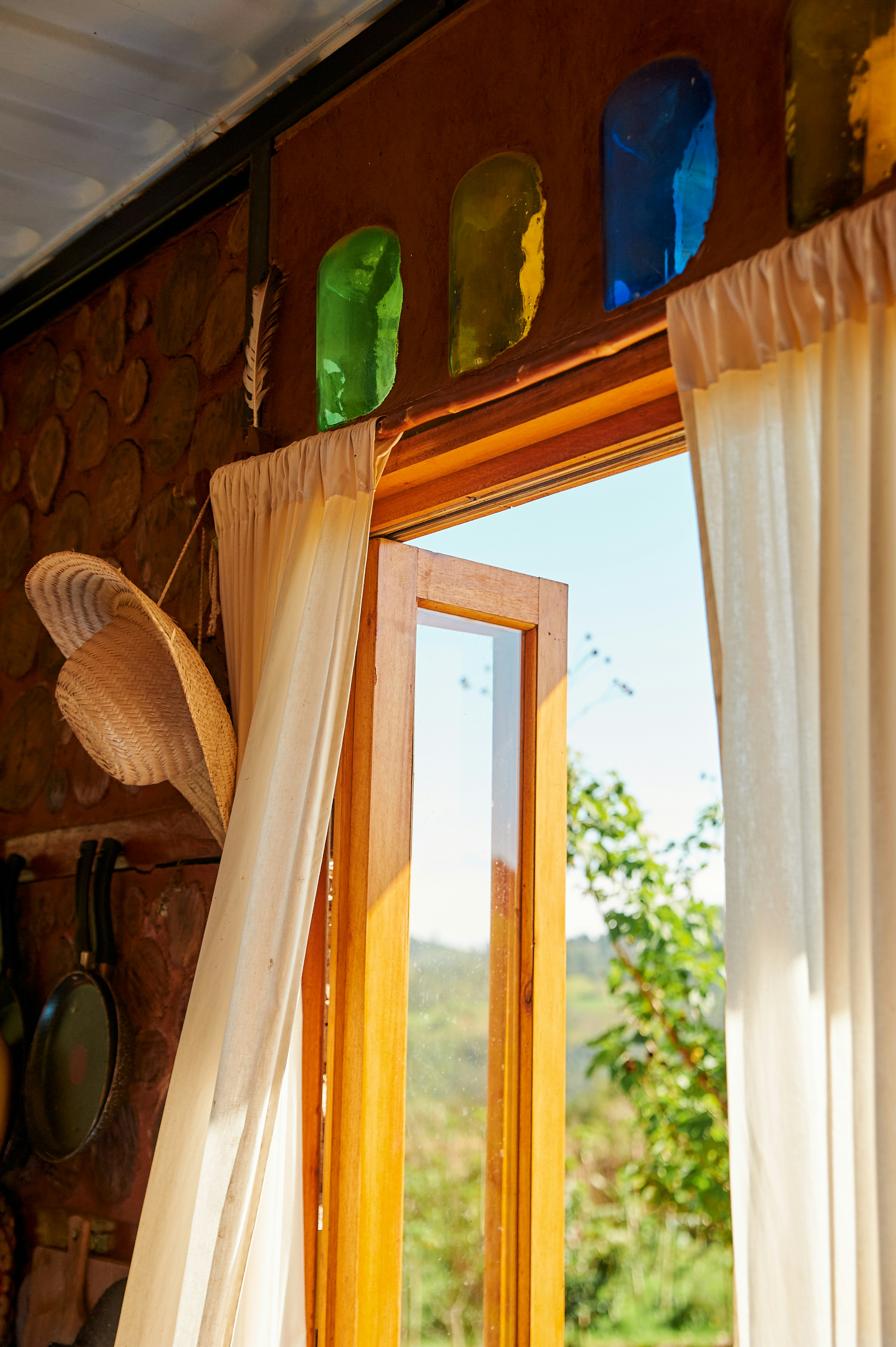
Use the “thermal chimney” effect. Open windows at the lowest and highest points of your home to create natural air circulation. Hot air will rise and exit through upper windows, drawing cooler air in through lower openings. This can create a refreshing breeze throughout your home without any electricity.
Block solar heat gain. Close curtains, blinds, or shades on south- and west-facing windows during peak sun hours (10:00 AM to 6:00 PM). This simple action can reduce indoor temperatures by 10-15°F by preventing solar radiation from heating your interior surfaces.
Switch to fans strategically. Ceiling fans use only 10-120 watts compared to 2,000 to 4,000 watts for central air conditioning. A fan moving air at just 2 mph allows you to feel comfortable at temperatures 6-8°F higher than still air.
Intermediate Solutions: Modest Investments, Major Impact
These approaches require some planning and minimal investment but can significantly reduce your cooling energy needs:
Install reflective window film. Window films can reject up to 80% of solar heat while still allowing natural light through. This invisible upgrade can reduce cooling costs by up to 25% by preventing heat from entering your home in the first place.
Add exterior shading. Awnings, exterior blinds, or shade sails block solar heat before it reaches your windows—far more effective than pulling shades inside your windows. Strategic exterior shading can reduce indoor temperatures up to 20°F during peak heat. Temporary solutions, such as outdoor umbrellas positioned over windows, can provide significant relief during the midday peak hours of heat waves.
Upgrade to whole-house fans. These powerful fans mounted in your attic or upper floor can pull hot air out of your home while drawing cooler outdoor air through open windows. A whole-house fan uses less than 600 watts while moving enough air to cool an entire home when outdoor temperatures are lower than indoor temperatures. They’re most effective in climates with cool nights.
Implement evaporative cooling. In dry climates (in which relative humidity stays below 60%), evaporative coolers (also called swamp coolers) can reduce air temperature up to 40°F while using 75% less energy than conventional air conditioning. Even simple DIY versions—like placing a damp towel in front of a fan—can provide significant cooling relief.
Insulate strategically. While often overlooked in cooling discussions, proper insulation keeps hot air out just as effectively as it keeps warm air in during winter. Focus on attic insulation first, to slow heat radiating down from a hot roof. Attic ventilation combined with insulation can reduce cooling loads by 20%.
Advanced Strategies: Designing for Natural Cooling
When you’re ready to make a larger investment in home modifications, these approaches can dramatically reduce air conditioning needs:
Create thermal mass cooling systems. Install tile, concrete, or stone floors that can absorb heat during the day and release it slowly at night. Dense materials moderate temperature swings and can be combined with radiant cooling systems that circulate cool water through pipes embedded in the thermal mass.
Plant strategically for microclimate control. Deciduous trees on the south (for homes in the northern hemisphere) and west sides of your home can block up to 90% of solar radiation in summer while allowing warming sun through in winter. Mature shade trees can reduce surrounding air temperatures up to 8°F through evapotranspiration. Vines growing on trellises can create living shade while allowing air circulation.
Install a cool roof. Light-colored or reflective roofing materials can reduce roof surface temperatures up to 60°F compared to dark roofs. Cool roofs can reduce air conditioning energy use up to 30% and extend roof lifespan by reducing thermal stress.
Design natural ventilation systems. Strategically placed windows, vents, and even simple wind towers (sometimes called “windcatchers” or “wind scoops”) can create powerful natural cooling systems. The key is understanding prevailing wind patterns and designing openings to capture and channel beneficial breezes.
Employ the Earth for cooling. Ground temperatures remain relatively constant year-round (typically 55°F at 7 feet deep), making earth-coupled systems highly effective for both heating and cooling. While geothermal heat pumps require significant investment, simpler earth tubes or ground-coupled air systems can provide substantial cooling benefits at a lower cost.
Expert Level: Integrated Passive Cooling Design
The most effective passive cooling systems integrate multiple strategies:
Implement stack ventilation with thermal zoning. Design your home so that heat-generating activities (cooking, electronics) are located in areas with dedicated ventilation paths that don’t affect living spaces. Combine this with thermal zoning, which utilizes natural air stratification to maintain comfort in occupied areas while allowing hotter air to concentrate and exhaust in designated zones.
Create night flush cooling systems. Use automated window openers, whole-house fans, and thermal mass to capture cool night air and store the cooling effect through the following day. Studies show that night flush cooling can maintain comfortable daytime temperatures even when outdoor highs reach 100°F, provided nighttime temperatures drop below 70°F.
Design for wind and solar orientation. Orient your home to capture cooling breezes while minimizing exposure to afternoon sun. Utilize building design elements, such as overhangs, clerestory windows (located above eye level), and courtyards, to create natural cooling effects. Properly designed passive solar features can reduce cooling loads by 80% compared to conventional construction.
Integrate renewable energy with efficient cooling. Combine solar modules with high-efficiency heat pumps or mini-split systems (a type of HVAC system that provides heating and cooling without the need for ductwork) that provide cooling only when and where needed. Solar electricity production peaks coincide with cooling demand, making this an ideal pairing.
Benefits of Sustainable Cooling
The financial benefits of passive cooling strategies compound over time. Compared to other potential investments, many passive cooling projects generate a competitive return on investment through reduced energy bills.
More importantly, passive cooling strategies add resilience to your home. During power outages or extreme heat events that strain the electrical grid, homes designed for natural cooling remain safe while conventionally cooled homes become dangerously hot. This resilience has real value as extreme weather events become more frequent.
Passive cooling works exceptionally well in dry climates and areas with significant day-night temperature swings. In humid climates, dehumidification becomes crucial, though many strategies (like thermal mass and air movement) still provide substantial benefits when combined with efficient mechanical systems.
Beyond Individual Action: Community Cooling Solutions
Sustainable cooling extends beyond individual homes to neighborhood and community-scale solutions. Urban heat islands—where cities become significantly hotter than surrounding areas due to the presence of pavement, buildings, and a lack of vegetation—can be addressed through community-wide strategies.
Green infrastructure, including community trees, parks, and green roofs, provides cooling benefits that extend beyond individual properties. A single mature tree can save hundreds of kilowatt-hours of electricity every year.
Cool pavement programs: Light-colored or permeable paving materials can reduce neighborhood temperatures by 5°F compared to conventional dark asphalt.
Community cooling centers: Shared spaces with efficient cooling can provide relief during extreme heat while using less total energy than individual home air conditioning.
A Cooler Future Starts with Smart Choices
As this summer’s heat intensifies, remember that staying cool doesn’t have to mean cranking up the air conditioning. The most sustainable cooling system is often the one you don’t need to run, because you’ve designed natural comfort into your living space. However, you may not be able to eliminate all mechanical cooling—in many climates and situations, some air conditioning remains necessary for health and safety reasons. Instead, the goal is to minimize dependence on energy-intensive cooling while maximizing the natural cooling potential of your home and landscape.
This week, challenge yourself to implement one passive cooling strategy before resorting to air conditioning. Whether that’s opening windows for cross-ventilation, installing reflective window film, or using a fan to circulate air, your actions create measurable energy savings while building resilience for our warming world. Every degree you can comfortably adjust on your thermostat represents a meaningful step toward sustainable cooling and a healthier planet.
Resources and Further Reading
Government Resources and Energy Data
Australian Government: Passive Cooling - Comprehensive guide to passive cooling strategies
EPA ENERGY STAR: Heat & Cool Efficiently - Tips for efficient cooling
IEA: The Future of Cooling - Global analysis of cooling energy demand and emissions
Lawrence Berkeley National Laboratory: Cool Roofs - Research and guidelines on reflective roofing materials
Natural Resources Canada: Heating and Cooling With a Heat Pump - Canadian guide to heat pump systems
US Department of Energy: Home Cooling Systems - Tips for cooling systems and operations
Practical Implementation Guides
Efficiency Vermont: 9 Tips to Keep Your House Cool Without Air Conditioning - Energy-efficient cooling strategies
Family Handyman: How to Keep Your House Cool in the Summer - Practical tips for reducing cooling costs
Family Handyman: Natural A/C - Best Ways to Cool Without Air Conditioning - Creative cooling solutions
Family Handyman: How to Remove Hot Air from a Room - DIY air cooling techniques
Real Simple: How to Cool Down a Room Without AC - Practical cooling tips
Southern Living: How To Cool Down A Room Without Air Conditioning - Regional cooling strategies for hot climates
This Old House: Ten Easy Ways to Cool Your Home - DIY cooling strategies for homeowners
Today's Homeowner: How to Cool a House Without A/C - Comprehensive guide to non-AC cooling methods
Natural Cooling and Passive Design
Arch2O: Passive Cooling Systems For Sustainable Architecture - Guide to passive cooling design principles
WBDG: Natural Ventilation - Technical guidance on natural ventilation design
WBDG: Sun Control and Shading Devices - Guide to shading and solar control
Research and Technical Information
Building America Solution Center: Passive and Low-Energy Cooling - Technical guide to passive cooling implementation
Building Science Corporation: Balanced Ventilation Systems - Technical information on ventilation for cooling
Building Science Corporation: Natural Ventilation Research - Comprehensive review of residential ventilation technologies
Sustainable Practice is dedicated to providing practical, science-based guidance for protecting our planet. Share this article to help friends and family discover energy-efficient ways to stay cool this summer.