Sprinklers, Streams, and Sustainability: Rethinking Lawn Irrigation
Up to 25,000 gallons of water annually can be wasted by each automatic landscape irrigation system that isn’t properly maintained
Picture this: it’s 6 am, and while you’re just waking up, your neighbor’s sprinkler system kicks on, sending water cascading not just across their freshly sodded lawn, but down the street in a miniature river that could fill a swimming pool. You’re witnessing one of suburbia’s most wasteful rituals—the automatic irrigation of landscapes that often need far less water than they receive.
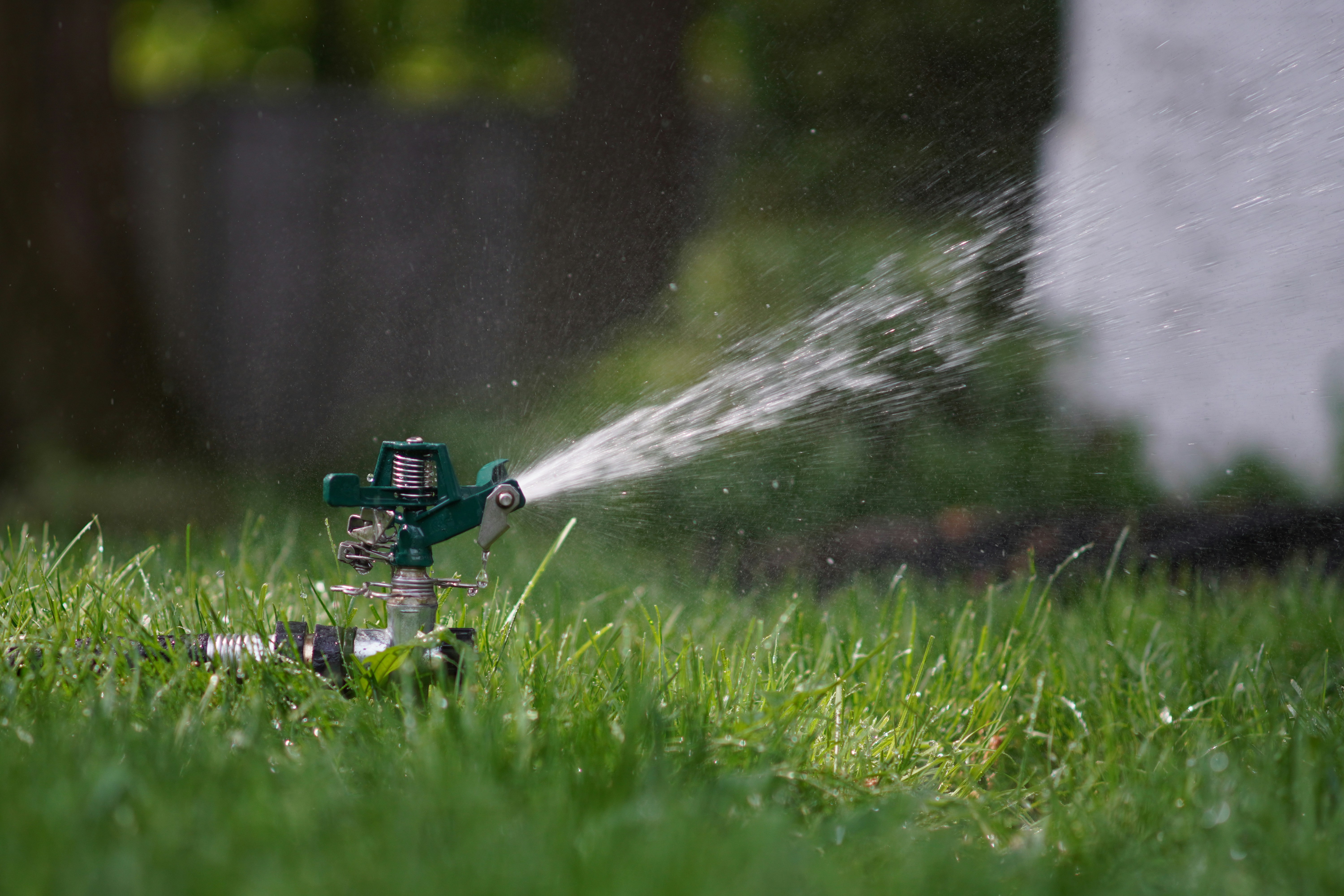
“Smart” irrigation systems promise an easy technological solution to water waste, but the reality is more complex. While these systems do save water when properly designed, installed, and maintained, they often encourage homeowners to double down on maintaining resource-intensive landscapes that would be better replaced with water-wise and planet-protecting alternatives.
The Environmental Cost of Lawn Irrigation
Outdoor water use accounts for more than 30 percent of total household water use, on average, but can be as much as 60 percent in arid regions. In the United States, outdoor water use alone averages over 9 billion gallons of water per day, primarily for landscape irrigation. As much as half of the water we use outdoors is lost due to wind, evaporation, and runoff caused by inefficient irrigation methods and systems. That’s billions of gallons of water that we spend our limited time and money every day to pump through pipes for no good reason.
The waste doesn’t stop with the water itself. Lawn maintenance accounts for an estimated 90 million pounds of herbicide (not to mention pesticides) and more than 800 million gallons of gas consumed annually for mowers and other outdoor tools. Runoff from these polluted landscapes compromises wetland and fish habitats. When we water lawns excessively, we’re not just wasting water—we’re perpetuating a system that consumes resources and produces pollution to maintain a diminished ecosystem that harms biodiversity.
The Smart Irrigation Dilemma
Smart irrigation systems represent a technological solution to the water waste problem. Under ideal conditions, they deliver significant water savings: controlled research studies indicate water savings from 30 to 50 percent compared to “dumb” irrigation systems. For example, replacing a clock-based controller with a WaterSense-labeled irrigation controller can reduce a home’s irrigation water use by up to 30 percent, saving up to 15,000 gallons of water annually.
However, these impressive numbers come with important caveats. Smart irrigation systems only work as well as they’re programmed, maintained, and monitored. In the real world, thousands of gallons can still be lost due to problematic leaks that are not detected when irrigation runs at night or at unattended sites.
More fundamentally, smart irrigation systems create a false sense of environmental stewardship. They make it easier to maintain water-intensive landscapes rather than prompting homeowners to question whether they need irrigated lawns at all.
Simple Steps: Improving Your Current System
If you currently have an irrigation system, here are immediate actions you can take to reduce waste:
Test your system regularly. If the average-sized lawn in the United States is watered for 20 minutes every day for 7 days, it’s like taking more than 800 showers. Walk around during operation to ensure water is hitting plants, not pavement, buildings, or streets.
Install a rain sensor. Rain sensors work to prevent irrigation systems from running during rainy conditions. These simple devices, costing less than $200, can prevent the waste of thousands of gallons of water annually.
Adjust timing and frequency. Daily watering is wasteful and is not healthy for your lawn. It encourages top growth at the expense of root growth. Water deeply once or twice a week to enable plants to develop strong root systems that extract water from the soil more efficiently.
Check for leaks monthly. A hidden underground pipe break or malfunctioning sprinkler head can waste thousands of gallons before being noticed as a spike on a water bill. A typical household leak can waste nearly 200 gallons per week.
Intermediate Steps: Strategic System Upgrades
For those ready to make more significant improvements:
Install soil moisture sensors. Compared to irrigation systems running on a set schedule, systems with soil moisture controllers had an average 72 percent irrigation savings and a 34 percent water savings during drought conditions. These sensors cost a few hundred dollars but can dramatically reduce overwatering by only irrigating when the soil actually needs moisture.
Upgrade to drip irrigation for gardens and shrubs. Water-saving drip systems deliver a metered drop of water from carefully positioned emitters directly to plant root zones. This technique can be integrated into most irrigation systems as one or more zones that water exactly where, when, and how much a plant needs with very little runoff or evaporation loss.
Create irrigation zones based on plant needs. Break up your lawn and plant areas in your smart irrigation system programming into “zones” that have different watering needs. Trees, shrubs, and different types of plants often need different amounts and frequencies of water.
Time watering strategically. The best time of day to water your lawn is early in the morning, between 4 am and 7 am. This allows the water to penetrate the soil and reach the roots before the sun comes up and evaporates the moisture.
Advanced Practice: Rethinking the Lawn
The most sustainable approach to lawn irrigation is to eliminate or dramatically reduce the need for it entirely. This involves transitioning to landscapes that thrive on natural rainfall.
Reduce lawn area by half. University of Delaware professor Doug Tallamy suggests cutting the grass on your property in half, replacing that space with trees, native plantings, or a small water feature. Even this modest change can significantly reduce water demand while creating habitat for wildlife.
Plant native alternatives. Look no further than native plants for a landscape that doesn’t need irrigation. Look up your Native Plant Society—every state has one. Native plants have evolved to thrive in your local climate conditions using only natural rainfall.
Consider clover lawns. Unlike grass, clover naturally fixes nitrogen in the soil, reducing fertilizer requirements. The lawn style promotes biodiversity, encourages pollinators, and stays green during warmer months when traditional grass can become sun-scorched. Clover can survive in a range of growing zones and requires little to no maintenance beyond the occasional mow.
Implement xeriscaping principles. Xeriscaping (which means “dry-scaping” in Greek) is a system that requires little to no supplemental irrigation beyond annual rainfall; these landscapes depend on what the weather provides in order for the plants to survive.
Expert Level: Creating Water-Wise Landscapes
For those ready to eliminate irrigation entirely:
Design with microclimates. Stay mindful of which areas of your yard get better sun and drainage versus spots that are cooler and more damp. Place the right plants in conditions where they’ll thrive without supplemental water.
Use groundcovers strategically. Ground covers are any low-growing plant you can walk on. Popular varieties include sedum, creeping thyme, dichondra, Corsican mint, and chamomile. Ground covers require fewer inputs like water, fertilizer, pesticides, and labor to thrive than turf grass lawns do.
Create diverse plant communities. Meadow lawns are composed of a variety of low-maintenance native plants that are interspersed with wildflower seeds or wildflower plugs. Native plants provide an incredible ecosystem for bugs that birds eat. Meadows can be designed with mowed paths for walking or left unmowed for a more naturalistic look.
Embrace seasonal changes. In places where rainfall is seasonal, let a lawn go gold in the dry season. Although the lawn may appear to be dead, it will naturally turn green again when the rain returns. This natural cycle eliminates the need for irrigation during dry periods.
The Economics of Water-Wise Landscaping
The financial benefits of reducing irrigation needs are substantial. Traditional lawns demand water, fertilizer, herbicides, and equipment maintenance. Alternative landscapes, such as native plantings or xeriscaping, can significantly reduce these maintenance costs. While xeriscaping may initially be more expensive to design and establish than traditional grass, it may ultimately prove to be more cost-effective in the long run. One company estimates that in Colorado, xeriscaping does not reduce home values, but can increase the value of a property by as much as 15%.
A Path Forward: From Streams to Sustainability
That stream of water flowing down your street from your neighbor’s yard represents more than just waste—it’s a symbol of a landscaping approach that’s increasingly at odds with our environmental reality. Droughts are becoming more frequent and severe, and rainfall events are intensifying. Landscaping practices that have worked well for centuries, while we were polluting our planet, will no longer be appropriate as our pollution begins to exert its inexorable effects on our world.
The solution isn’t necessarily to install the latest smart irrigation technology, although such systems can be beneficial when properly implemented. The deeper solution is to question why we’re irrigating and polluting in the first place, and whether the types of landscapes we’re maintaining justify the resources we choose to expend on them.
“One of the greatest acts of conservation the average American homeowner can take is to remove as much of their lawn as possible,” says University of Delaware professor Doug Tallamy, “and strategically replace it with native plant communities.” This doesn’t mean abandoning beautiful outdoor spaces—it means creating landscapes that work with natural systems rather than against them.
Whether you choose to optimize your current irrigation system, transition to water-wise plants, or eliminate the need for watering altogether, every step toward more sustainable landscaping helps preserve our natural resources while creating spaces that truly belong in their environment. The streams of tomorrow should flow naturally in clean rivers and creeks, not artificially down polluted suburban streets from overwatered lawns.
This week, take one step toward more sustainable landscaping: audit your current irrigation system, research native plants for your area, or simply turn off the sprinklers for a few days to see how your yard responds to natural rainfall. Your water bill—and your local watershed—will thank you.
References and Additional Reading
Sources of Statistics
25,000 gallons wasted by poorly maintained automatic irrigation systems: U.S. EPA WaterSense Statistics and Facts
30-60% of household water use is outdoors: U.S. EPA WaterSense Statistics and Facts
9 billion gallons of outdoor water use daily in the US: HydroPoint - What Is Smart Irrigation?
50% of outdoor water is wasted due to inefficient irrigation: U.S. EPA WaterSense Statistics and Facts and HydroPoint - What Is Smart Irrigation?
90 million pounds of herbicides and 800 million gallons of gas for lawn maintenance: The Good Trade - Xeriscape Alternatives to Traditional Lawns
180 gallons per week wasted from household leaks: U.S. EPA WaterSense Statistics and Facts
15% property value increase from xeriscaping: Green Packs - Xeriscaping in Colorado
30-50% water savings from smart controllers: HydroPoint - What Is Smart Irrigation?
72% irrigation savings with soil moisture controllers: Oklahoma State University Extension - Smart Irrigation Technology
Water waste statistics globally: GreenMatch - Water Waste Statistics
Lawn Alternatives and Native Plants
Native Plant Societies by State: American Horticultural Society
Xeriscaping principles and benefits: PBS NewsHour - What is xeriscaping?
Doug Tallamy's research on native plants: Doug Tallamy’s Hub
Clover lawn benefits: Martha Stewart - 12 Alternatives to Traditional Grass Lawns
Pros and cons of lawn alternatives: Journeyman HQ - Pros and Cons of Lawn Alternatives
Practical Guides and Resources
WaterSense program and certified products: U.S. EPA WaterSense
No-mow grass alternatives: Lawn Love - Types of No-Mow Grass Alternatives
Ground cover options: The Spruce - Clover Isn't the Only Lawn Alternative
Smart irrigation installation tips: Terry's Landscape - Water Saving Solutions