Water-Smart Gardening: Conserving a Precious Resource
Combining water-smart gardening strategies can reduce water demand by 80% without compromising aesthetics or yields.
This week’s One Step tells you how to conserve water and utilize it wisely in your garden, but we also want to thank you, the community of people dedicated to sustainable living, for responding so positively to our just-published Handbook: the 2025 edition of Sustainable Practices: Your Handbook for Effective Action. People have told us that there is nothing as comprehensive on the market today, and they have been able to find answers to questions and science-based insight into the thoroughly-researched practices. Whether you want an e-book or a paperback copy, please visit the books section of our new website, www.suspra.com/books. Note: Deep discounts will be a benefit for all paid Substack subscribers this weekend through May 31.
We hope our Handbook and other resources inspire and empower you to use practical sustainable technologies and techniques to protect our Earth for the benefit of all.
While we eagerly welcome spring’s warmth and the growing season ahead, gardeners across North America face a sobering reality: water scarcity threatens many of our landscapes. In the United States, outdoor water use accounts for nearly 30% of household water consumption, with more than half of that potentially wasted due to inefficient watering methods, evaporation, and runoff. What if our gardens could flourish with a fraction of the water we currently use? The answer lies in water-smart gardening practices that not only conserve resources but create more resilient, beautiful, and low-maintenance landscapes.
Why Water Conservation Matters Now
Water scarcity isn't a future problem—it’s already happening. Drought conditions have intensified across much of North America, with some regions experiencing their driest periods in recorded history. Even in traditionally water-rich areas, growing populations and aging infrastructure put pressure on municipal water supplies.
The environmental costs of excessive water use extend beyond resource scarcity. Water treatment facilities consume significant energy, which causes pollution. Additionally, runoff from overwatered gardens can carry fertilizers and pesticides into waterways, harming aquatic ecosystems.
By adopting water-smart gardening techniques, you can cut your water consumption in half (or more!) while maintaining a vibrant garden that supports local biodiversity and requires less maintenance.
Rainwater Harvesting: Capture What Falls Freely
Rainwater harvesting is an effective way to reduce reliance on municipal water while providing plants with chemical-free, temperature-appropriate moisture.
Basic Rain Barrel Systems
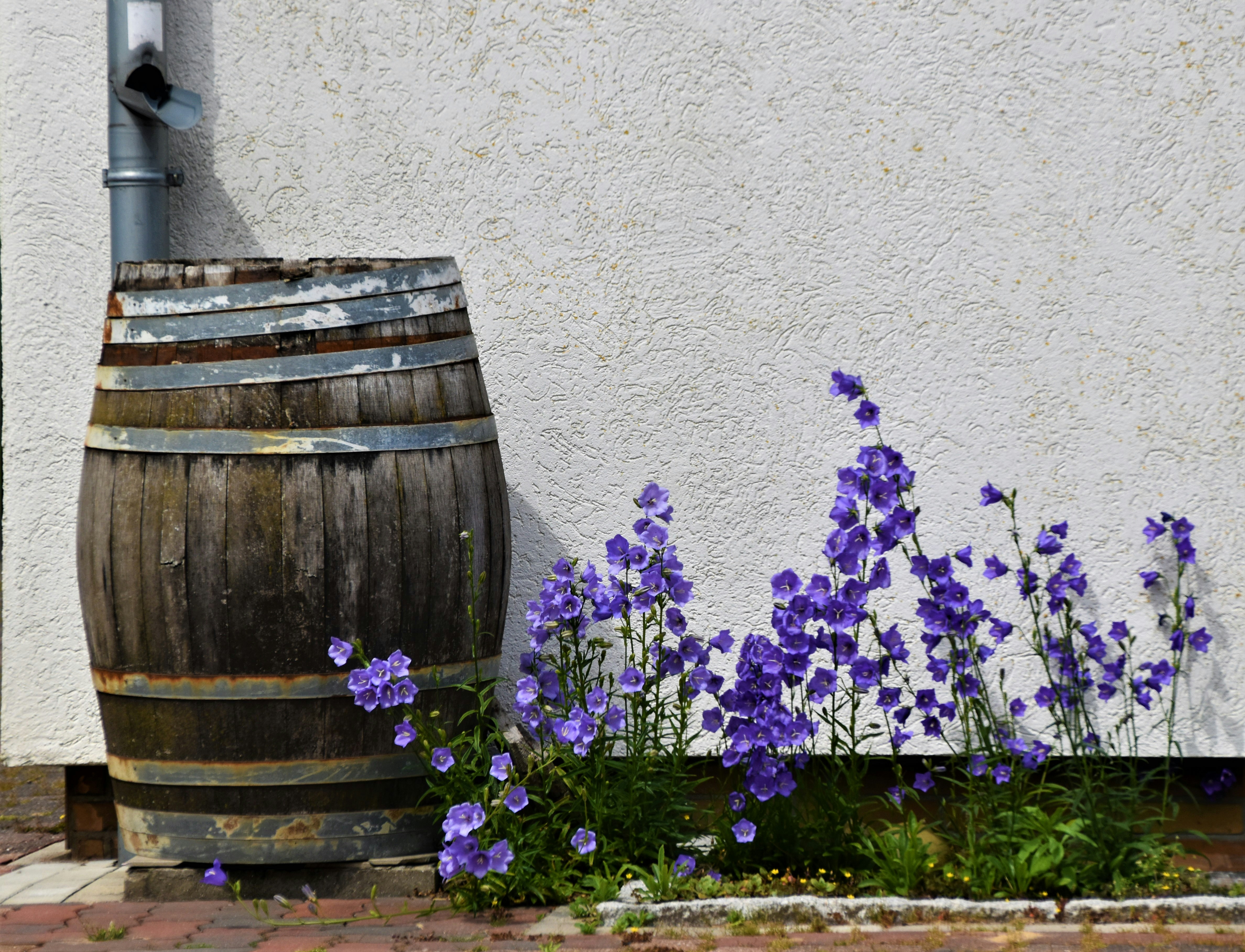
A single rain barrel connected to a downspout can capture thousands of gallons annually. A modest 1,000-square-foot roof can collect approximately 600 gallons of runoff water from just one inch of rainfall. This water, stored in a rain barrel, may be invaluable during subsequent dry periods, as municipal restrictions often limit outdoor watering during droughts.
When selecting a rain barrel:
Choose food-grade containers with secure lids to prevent debris accumulation and mosquito breeding (attach a downspout through the lid or through the side of the rain barrel)
Install overflow valves to direct excess water away from foundations
Position barrels on stable, level surfaces that can support their weight when full
Include removable mesh screens in the downspout to filter debris before it gets into your rain barrel
Consider raised platforms to increase water pressure; the higher the water is stored above ground, the more gravity will help deliver it where you need it
Advanced Collection Systems
For those ready to maximize rainwater collection:
Install multiple interconnected barrels for greater capacity
Consider underground cisterns for larger storage capacity and aesthetic benefits
Add first-flush diverters to improve water quality by diverting the initial runoff that contains most contaminants
Incorporate pumps for pressurized delivery to garden areas
Install rain chains as decorative alternatives to traditional downspouts
Rain Gardens: Natural Water Management
Rain gardens represent the perfect complement to collection systems. These shallow depressions planted with native species capture runoff from impervious surfaces, including roofs, patios, and driveways, allowing water to percolate slowly into the ground rather than rushing into storm drains.
To create an effective rain garden:
Position it at least 10 feet from building foundations
Size the planted area to be approximately 20-30% of the total drainage area (i.e., if you’re collecting water from a 1,000 square-foot roof, your rain garden should be 200 to 300 square feet)
Excavate to a depth of 4-8 inches
Add compost to improve drainage if needed
Select native plants adapted to both wet and dry conditions
Use plants with varying root depths to maximize water infiltration
Add a layer of mulch to reduce evaporation and prevent erosion
Efficient Irrigation: Delivering Water Where It's Needed
Even the most water-conscious gardeners often waste water through inefficient delivery systems. Traditional sprinklers can lose up to half of the water used due to evaporation and runoff. Transitioning to more targeted irrigation methods dramatically reduces waste by delivering water precisely where it’s needed.
Drip Irrigation: The Gold Standard
Drip irrigation delivers water directly to plant roots, reducing evaporation and minimizing weed growth. Research shows drip systems use half as much water as conventional methods while producing healthier plants and fewer disease problems.
For an effective drip system:
Use pressure regulators to ensure consistent flow
Install timers to automate watering during early morning hours
Incorporate filters to prevent clogging
Choose appropriate emitters for different plant types
Consider soaker hoses for closely planted beds
Use stakes or stakes with emitters for potted plants
Smart Controllers and Sensors
Today’s “smart” irrigation technology with electronic controllers and sensors can optimize watering based on actual conditions rather than rigid schedules:
Weather-based controllers adjust watering based on local conditions
Soil moisture sensors prevent watering when soil remains sufficiently moist
Rain sensors automatically shut off systems during rainfall
Flow meters detect leaks and excessive water use
Mobile apps allow remote monitoring and adjustment
Hand Watering Techniques
For smaller gardens, strategic hand watering remains effective:
Water deeply but infrequently to encourage deep root growth
Use watering cans with shower heads for gentle application
Focus on root zones rather than foliage
Water during early morning to minimize evaporation
Use moisture meters to check soil before watering
Drought-Resistant Landscaping: Working With Nature
Perhaps the most profound shift in water-smart gardening comes from reimagining what a beautiful landscape looks like. Drought-resistant landscaping, often called xeriscaping, doesn't always mean creating barren, rocky gardens—it can mean selecting plants that thrive in your local conditions without excessive supplemental water.
Native Plant Selection
Native plants have adapted to local rainfall patterns over thousands of years. They typically require significantly less supplemental water once established and provide essential habitat for local wildlife.
When selecting native plants:
Research which species naturally occur in your specific region
Consider the microclimate of your garden (sun exposure, soil type, drainage)
Include a mix of groundcovers, perennials, shrubs, and trees for biodiversity
Focus on deep-rooted species that access moisture from lower soil layers
Plant in groups according to water needs (hydrozoning)
Water-Wise Exotics
Some non-native plants also demonstrate excellent drought tolerance while adding variety to gardens:
Mediterranean herbs like rosemary, thyme, and lavender
Succulents and cacti for extremely dry areas
Ornamental grasses that require minimal irrigation
Drought-adapted flowering perennials like yarrow and coneflower
Soil Improvement for Water Retention
Healthy soil acts as a reservoir, storing water for plant use:
Add organic matter to improve structure and water-holding capacity
Apply compost annually to increase microbial activity
Use cover crops in vegetable gardens to build soil quality. (A cover crop is typically a type of annual grass or legume that you can grow from seed after you’ve harvested your vegetables. You’ll kill the cover crop before it sets seed, allowing you to plant vegetables again the next year.)
Consider biochar (a form of charcoal intended for agricultural use) in sandy soils to improve retention
Install rain garden soil mixes in areas receiving significant runoff
Mulching: The Water-Saver's Secret
A 2-4 inch layer of appropriate mulch can reduce evaporation by up to two-thirds while suppressing weeds and moderating soil temperature:
Use organic mulches like bark, wood chips, or shredded leaves in most garden beds
Apply straw or grass clippings in vegetable gardens
Consider gravel or decomposed granite for Mediterranean or desert-themed areas
Keep mulch pulled back slightly from plant stems to prevent rot
Replenish annually as organic mulches decompose
Combining Strategies for Maximum Impact
The most water-efficient gardens incorporate multiple approaches:
Capture rainwater in barrels and rain gardens
Deliver it efficiently through drip irrigation guided by smart controllers
Grow drought-adapted plants in well-mulched, healthy soil
Group plants according to water needs for targeted irrigation
This integrated approach can use one-fifth the amount of water compared to traditional landscapes while creating gardens that remain resilient during drought conditions.
Getting Started: Your First Water-Smart Project
Begin your water-smart journey with one achievable project:
Option 1: Install a rain barrel
Purchase a ready-made system or convert a food-grade drum
Position it under a downspout that drains a substantial roof area
Ensure stable support that can handle the weight (about 8 pounds per gallon)
Install an overflow hose directed away from your foundation
Use the collected water for container plants and garden beds
Option 2: Convert one bed to drip irrigation
Start with a small, defined area like a vegetable garden
Purchase a drip starter kit with all essential components
Connect to an outdoor faucet via a backflow preventer
Lay the main line and add emitters near the plant roots
Cover with mulch to protect tubing and further reduce evaporation
Option 3: Create a mini rain garden
Identify where water naturally pools or flows during rainfall
Dig a shallow depression approximately 4-6 inches deep
Amend the soil with compost if drainage is poor
Plant with native species that tolerate both wet and dry conditions
Add a layer of mulch to prevent erosion and reduce evaporation
Option 4: Establish a drought-resistant garden bed
Remove a section of water-intensive lawn (about 50-100 square feet)
Prepare the soil with appropriate amendments based on plant selection
Install a weed barrier if necessary
Select and group native plants according to water needs
Apply 3 inches of appropriate mulch after planting
Water deeply but infrequently during the establishment period
Resources for Water-Smart Gardening
Your local Cooperative Extension Service for region-specific plant recommendations
Regional water conservation districts often offer rebates for water-saving installations
Native plant societies provide expertise on local species selection
The EPA's WaterSense program offers guides for outdoor water efficiency
Local Master Gardener programs frequently demonstrate water-wise techniques
The Ripple Effect of Water-Smart Gardening
When you implement water conservation in your garden, the benefits extend far beyond your local property boundaries. You're helping preserve community water supplies, reducing energy consumption associated with water treatment and delivery, protecting watersheds from runoff pollution, and demonstrating sustainable practices to neighbors and visitors.
Most importantly, you're creating a vital link in a landscape that works with nature rather than against it—a garden that remains beautiful even during challenging conditions and requires less of your time and resources to maintain.
This growing season, commit to installing at least one water-saving feature in your garden. Whether it’s a simple rain barrel or a complete irrigation system overhaul, each step toward water efficiency creates a more sustainable landscape. Your garden—and our planet—will thrive because of it. What water-smart choice will you make today?