Everything Under the Sun: Our Bright Energy Future
Everyone can get on the pathway to 100% clean energy
Thank you for being a paid subscriber to One Step This Week, enabling us to continue this work and bring you science-based information for continuing on the pathway to substainability. As promised, we occasionally offer ‘Insights’ to bring paid subscribers additional updates to research and comments about developments in the field.
Almost everyone who owns or rents property that gets a little sunshine has started thinking about how to make their own electricity from free sunlight. Every business and family can get on the pathway to 100% clean energy right now (check out PathwayToCleanEnergy.org to learn more). This is great news for our planet.
The more electricity you generate for yourself from the sun, the less fuel burned. Less fuel burned means cleaner air and water and lower costs for everyone. Lowering demand for hydrocarbons, the feedstock for fossil fuel, lowers prices for everything made from them, including pharmaceuticals, paint, plastic, and a long list of other essential goods.
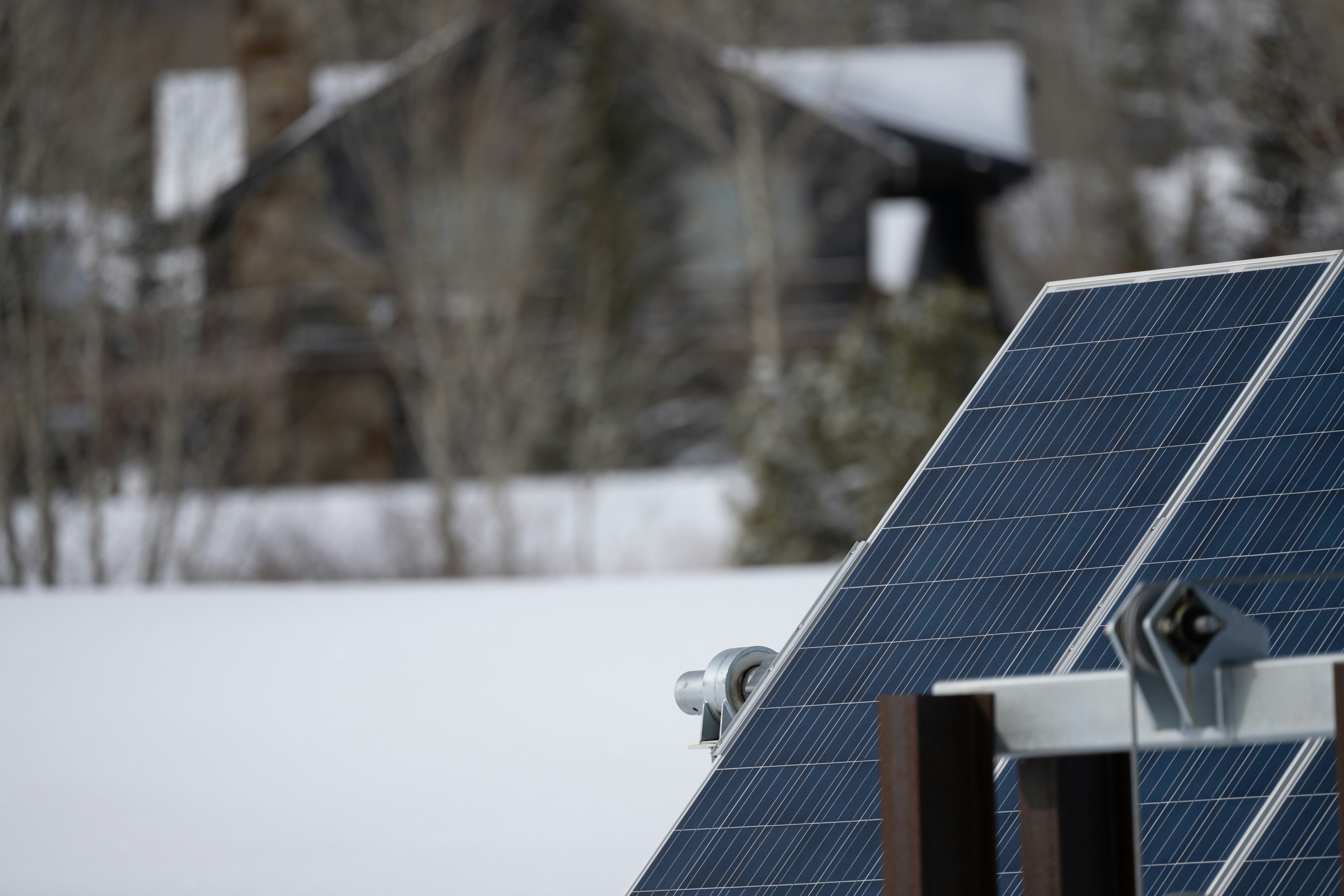
I’m sending this energy insight today to share some comforting news if you or someone you know has been scared off from starting on the pathway to 100% clean energy. There is no reason to delay. You can start making electricity from sunshine right away. And there is no reason to be dismayed. Sunlight is sufficient to meet 100% of our energy needs.
Let's explore three key insights that can help you move forward with confidence.
The Economics Have Fundamentally Changed
The all-in cost for a residential solar project has fallen from over $10 per watt in 2000 to under $3 per watt in 2025. And if you’re into doing it yourself, you can now buy solar modules for less than $0.25 per watt. This isn't just an incremental improvement—it's a revolution that makes solar power the most affordable source of electricity ever. Affluent households with access to credit can now save money from day one through home equity loans where the monthly payment plus their reduced electric bill is less than their previous electric bill. Less affluent households can also go solar, but politicians are wrestling over whether to help or hinder them. Fortunately, people who know how to stretch a dollar are finding all sorts of clever ways to go solar without borrowing money and without letting politicians dictate their choices.
Solar Power Is Simpler Than Ever
Just three components are all you need to generate and use solar electricity:
A solar module
A charge controller
A battery
You can buy a solar charger online for less than $20 that combines all three into a portable device that you can use to charge your cell phone. Or you can hire a company to install a larger system that includes an array of many solar modules, a charge controller, and a bank of batteries that can power your entire homestead. If you don’t connect your system to the public power grid, you don’t need anyone’s permission to go solar. Depending on your financial circumstances, you can start small or go big right away.
If you’d like to keep paying a utility bill, you can use an inverter to interconnect with the grid and share the solar electricity you generate with your neighborhood rather than use it all yourself. To interconnect, here are the components you need:
A solar module (typically an array of many modules)
An inverter
A grid disconnect device
You will also need the permission of your utility and your local codes enforcement officer. In some places, utilities are not allowing people to interconnect.
Interconnected solar arrays with inverters don’t need batteries, but for safety reasons, some inverters disconnect solar arrays during grid power outages. If you want to interconnect and use solar electricity during a power outage, here’s what you need:
A solar module
A hybrid inverter
A grid disconnect device
A charge controller
A battery
A hybrid inverter, a charge controller, and a bank of batteries can be packaged into a single product, such as the Tesla Powerwall. A “hybrid” inverter can switch to batteries during a power outage.
Solar Power Is Enough
Most people are surprised to learn that solar power can provide all the energy their household actually requires forever. How could this be? Don’t we need nuclear power or something else to keep the lights on?
Well, no. Many years ago, I was the proprietor of F. W. Horch Sustainable Goods & Supplies. Many of my customers lived “off-grid” in solar-powered homes. Most of these homes wasted vast amounts of energy because they were designed to be heated by burning wood. But a few of my customers started building super-efficient, air-tight homes using modern materials and techniques. Their homes are heated passively by sunshine: light energy from the sun streams in during the day; insulation keeps that energy from flowing back out at night.
It’s easy to see just how much energy we waste without even realizing it by comparing “passive” homes that use nothing but sunlight for warmth to conventional houses that burn literally tons of fossil fuel for heating every winter. In fact, when I help people carefully examine their homes, we find that most of the money they spend on energy is wasted. The pathway to 100% clean energy can start with efficiency.
If we don’t optimize our efficiency, then we still could build enough solar power to meet our energy demands. We’d just have to overbuild. For example, solar modules covering the roof and driveway of an efficient three-bedroom single-family home are sufficient to provide all the energy for the household forever. But an inefficient home of the same size might need to subscribe to a community solar farm covering an acre with solar modules. The more energy a home wastes, the larger the size of the solar array necessary to provide that energy to be wasted.
Another part of the pathway is electrification. Solar power can provide all the energy your household requires because anything you can do by burning fuel, you can do better by using electricity. Passive homes don’t burn fuel because burning fuel brings in lots of fresh air and exhausts lots of polluted air. No one should be doing this.
What we should be doing is using electricity efficiently for heating, cooking, and driving. I write a lot about those topics, so I’ll skip the details for now. But there’s a ton of interesting work to do along this stretch of the pathway to 100% clean energy!
Once we’ve optimized our efficiency and electrified our equipment, the final milestone to reach 100% clean energy is to supply power using battery-buffered solar electricity.
Here’s the kicker—you don’t really have to do all the hard work of efficiency and electrification first. You can jump ahead and go solar now. Shiny solar modules on your roof are much sexier than hidden insulation buried in your walls, I know!
Think about it this way: if you want to wait on efficiency and waste the energy your solar modules make, that’s better than wasting energy produced by burning fossil fuel. At least the solar power you waste won’t create persistent pollution that will harm our planet for centuries.
Electricity is the most useful form of energy, so generating your own electricity is a smart move whenever you decide to do it. Unlike fuel, which one day you will stop using, electricity is something you’ll always need. When the day comes for you to take the boring steps to improve your efficiency, every watt of solar power you’ve already installed will do more for you. Instead of generating electricity just to waste it, you’ll be generating electricity to do something useful. As technologies improve, it gets easier to optimize efficiency, making it more and more feasible to meet all your needs with solar power.
And what about batteries? Why did I say the final milestone on the pathway to 100% clean energy is battery-buffered solar electricity? What’s wrong with solar electricity that isn’t battery-buffered? When people reach the final milestone of 100% clean energy, they generate solar electricity during the day but not at night. Once we’re all doing that, we won’t be able to use our public power grid like we used to. We’ll need a buffer to store energy for a few hours—batteries are perfect for that.
Where is nuclear power, fossil fuel, or hydrogen in this energy future? Nowhere! We really don’t need any of them. We will probably save money and prevent pollution faster if we focus on the best energy opportunities right in front of us and not get delayed by industries that have nothing of real value to offer in the long run. Many researchers study energy markets, but none have accurately projected the rate of decline in solar or battery costs and the rate of increase in solar and battery deployments. We are at a point of exponential growth where small perturbations in initial assumptions lead to enormous changes in outcomes—so no one knows precisely how much battery-buffered solar power the world can build by 2050. And as far as your own home, no one but you can say how much solar power you’ll install and when you’ll install it.
My first job as a lawyer was working for Pacific Gas & Electric, a major utility in California. Back then, I believed that nuclear and pumped-hydro power stations were a fabulous idea—run the fission reactor at full power all the time and buffer the energy daily using a pair of reservoirs with a hydropower station between them. A decade later, I worked with hydrogen fuel cell systems. Now we have nuclear fusion devices in research labs. Nuclear fission reactors, hydrogen fuel cells, and fusion reactors are all remarkable technologies that public funding should help researchers keep exploring. But you don’t need any of them to power your home.
The Future Is Bright
I have helped many people generate clean electricity from sunshine. The best feeling is seeing how proud they are of their contribution to a better world, especially those who have figured out how to use sunlight to generate all of the power they need. Many wish they had started on the journey sooner.
Remember, it helps to start with the end in mind, but you don't have to do everything at once. You can start with a small system and expand later. Maybe just a portable solar charger for your cell phone and then a solar carport to charge your EV. But it’s essential to take a first step on your journey to 100% clean energy.
If you’ve already gone solar but haven’t tackled efficiency seriously, that’s a good next step. How much of your total energy requirements do your solar modules supply? What needs to happen to get that number to 100%?
Together, we're building a future where solar power supplies everyone’s home. Every watt of solar power brings us closer to that future. And while the environmental and financial benefits are significant, there's also something deeply satisfying about generating your own electricity from the sunshine that would otherwise go to waste.
So, if you've been waiting for the "right time" to explore solar, know that the technology is proven, the economics work, the path forward is clear, and the destination is achievable. The sun rises every day, ready to power your world.
To learn more, visit www.PathwayToCleanEnergy.org