Holiday Travel Efficiency: The Pressure is On
Keeping tires aligned and at the right pressure enables them to last up to 25% longer and maintains optimal fuel economy.
Before reading about holiday travel, we at Sustainable Practice hope you’ll consider the most sustainable holiday gift you could give this year: 52 weeks of a digital copy of One Step This Week. (It’s also a gift to Earth this holiday season!) Until December 31, we are offering a 20% discount on a yearly subscription to One Step, which will cost just $40 for benefits added to weekly fact-packed writing. Those benefits include:
A half-hour personal Zoom consultation with sustainability expert and One Step writer Fred Horch
Occasional insights on environmental news
The benefit of being in a community of people who are committed to sustainability
And if you haven’t yet purchased a paid yearly subscription, now is the best time. You can also give a gift to others who share your priorities for a sustainable future. Click the address below, and you will know you are choosing a genuinely sustainable gift.
https://SustainablePractice.substack.com/31a86639
'Tis the season of holiday travel! As we prepare to visit loved ones near and far, here's a simple way to protect our planet while making our journeys safer and cheaper: proper tire care. Just by maintaining correct tire pressure, alignment, and balance, you cause a cascade of benefits. You'll save up to 3% on energy (and expand vehicle range), extend your tire life (reducing tire particles released into our air and water and keeping rubber out of landfills), and significantly lower your risk of accidents from tire failures. Every mile you drive with properly maintained tires means fewer emissions, cleaner air and water, less waste, and safer roads.
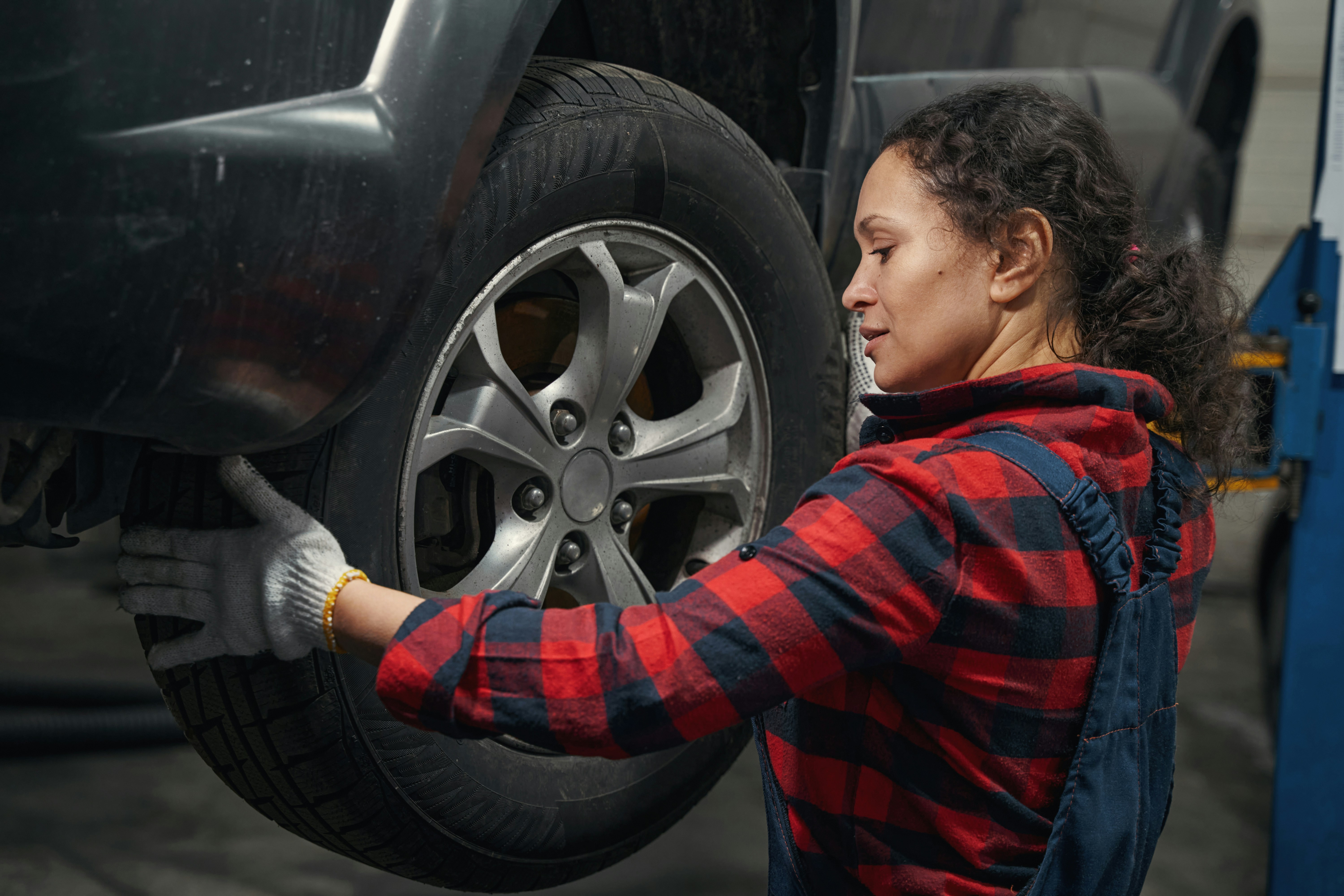
The best part? Saving money, reducing pollution, and safeguarding lives is not difficult: just invest a few minutes checking your tires before holiday trips. Let's explore how to make this happen.
Beginner: Simple Starter Steps
Check your tire pressure before any trip longer than 30 minutes. Look for your vehicle's recommended tire pressure on:
The sticker inside your driver's door frame
Your owner's manual
Inside the fuel door
Note: The number on your tire's sidewall is the maximum pressure the tires can withstand, not the recommended pressure for the tires when used for your vehicle.
Check your tires when they're "cold" (the vehicle hasn't been driven for at least 3 hours):
Remove the valve cap
Press a tire gauge firmly onto the valve stem
Read the pressure
Compare to the manufacturer's specifications
Repeat for all tires, including the spare (if you have one)
Monitor pressure more frequently during winter:
For every 10°F decrease in temperature, tire pressure typically drops by one or two pounds per square inch (PSI)
Pay attention to your Tire Pressure Monitoring System (TPMS) warning light
Don't rely solely on TPMS—it typically only warns when pressure is 25% low
Example: If your area experiences a cold snap from 50°F to 20°F, you could lose 6 PSI—enough to reduce fuel economy by more than 1% but possibly not enough to trigger the TPMS warning.
Intermediate: Leveling Up Your Efficiency
Create a winter tire maintenance kit including:
A quality digital tire pressure gauge
A portable air compressor that plugs into your car (or a bicycle pump that works with Schrader valves—after pumping up your car tires a few times by hand, you’ll appreciate the power of electricity!)
A tire tread depth gauge
Valve caps (they actually help maintain pressure)
Plan your holiday trips to combine multiple stops:
Make a list of all planned holiday visits and errands
Use mapping tools to optimize your route
Schedule trips during off-peak hours to reduce idle time
Share your travel plans with nearby friends and family to identify carpooling opportunities
Consider winter-specific pressure maintenance:
Check pressure weekly during severe winter weather
Always maintain the manufacturer's recommended pressure: let out air during warm spells and add air during cold snaps
Keep your portable compressor charged and ready for quick adjustments
Remember that heated garages can mask low pressure—recheck after parking outside
Advanced: The Environmentalist's Approach
Monitor and reduce tire wear to minimize tire particulate pollution:
Check alignment every year
Rotate tires according to the manufacturer's schedule
Address any vibrations or pulling immediately
Use eco-friendly tire models when replacement is needed
Track your tire wear with monthly tread depth measurements
For EVs, look for tires specifically designed for electric vehicles with:
Enhanced load ratings for battery weight
Low rolling resistance for extended range
Wear-resistant compounds for high torque
Noise reduction technology
Implement a comprehensive trip reduction strategy:
Create a holiday communication plan to consolidate visits
Host virtual gatherings for distant connections
Identify which traditions could be celebrated locally
Keep a travel log to identify patterns and opportunities
Track your vehicle's efficiency:
Log fuel economy for each trip
Note the impact of proper tire inflation
Document cost savings to reinforce good habits
Compare winter and summer efficiency patterns
Expert: The Planet Hero's Strategy
Lead community-wide travel efficiency initiatives:
Organize neighborhood carpooling networks for holiday events
Share tire pressure checking equipment with neighbors
Create a local tire recycling guide
Start a "walk there" challenge for nearby holiday gatherings
Address systemic transportation issues:
Support local complete streets initiatives
Advocate for better public transportation options
Research and support tire recycling innovations
Champion workplace charging stations and bike facilities
Get involved in tire waste reduction:
Support tire recycling programs that transform old tires into useful products
Advocate for tire manufacturer take-back programs
Promote the use of retreaded tires where appropriate
Encourage local governments to use recycled tire products in public projects
Troubleshooting Common Tire Issues
If a tire keeps losing pressure:
Check for obvious punctures by visual inspection
Listen for hissing sounds around the valve stem
Apply soapy water to find slow leaks (bubbles will form)
Have a professional check the tire bead seal
Note that very cold weather can temporarily show as pressure loss
If your gauge gives inconsistent readings:
Make sure you’re measuring pressure at a consistent temperature: pressure will increase as temperature increases, and decrease as temperature decreases
Ensure the gauge is pressed straight onto the valve
Try measuring at different angles
Test the gauge on a known good tire
Consider replacing an old or dropped gauge
Keep your gauge at room temperature for accurate readings
If you can't reach the recommended pressure:
Verify the air compressor is working properly
Check for stuck valve stems
Ensure valve caps haven't damaged the valve
Visit a service station with a commercial compressor or use a bicycle pump to manually inflate tires
Allow extra time for filling in very cold weather
Technical Details
The tire industry has a massive environmental footprint, with nearly 290 million tires discarded annually in the United States alone. While 81% of these tires are now either burned or recycled, tire production still requires substantial resources—approximately 7 gallons of petroleum per tire.
How Inflation Affects Tire Performance
Tire pressure recommendations are for “cold” tires. As a vehicle is driven and tires warm up, PSI will increase slightly. Car manufacturers establish tire pressure recommendations after carefully analyzing many factors.
An underinflated tire:
Generates more heat internally, potentially resulting in failure
Cannot absorb road shock as well, potentially damaging other vehicle components
Does not have the correct shape tire patch (contact point with road), putting excessive wear on the tire’s shoulders
Has less grip than a properly inflated tire
An overinflated tire:
Cannot absorb road shock as well, potentially damaging other vehicle components
Does not have the correct shape tire patch (contact point with road), putting excessive wear on the center tread
Has less grip than a properly inflated tire
Although tires lose about 1 PSI per month, the National Highway Traffic Safety Administration estimates that fewer than one in five consumers check and maintain their tires at the proper inflation.
Driving Habits
Driver behavior significantly impacts tire life and environmental footprint:
Gentle acceleration reduces wear
Anticipatory braking extends tire life
Maintaining moderate speeds optimizes efficiency
Proper Tire Pressure and Alignment
Regular tire monitoring and maintenance delivers significant environmental benefits:
Proper inflation improves fuel efficiency by approximately 3%, reducing both fuel costs and emissions.
Correct wheel alignment improves efficiency by an additional 2-3% and can extend tire life by up to 20%.
The combination of proper inflation and correct alignment can extend tire life by up to 25% compared to driving with underinflated and misaligned tires.
Regular Inspection and Rotation
Systematic tire care maximizes tire lifespan and environmental benefits:
Annual alignment checks (or every 12,000-15,000 miles) ensure optimal performance.
Regular rotation every 6,000-8,000 miles promotes even wear.
Early problem detection through monitoring:
Vehicle pulling to one side
Uneven or rapid tire wear
Steering wheel vibration
Off-center steering wheel
Seasonal Types of Tires
Summer Tires
Optimized for warm weather performance
Features:
Less aggressive tread patterns
Harder rubber compounds
Focused on dry grip and handling
Environmental considerations:
Lower rolling resistance in warm weather
Best efficiency in appropriate conditions
All-Season Tires
Designed for year-round use in moderate climates
Characteristics:
Medium-soft rubber compounds
Moderate tread depth
Balanced void ratio
Not truly optimal for any condition but acceptable in most
Winter Tires
Specifically engineered for cold weather
Technology features:
Soft rubber compounds (maintain flexibility below 45°F)
Deep tread depth
High void ratio for snow clearance
Maximum sipe density
Analysis: Seasonal Tire Change Strategy
Strategy 1: Single Set of All-Season Tires
Benefits:
Reduced manufacturing impact (one set vs. two)
No storage or transportation requirements
Lower initial resource consumption
Drawbacks:
Reduced efficiency in extreme conditions
Potentially shorter tire life due to year-round use
Compromised performance may lead to increased fuel consumption
Strategy 2: Seasonal Tire Changes
Benefits:
Optimal performance in all conditions
Extended tire life through seasonal use
Maximum efficiency in each season
Drawbacks:
Double the manufacturing impact
Storage and transportation requirements
Additional mounting and balancing energy use
Recommendations Based on Climate Zones
Severe Winter Regions (Regular snow, temperatures consistently below 45°F)
Changing tires season-to-season is recommended
The environmental benefit from improved efficiency outweighs additional tire production
Safety benefits also justify the environmental cost
Moderate Climates (Occasional snow, temperatures rarely below 45°F)
All-season tires are typically sufficient
Performance gains do not justify the environmental impact of a second set of tires
Consider all-weather tires for occasional winter needs
Mild Climates (No snow, temperatures above 45°F)
Consider summer tires or low-rolling resistance tires for all seasons
There is no environmental justification for winter tires
Focus on an efficiency-optimized single set
Advanced Technologies
Tire Pressure Monitoring Systems (TPMS)
Modern TPMS technology alerts drivers to tire pressure anomalies:
Direct TPMS: Uses internal sensors for precise pressure readings
Indirect TPMS: Utilizes wheel speed sensors through the anti-lock braking system (ABS) to detect pressure changes
Usually set to indicate when tire pressure is 25% above or below the recommendation
Low Rolling Resistance (LRR) Tires
These efficiency-focused tires represent a significant advancement:
Environmental Benefits:
2-4% improvement in fuel economy
Reduced energy loss through advanced compounds
Lower carbon emissions over tire lifetime
Technology Features:
Advanced rubber compounds
Optimized tread patterns
Lightweight construction materials
Specialized internal construction reducing heat buildup
Sustainable Tire Materials
Modern tire manufacturing increasingly incorporates sustainable materials:
Recycled rubber from end-of-life tires
Recovered carbon black (RCB) from tire recycling
Bio-based materials replacing petroleum-based compounds
Emerging Sustainable Technologies
New developments in tire technology focus on environmental protection:
Airless tire designs eliminate the need for pressure maintenance
Self-healing compounds extend tire life
Special Considerations for Electric Vehicles
EVs present unique challenges and opportunities for tire technology:
Challenges:
Higher vehicle weight (20-30% more than comparable gas vehicles)
Instant torque affecting wear
Increased tire wear rate
Solutions:
Specialized EV tire compounds
Enhanced weight distribution design
Optimized tread patterns for torque management
Impact and Looking Forward
Proper tire maintenance during holiday travel is your gateway to year-round sustainable transportation habits. While individual dollar savings might seem modest—perhaps $15-20 per 1,000 miles of holiday travel—the collective impact is substantial. If every American household with a car maintained proper tire pressure and alignment during holiday travel, we could save billions. Every sustainable journey begins with a single step—or, in the case of tire pressure, a single square inch with a lot riding on it.