Lighting Up the Holidays: Your Path to Energy-Smart Celebrations
More efficient holiday lighting can free up billions of watts of electricity for other uses in North America.
Before reading about holiday lights, we at Sustainable Practice hope you’ll consider the most sustainable holiday gift you could give this year: 52 weeks of a digital copy of One Step This Week. (It’s also a gift to Earth this holiday season!) Until December 31, we are offering a 20% discount on a yearly subscription to One Step, which will cost just $40 for benefits added to weekly fact-packed writing. Those benefits include
A half-hour personal Zoom consultation with sustainability expert and One Step writer Fred Horch
Occasional insights on environmental news
The benefit of being in a community of people who are committed to sustainability
If you haven’t yet purchased a paid yearly subscription, now is the best time. You can also give a gift to others who share your priorities for a sustainable future. Click the address below, and you will know you are choosing a genuinely sustainable gift.
https://SustainablePractice.substack.com/31a86639
Every December, millions of people around the world climb into their attics, dig through closets, or pull out storage bins to retrieve their cherished holiday lights. As you untangle those familiar strands, you can make choices that benefit both your bank account and our planet. Simple changes to holiday lighting can save energy and reduce waste. Let's explore how you can light up your celebrations sustainably, wherever you are on your environmental journey.
Not sure what type of lights you currently have? Plug in a strand and let it run for five minutes. Then, carefully touch the tip of one of the bulbs (not the wire). If it's very hot, you have incandescent bulbs–that heat is energy being wasted! LED bulbs remain relatively cool to the touch even after hours of illumination.
Beginner: Simple Starter Steps
Start your journey to sustainable holiday lighting with these easy changes:
Replace just one strand of incandescent lights with LEDs to save $3 in electricity this season—and spread holiday cheer by leaving more power available for your neighbors!
Set a regular schedule for turning lights on and off (such as 5 pm to 10 pm)
Focus lights on smaller areas for maximum impact with fewer strands
Check strands for worn insulation, loose connections, and broken sockets before hanging–replace strands before they become a fire hazard
Store lights safely after the season by wrapping them around cardboard to prevent tangles and damage
Intermediate: Leveling Up Your Eco-Game
Ready to increase your impact? Try these additional steps:
Replace all indoor holiday lights with ENERGY STAR-certified LED strands
Install basic plug-in timers on your holiday light displays
Use light-colored or reflective decorations to multiply the effect of fewer lights
Choose "warm white" LEDs (2700K or 3000K) that match traditional bulbs' appearance
Calculate your energy savings: Each 100-bulb string of incandescent lights you replace saves about 20 kilowatt-hours over a standard holiday season (assuming you leave them on for about 500 hours)
Advanced: The Environmentalist's Display
For those ready to make a bigger commitment:
Create an all-LED outdoor display with timers and motion sensors
Install smart plugs to control lights remotely and monitor energy usage
Use solar-powered lights for walkways and garden decorations
Set up zones in your display that can be independently controlled
Create schedules that automatically adjust for weather and daylight hours
Consider limiting light displays to key celebration dates rather than running them all season
Expert: The Planet Hero's Light Show
For maximum environmental impact:
Design an energy-monitoring system for your entire holiday display
Use 100% solar power for your lights, either from batteries or “banked solar” from a grid-connected solar array
Organize a community LED initiative:
Partner with local retailers for LED light discounts
Set up a collection point for properly recycling old light strands
Host a workshop teaching neighbors about energy-efficient lighting
Create a neighborhood challenge to track collective energy savings
Install a smart home system that optimizes energy use based on:
Real-time electricity rates
Weather conditions
Motion detection
Daylight sensors
Document and share your energy savings to inspire others:
Track before/after electricity bills
Monitor real-time energy use with smart meters
Share results on community social media
Create a simple guide for neighbors who want to follow your example
Important Safety and Environmental Considerations
California Proposition 65 Warnings on Light Strands
Many holiday light strands carry a warning label stating they contain chemicals known to the State of California to cause cancer or reproductive harm. These warnings are typically due to:
PVC (polyvinyl chloride) in the cord coating, which may contain phthalates
Lead used in the PVC insulation and wiring
Other plasticizers and flame retardants in the coating
These warnings are concerning, but they don't mean the lights are unsafe for normal use. However, you should:
Wash hands after handling the cords or consider wearing gloves when installing or removing lights
Keep cords out of reach of small children who might put them in their mouths
Keep old light strands from going to “waste-to-energy” incinerators, as this can release toxic chemicals
Battery-Powered vs. Plug-in LED Lights
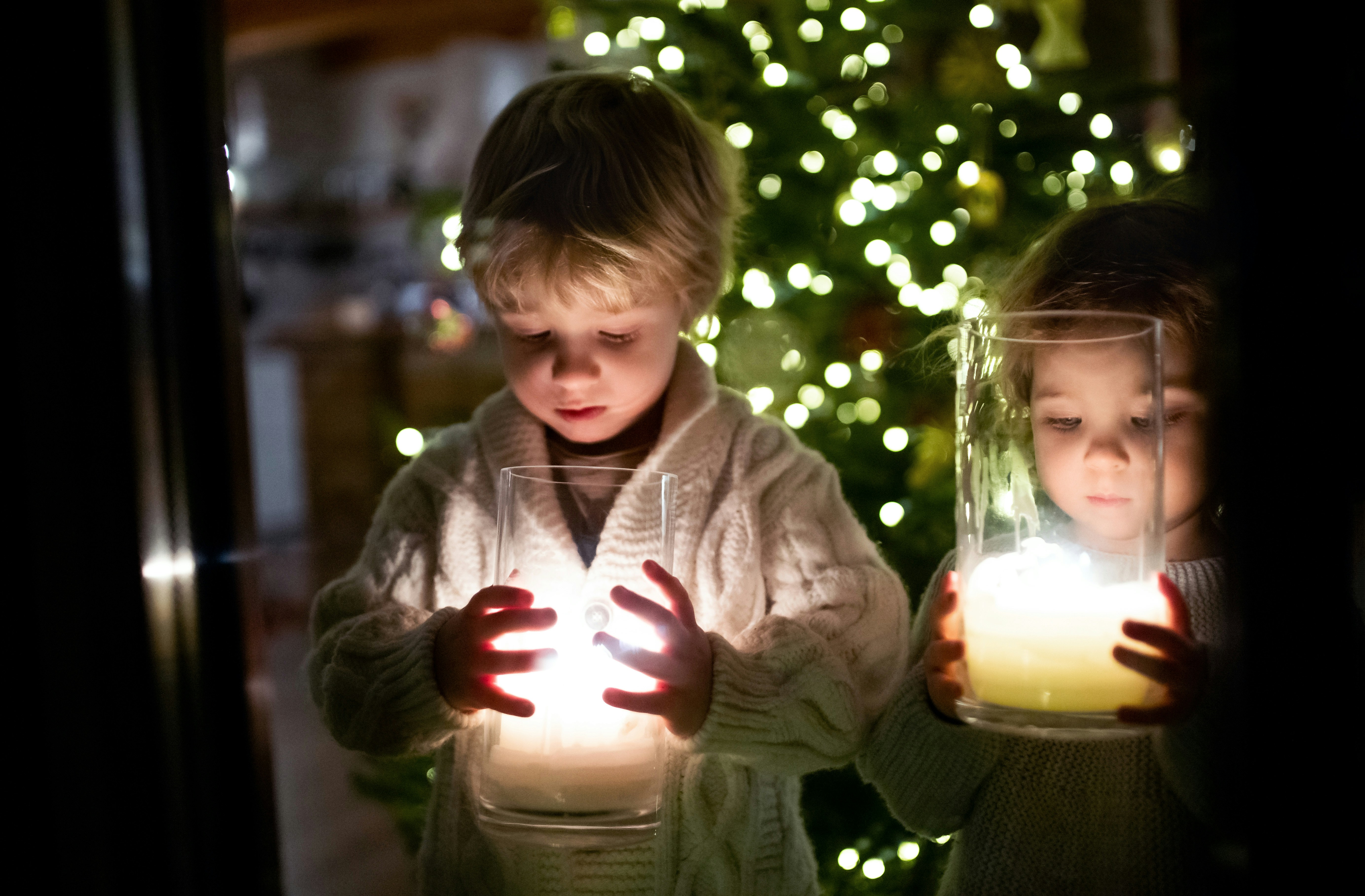
Battery-powered LED lights, like window candles, present different environmental considerations:
Advantages
No cord is needed, reducing PVC or lead exposure
Can be placed anywhere and spaced apart tastefully, potentially reducing the total number of decorations needed
Often come with built-in timers
Safer around toddlers and pets (because they have no cords to chew)
Disadvantages
Batteries create additional waste–best practice is to use rechargeable ones
May cost more to operate than plug-in lights due to the efficiency loss of charging and discharging batteries
Shorter lifespan if batteries corrode inside–for lighting appliances with removable batteries, always remove batteries and store them separately when the appliance is not in use
Recommendations
For window candles and small displays, use plug-in LED options (with cords) for efficiency or battery LED options (cordless) for safety
If using battery-powered lights, invest in high-quality rechargeable batteries
Look for solar-powered options for outdoor use
Technical Notes: Understanding the Numbers
The environmental benefits of LED holiday lights come from two main factors:
Direct Energy Use: LED holiday lights use about 90% less energy than traditional incandescent bulbs
Longevity: LED strands last up to 25 times longer than traditional strands
For a typical home display of ten strands:
Traditional incandescent display: ~450 watts
LED display: ~45 watts
Seasonal savings: Around $30 on energy bills, assuming 500 hours of run time and electricity costs of $0.15 per kilowatt hour
Extended benefit: Bulbs last 20+ seasons instead of just a few
Community Impact
If every North American household replaces just one string of incandescent holiday lights with LEDs:
Our power grid will experience less strain each holiday season, removing more than seven billion watts of power demand.
In one season, we will save more than 3.5 billion kilowatt hours of electricity–enough energy to drive an electric car 14 billion miles (that’s more than 500,000 trips around the Earth).
After twenty years, we will have saved enough energy to drive more than 11 million electric cars all the way around the Earth.
One Step This Week
Choose your level of commitment and take one step toward more sustainable holiday lighting. Whether you're just replacing one broken strand or designing a fully automated eco-friendly display, every change helps create a more sustainable celebration.
Remember: You don't have to do everything at once. Start with the level that matches your current commitment and resources, then advance when you're ready for the next step.