Go Native: Transform Your Yard for a Healthier Landscape
Lawns cover an estimated 40 million acres in the United States, four times as much land as used to grow fruits and vegetables.
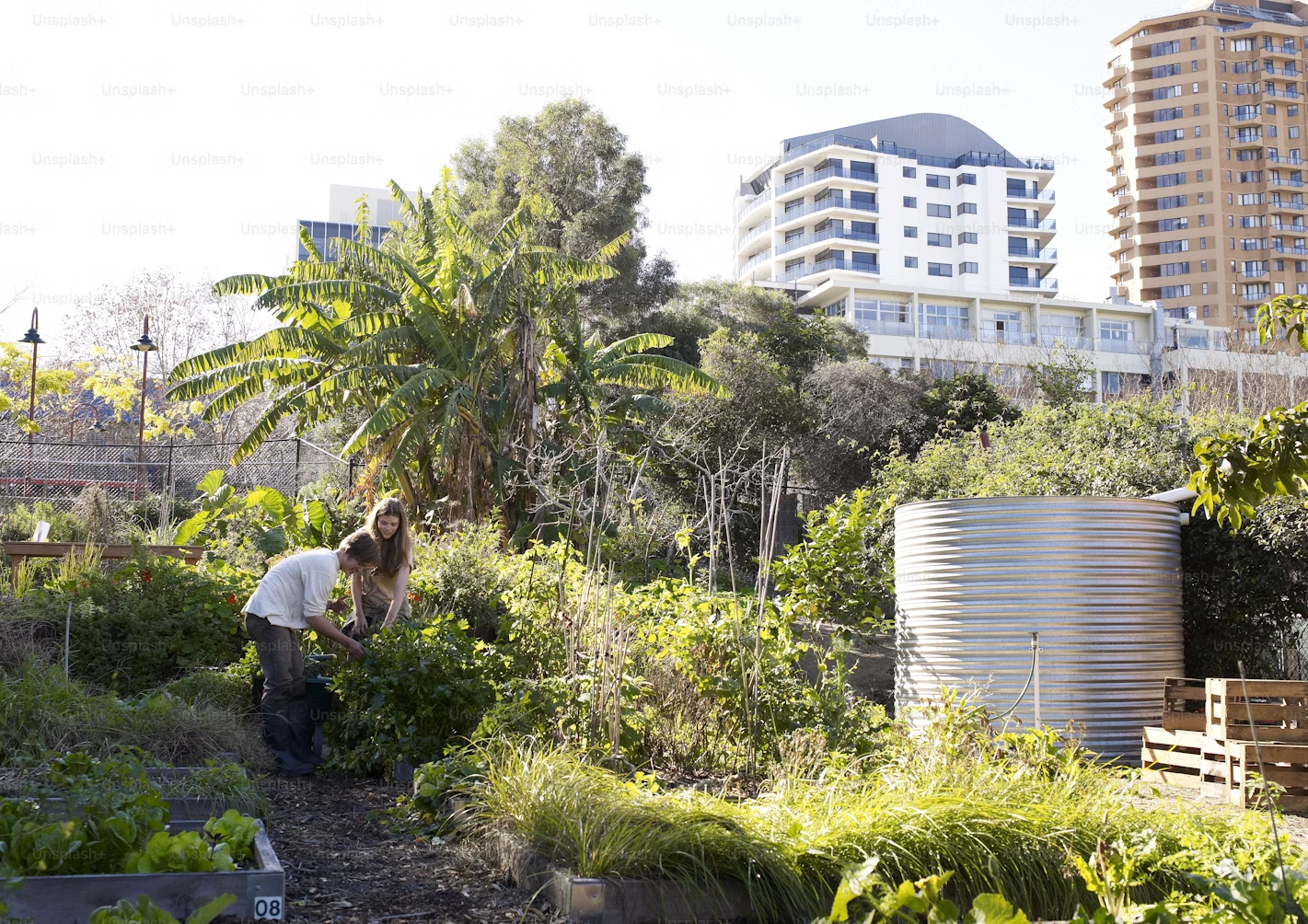
Our one step this week is Landscaping 101: Planting Native Species. Turfgrass lawns became popular in the United States in the 1870s and have since become the dominant idea in residential and commercial landscape design regardless of the surrounding natural biome. From the forested northeast to the desert southwest, people in the United States toil to grow a few species of turfgrass, keep it mowed a few inches tall, and exclude all other plant species. Allowing, encouraging, or establishing native plants instead of or in addition to turfgrass provides valuable habitat for many more species, safeguarding biodiversity.
Two That Matter Most
To know how well you are meeting the need for habitat with native plants, these two indicators matter most:
How much pesticide you apply to your land.
How many native plant species are growing on your land.
Sustainable Practice: Landscaping 101
Planting Native Species
Landscape with native species well-adapted to local conditions.
Equipment and Materials
Guide to native plants [optional]
Plants, cuttings, rhizomes, tubers, corms, bulbs, or seeds.
Steps
Learn which plants are native to your area.
Decide how actively you want to manage your landscape.
Remove non-native species.
Plant native species.
Repeat steps 3 and 4 as necessary.
Discussion
Turfgrass lawns are the standard landscaping practice in the United States and Canada. This land-use practice intentionally diminishes biodiversity to reduce the chance of humans interacting with wildlife near inhabited buildings. It is prudent to keep a small buffer area around buildings that is free of habitat that can harbor ticks, rodents, and other undesirable species. However, biodiversity and human well-being both benefit from encouraging native plants in areas of yards and landscapes that are several meters away from structures.
Which native species are best suited for a specific area of land depends on many factors. Consulting with an agent from your local extension service is a good first step to determining which native plant species to grow on your land. Plants attract animals, so by encouraging native plants, you allow an entire ecosystem to thrive.
Definitions
Biodiversity: biological diversity; the variety and variability of species
Cosmopolitan species: having a very widespread or global distribution
Endemic species: native and restricted to a specific area
Exotic Plants: plants that are not naturally found in a location
Integrated Pest Management: a science-based approach that monitors conditions and identifies pests before taking control measures to minimize environmental and health risks, as opposed to spraying pesticides prophylactically or indiscriminately
Invasive Species: species that are exotic and crowd out native species, potentially extirpating endemic species
Native Plants: plants that naturally grow (or have historically grown without human cultivation) in a location
Turfgrass: narrow-leaved grass species that form a uniform ground cover and can tolerate foot traffic and mowing to two inches or shorter
Troubleshooting
You need help deciding which native plants to encourage in your yard.
Contact your local cooperative extension service.
Consult a native plants garden guide.
Invasive exotic plants are overrunning your native planting area.
If you’re not worried about offending your neighbors, you could take some time to observe before intervening. You may find it edifying to allow nature to take its course; over time, a diverse mix of species tends to arise.
Prune or pull up invasive plants you dislike.
Many people have strong feelings about which plants they believe deserve to live; they will recommend selective herbicide use. Your local cooperative extension service is a good resource.
Consider hiring a professional landscaping service.
Native plants are failing to thrive.
Try different native plants.
Get a soil test to help select plants that may better tolerate your conditions.
You have an area of lawn you’d like to convert to native plants.
Cover the lawn area with cardboard.
Put new topsoil on the cardboard.
Put native seeds or plants in the topsoil.
Strategies and Goals
Community
Demonstrate sustainable practices
Grow native plants in your yard
Water
Conserve water
Use less water for outdoor irrigation
Protect water quality
Reduce runoff of pesticides
Reduce runoff of excess fertilizer
Energy
Conserve energy
Reduce the number of hours spent mowing lawn
Habitat
Share habitat
Share your yard with other species
Milestones
Decrease how much water you buy or pump
Measure: How much water you buy or pump
Method: Water or electricity bills
Time Period: Year
Decrease how much energy you expend mowing lawn
Measure: How much time is spent mowing lawn
Method: Logbook
Time Period: Year
Decrease how much pesticide you apply
Measure: How much pesticide you buy
Method: Financial records
Time Period: Year
Decrease how much synthetic fertilizer you apply
Measure: How much fertilizer you buy
Method: Financial records
Time Period: Year
Increase biodiversity in your yard
Measure: Number of plant species growing in your yard
Method: Survey
Time Period: Year
Limitations
Some neighborhoods require lawns.
Some families want lawns for recreation.
Unmowed areas can harbor pests like ticks and rodents.
Tall vegetation growing close to a building can be a fire hazard.
Unwanted invasive species can become numerous in unmanaged yards.
Some people find natural landscapes unsightly.
Opportunities
Landscaping 102: Integrated Pest Management
Use a science-based approach to manage pests.
Minimize environmental risks while reducing pest pressure.
Landscaping 103: Fertilize Organically
Use compost and organic methods rather than synthetic fertilizers.
Prevent water pollution from fertilizer runoff.
References
Cooperative Extension Services
Native Plants Garden Guides
Articles and Websites
A Strategy for Mapping and Modeling the Ecological Effects of US Lawns
Biodiversity Explained: Facts, Myths, and the Race to Protect It
The Cool-Season Turfgrasses: Basic Structures, Growth and Development
The U.S. Fresh Fruit and Vegetable Industry: An Overview of Production and Trade
Organizations
Projects
Keywords
landscaping, native plants, lawn, yard, integrated pest management, backyard habitat