Sustainability Education: Learning Practices 101
Students scored an average of 52% on a survey of environmental literacy among United States undergraduates in 2018. Continuing work on that is a priority.
How much better would our world be if everyone had a better understanding of environmental problems—and knew exactly what they could do to help solve them? We know from surveys that environmental education is a huge opportunity for saving our planet. Of all the ways we can think globally and act locally, education takes the cake. A great way to work on environmental literacy is to start with our own learning practices—what are we doing to make sure our own understanding is first rate so we can share our knowledge with everyone in our sphere of influence?

Today’s post features Sustainability Education: Learning Practices 101. For more sustainability learning guides, see our Sustainable Practice website: https://www.SustainablePractice.Life.
The Two That Matter Most
To evaluate your learning practices, two measurements matter most:
How much time you spend learning science, math, and current technology that is relevant to environmental problems and solutions.
Your level of understanding of environmental problems and solutions.
Successfully Changing Learning Practices: A Quick Note
Changing learning habits is hard. You may have the best intentions to study, but catch yourself putting it off for another day or time. A six-step continuous improvement practice proficiency model helps you make successful changes:
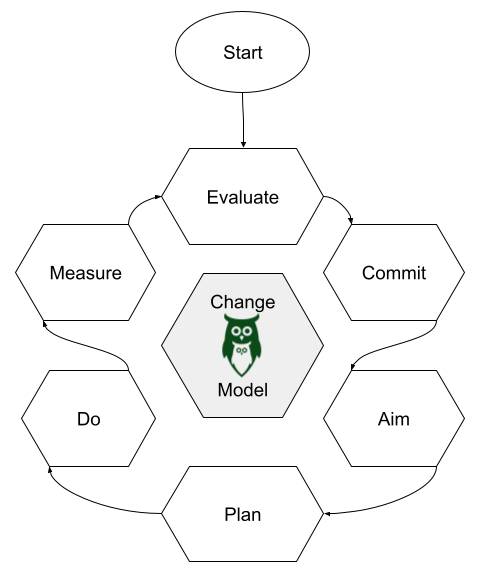
Start by evaluating your current practices to identify what can and needs to change. Make and share a commitment to improve. Then take aim by setting specific, measurable, achievable, relevant, and time-bound goals. Develop a plan that describes how you will achieve your goals. Do the work. Measure what matters, so you can evaluate your results and keep making positive change happen.
Learning Practices 101 Guide
Sustainability Education
An important step is to reach a level of understanding of science, math, and technology relevant to households and organizations so you can make wise decisions and be a reliable source of knowledge for your community. Continuous use of Internet searches and chatbots for lifelong learning will benefit your household, organization, and your community. Regularly testing your environmental literacy, including your comprehension of the science, math, and technology being used to solve environmental problems, will be essential. We can all benefit from reading and talking with experts to correct misunderstandings and continue learning.
Strategic Goals
Understand environmental problems and solutions.
Become a reliable source of knowledge for your community.
Equipment and Materials
Personal computer, tablet, or cell phone.
Internet connection.
Internet search engines and chatbots.
Bookstore or library. [Optional]
Subject matter experts.
Steps
Search the Internet, either at home or at a local library.
Learn how to assess the trustworthiness of information.
Learn how to prompt chatbots to retrieve information from large language models (LLMs) and to test your level of understanding of environmental problems and solutions.
Learn how to determine whether a chatbot’s answer is a hallucination (see further explanation under Discussion below).
Read books and articles written by subject matter experts.
Talk with subject matter experts about what you’ve read.
Discussion
Your own understanding of science, math, and technology empowers you to be a reliable source of knowledge for your community. Our environment and technology are changing rapidly, so to remain knowledgeable, you need to continue learning at a similar rapid pace. Building on a solid foundation of scientific knowledge, you can use math and critical thinking skills to evaluate the trustworthiness of what you are reading, hearing, or seeing when you study environmental issues and solutions.
High school is an opportunity to acquire a basic knowledge of science, math, and technology, and college courses can expand that knowledge. However, continuing to use other sources, primarily the Internet and artificial intelligence (AI) chatbots, is essential for lifelong learning about sustainability.
Thanks to the Internet, search engines, and chatbots, we are the first people in known history to have convenient and affordable access to the sum of human knowledge. Chatbots became available in 2022 as another way to find information (they can also be used to create new text, images, and movies quickly). When prompted by humans, chatbots traverse a large language model to generate a response. Depending on the information used to create the knowledge model and the training the chatbot receives, a chatbot can have a conversation with you about environmental and sustainability issues in English, Spanish, Chinese, etc.
As with human authors, AI's output can also be untrustworthy. A “hallucination” is a fanciful AI response (a “wrong” answer) to a prompt. As AI improves daily, it becomes harder to tell whether text, images, or movies were created by humans or AI.
Improving your comprehension of science, math, and technology empowers you to make wise choices and changes. Achieving a higher level of science and math literacy is essential so that you can have productive conversations with subject matter experts about how to improve the environmental sustainability of a household or small organization.
Definitions
AI (artificial intelligence): algorithms that allow computers to do tasks that used to require human intelligence
Chatbot: an artificial intelligence program that can traverse a large language model (LLM) to produce natural language text in response to a prompt
Environmental Literacy: the ability to understand and make informed decisions about environmental issues and solutions
Information: an observable state of a part of the universe
Internet: a high-speed global network of computers that communicate using standard protocols
Internet search engine: a service to help people find information on the Internet (Google provides the results for more than 90% of Internet searches)
Knowledge: information organized to be useful to humans or AI
Science: knowledge based on experiments and observations
Measurements
How much time you spend learning science, math, and current technology that is relevant to environmental problems and solutions.
Your level of understanding of environmental problems and solutions.
Milestones
Achieve an understanding of the following in order to interpret standard environmental and sustainability practices accurately and implement them.
physics,
chemistry,
biology, and
math.
Be able to teach a junior high school class about basic aspects of
composting,
vegetable and ornamental gardening,
human nutrition,
electricity in residential and commercial buildings,
plumbing in residential and commercial buildings,
heat gain and loss in residential and commercial buildings,
batteries,
internal combustion engines,
electric motors,
vapor compression refrigeration systems,
solar photovoltaic systems,
recycling, and
habitat conservation and species extinctions.
Troubleshooting
To heighten your household’s or organization’s interest in physics, chemistry, biology, math, and technology, encourage:
Finding friends who think science and math are fun; learning from them.
Visiting a library and asking a librarian for fun ways to learn high school science and math.
Asking a chatbot to explain science and math concepts in entertaining ways.
If your household members or organization’s members don’t have time to learn about the science, math, and technology relevant to solving environmental problems, encourage them to:
Record what they do every minute of every day for one week using a time tracker on their cell phones.
Evaluate the results of a time journal to identify when during the week they could watch short videos or listen to podcasts to improve their environmental and technical literacy.
If your household or organization is unsure how well they understand science, math, and technology:
Prompt a variety of chatbots to act as teachers and have conversations about topics that are not understood.
Ask each chatbot to evaluate comprehension of a topic and help achieve a high-school level of understanding.
Validate each chatbot's response by asking them about anything that doesn’t make sense. Have one chatbot check what another chatbot is teaching to make sure it is accurate.
If those in your household or organization are unable to have conversations with subject matter experts, suggest they:
Take classes at Khan Academy, MIT OpenCourseWare, or other educational organizations.
Watch recorded lectures and interviews with subject matter experts.
Prompt a chatbot with the name of a subject matter expert, ask it to be that person, and have a conversation with the chatbot. Request citations to sources for any facts that are interesting; verify that the facts are real and not AI hallucinations.
Limitations of this Practice
Provides limited interaction with other people
Requires proficiency with computers
Requires access to the Internet
Does not address applying knowledge to decision making
Extra effort is required if persons did not learn science and math in high school
Opportunities to Improve
Learning 102: Taking Classes In Person and Learning 103: Joining Organizations
Meet other people
Learn from human experts
Add a social dimension to acquired knowledge
Learning 201: Becoming a Master Gardener Volunteer
Improve understanding of gardening
Learning 202: Becoming a Master Composter
Improve understanding of composting
Pathway Strategies
Community: Provide community education
References
Books
Silent Spring by Rachel Carson
The Sixth Extinction: An Unnatural History by Elizabeth Kolbert
Chatbots
ChatGPT from OpenAI
Claude from Anthropic
Grok from X
HuggingChat from HuggingFace
Websites
Educational Organizations
Master Gardener and Composter Programs