The Answer is Composting. Here Are the Questions
In the United States, 51.4% of our landfill space is filled with waste that could be composted instead.
Composting is part of a sustainable diet—putting water and nutrients back to work, and growing more food, paper, wood, and other organic goods. It’s probably the single most effective thing we can do in our households and organizations to improve our sustainability because it completes the circle of resource use. When we take responsibility for composting, it forces us to consider what we’re eating and consuming and how we’re handling our own waste. Let’s explore how to compost superbly well in a three-week mini-series that will cover:
The environmental benefits of composting.
Basic composting practices.
Advanced composting practices.

I believe the best first step on any sustainability journey is to understand where you’re going. So, we’ll start off this mini-series by digging into the environmental benefits of “recycling” food scraps, paper, and other organic material by composting them rather than barging, burying, burning, or digesting them (in a methane digester). Sailing barges to dump garbage at sea is no longer in fashion, but trucking loads of compostable garbage to bury on land happens daily with regrettable results. Some people believe that burning garbage is a good idea, so we’ll take a quick look at incinerators and their cleaner cousins, digesters. How do all of these methods of handling solid waste stack up against composting, the gold standard for sustainability?
Help! Why is composting any better for our planet than burying garbage in a landfill or burning it for energy?
You might think that the food scraps and yard trimmings you put in your garbage simply rot safely in a landfill, turning back into topsoil in a few months or years. They don’t. You might also think that burning food scraps or yard trimmings for energy is the best way to reduce the amount of garbage we bury in landfills. It isn’t.
Food scraps, yard trimmings, paper, leather, wood, and anything else that was once alive (organic material) can rot safely and turn back into a useful soil amendment in just a few weeks if you superbly compost them using the very best practices. But if you put these items into your garbage in any town or city in the United States, they will end up in one of two places: a sanitary landfill or an incinerator.
Sanitary landfills are designed to receive a wide variety of materials, including incinerator ash. Things like incinerator ash are full of dangerous compounds that can pollute our air, groundwater, and nearby streams or rivers. To mitigate their pollution potential, sanitary landfills are lined with materials to prevent the flow of air and water through them. Raw garbage and ash from waste-to-energy incinerators are systemically buried in landfills, compacted, and then covered. As a result, very little oxygen and water are available for composting microbes, so a banana peel you toss into a landfill in 2024 may still be there in 2074.
Waste-to-energy incinerators burn garbage, then send their ash to a sanitary landfill. This is an inherently wasteful process because food scraps and yard trimmings are full of water, which doesn’t burn. A huge percentage of the energy available in plastic garbage is used simply to boil off water in food scraps and yard trimmings. Incinerators would be much more efficient if they burned only plastic garbage.
Whether your garbage goes straight to a landfill or gets sent to an incinerator on its way to the landfill, composting everything you can instead of putting it into your garbage is a much better way to reduce the amount of materials going into landfills.
Help! If compostable garbage in a landfill can’t rot, what happens to it?
When sanitary landfills don’t leak, the organic material (anything that was once alive) in them stays mostly dry and simply mummifies. Most sanitary landfills leak, though. Enough water gets in for microbes to go to work, breaking things down, but not enough air gets in to supply oxygen. In these conditions, anaerobic (“without oxygen”) microbes digest organic material instead of composting it. These digesting microbes produce a dangerous explosive natural gas called methane, which has a global warming potential 84 times greater than carbon dioxide over a twenty-year timescale.
Help! Is the natural gas that landfills produce the same as the natural gas I can use in my home?
Not exactly; it contains water and other impurities in addition to burnable gas. A landfill full of compostable garbage produces a variable mixture of gasses, one of which is methane, the highly flammable “natural gas” that some people burn in their homes. It is possible to collect and treat the gasses that a landfill emits, with careful effort, producing methane at a consistent purity level that can be injected into a natural gas pipeline. It’s much easier to produce methane from pockets of fossil natural gas. Because so much cheap fossil methane is available, the standard practice in a landfill is to vent gasses (i.e., put in pipes that allow water vapor and gasses out) so landfill methane doesn’t build up and explode. Unfortunately, venting methane from a landfill puts those molecules into our atmosphere, which accelerates global warming for decades. Eventually, methane in our atmosphere oxidizes to carbon dioxide, which causes more global warming for centuries.
Help! I’ve heard about waste-to-energy methane digesters that can take compostable garbage and turn it into electricity. Are they a good idea?
Not really. After you’ve paid to build a couple sanitary landfills, then discovered that methane builds up in them and can explode, and then try to retrofit those landfills at great expense to collect methane and use it for something useful rather than simply venting it to the atmosphere where it will cause global warming for centuries, it occurs to you that maybe it would be better to design a system from the get-go that can safely collect and burn the gasses that anaerobic microbes produce when digesting garbage. This seems reasonable and noble until you take another step back and think about what you’re doing.
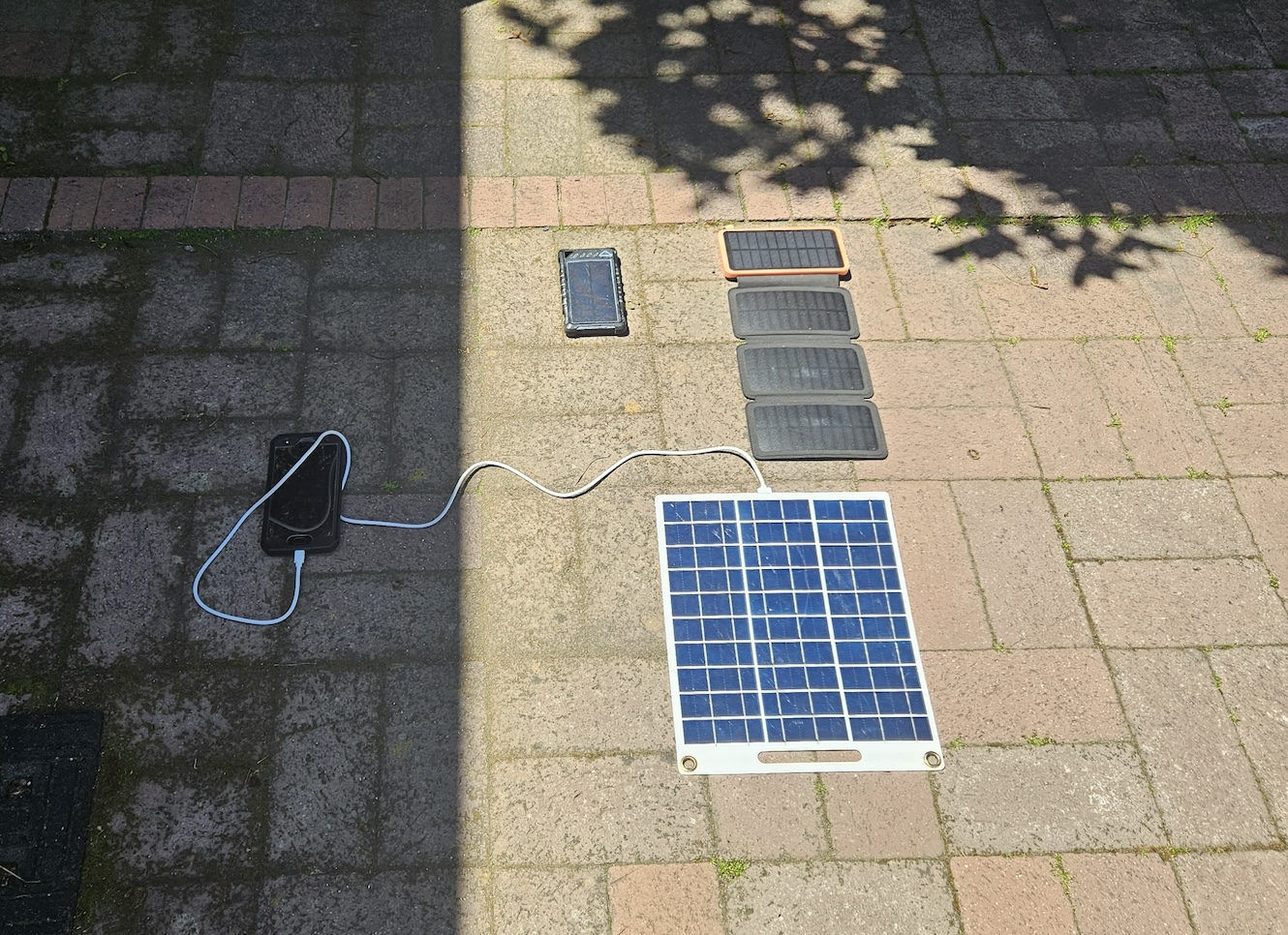
If you’re burning anything to produce electricity, you’re operating a thermal power plant, which is not a very sustainable thing to do. The three most sustainable ways to generate electricity are solar, wind, and hydropower. Of those, solar is by far the best, the most abundant, the most reliable, and becoming the cheapest. Our world (mostly thanks to China) is just starting to build an enormous amount of solar electricity generating capacity, so your thermal power plant will have to compete with that. By 2030 or so, it will be incredibly obvious to everyone that burning gas from garbage is far less reliable and less affordable than simply putting a solar module in a sunny spot connected to a battery in a shady spot (as I’m doing as a write this on my laptop on an outdoor patio).
After you’ve put your garbage through a digester, collected some gas, and burned it to generate electricity, then you need to send what’s left of your garbage to a composting facility, a landfill, or a friendly farmer’s backfield. When all is said and done, it’s smarter just to compost your compostable garbage and invest your money in solar and electricity storage systems that are far more efficient than any thermal power plant.
Help! If landfills, incinerators, and digesters aren’t so great, why don’t we just compost all our garbage?
Good question! The short answer is contamination and lack of know-how.
We can and should compost everything we can. If you’re in a position to have a compost pile in your backyard, please put everything you can in it. There’s really no better way to handle your own solid waste than to compost it in your own backyard.
Once you start composting your garbage, one of the first things you’ll wonder is what is in your garbage. Can you safely compost all the food you don’t eat? What about meat? What about vegetables that have been treated with pesticides? What about GMOs? Can you compost all the paper and cardboard waste you have? What about the dyes in the inks on paper? What about the coatings on glossy magazines and junk mail? What about the glues in cardboard? Can you compost all your yard waste? What about the herbicides your lawn-care company sprayed on your grass? What about the thick, woody branches from the bushes you cut back? What about the seeds from all the weeds you didn’t pull before they flowered? What about the poop from your pets?
I love these questions. For many people who ask me about them, it’s the first time in their lives that they are practically confronting the issue of environmental sustainability and their personal role in helping our society achieve it.
Help! My town has a composting facility. But is it really better for the environment for me to drive over there to dump my compost pail every couple of days?
No, of course not. I love this line of questioning, too. For many people who ask me questions like this, it’s the first time that they are thinking about the environmental cost of transporting their garbage and about their civic opportunity to do something practical that saves our planet.
One of the biggest environmental benefits of composting is that we don’t have to move our garbage so far and so inefficiently. What do you think happens when your garbage gets picked up? Someone has to drive a big truck that wouldn’t be on the road if you and your neighbors weren’t producing so much garbage.
If your town has a composting facility that is near where you already go, such as on the way to your grandmother’s house or your local grocery store, just bring along your compost when you visit your nana or do your shopping. If your town’s composting facility is inconveniently located, find your local environmental champion. The most superbly sustainable solution is for this champion to get a bicycle with a trailer, recruit a group of people who want to exercise and save our planet at the same time, and have them volunteer to ride around gathering up people’s compost to take over to the composting facility.
There are many other solutions that are more sustainable than having everyone make a special trip to drive their compost pails over to the town’s composting facility, but less sustainable than having an environmental champion manage volunteer bicyclists.
Help! What actually happens when my garbage composts?
Composting is a controlled process of decomposition of carbon-containing (organic) material by oxygen-breathing (aerobic) microbes. They break apart big molecules like proteins, carbohydrates, and fats to release energy to power their life cycles. Because nothing in nature is perfectly efficient, they can’t use all the energy they release, so some of their work generates heat. Unlike anaerobic microbes, which produce explosive methane gas as waste, aerobic microbes produce odorless, colorless, and non-flammable carbon dioxide as a waste gas. Once they’ve broken up the big molecules and released carbon dioxide gas, what’s left of a very big pile of your garbage is a very small pile of dark, earthy, completely decayed organic matter that is called compost, which you can sprinkle around your yard or carefully conserve to use in your garden.
Help! If composting produces carbon dioxide, which is a greenhouse gas, why is composting more sustainable than landfilling or incinerating garbage?
Good question. Simple answer: add up the sustainability score of composting garbage versus landfilling garbage without incinerating it versus incinerating garbage then landfilling ash. You’ll find that composting has the best sustainability score.
A sustainability score includes more than just greenhouse gas emissions; even if you add up the greenhouse gas emissions, composting emits some pollution with global warming potential but much less pollution than landfilling garbage or incinerating garbage and then landfilling ash. The best practice for sustainability is composting your own garbage in your own backyard and then using the compost you create to improve the fertility of your soil to grow native plants that provide healthy habitats for a diversity of living creatures.
Here are three reasons why composting has a better sustainability score than landfilling garbage without incinerating it first or incinerating garbage and then landfilling ash:
Composting is a circular process that returns nutrients to your soil. Landfilling garbage or incinerating garbage and then landfilling ash are linear processes that remove nutrients from circulation and lock them up in landfills.
Composting can be done in every backyard and every town in the world, which means garbage has less distance to travel before being processed into something useful. We waste energy, put unnecessary traffic on our roads, and pollute when we transport garbage to landfills directly or transport garbage to incinerators and then transport ash to landfills.
Composting—especially backyard composting—raises the sustainability wisdom of a community, requiring people to consider what they are eating and consuming and how they are disposing of their own waste. Throwing everything into the garbage and having it magically whisked away—and especially whisking it away and telling people that burning their garbage is good for our planet—lowers the sustainability wisdom of a community because most people have other things to think about, so they will never consider what they are eating and consuming and how their waste is being handled.
What’s Still Ahead on the Pathway…
Last year, we explored the pathway to sustainable movement, energy, and goods. Now, we’re exploring the pathway to sustainable food to transition from the standard American diet to a healthier-for-our-planet plant-centered diet and transition from industrial to regenerative agriculture. Stay with us on the journey as we blaze a trail to a superbly sustainable future, one practical step at a time.
References and Further Reading
Impacts of Sending Food and Other Organic Materials to Landfills, United States Environmental Protection Agency
How Landfills Work, How Stuff Works
Methane and Climate Change, International Energy Agency
World stuck in major solar panel 'supply glut'; module prices plummet: IEA, S&P Global Commodity Insights