Self-Serve Water: Thirst-Quenching in New Zealand
The system for drinking water in Kiwi cafés is practical and sustainable.
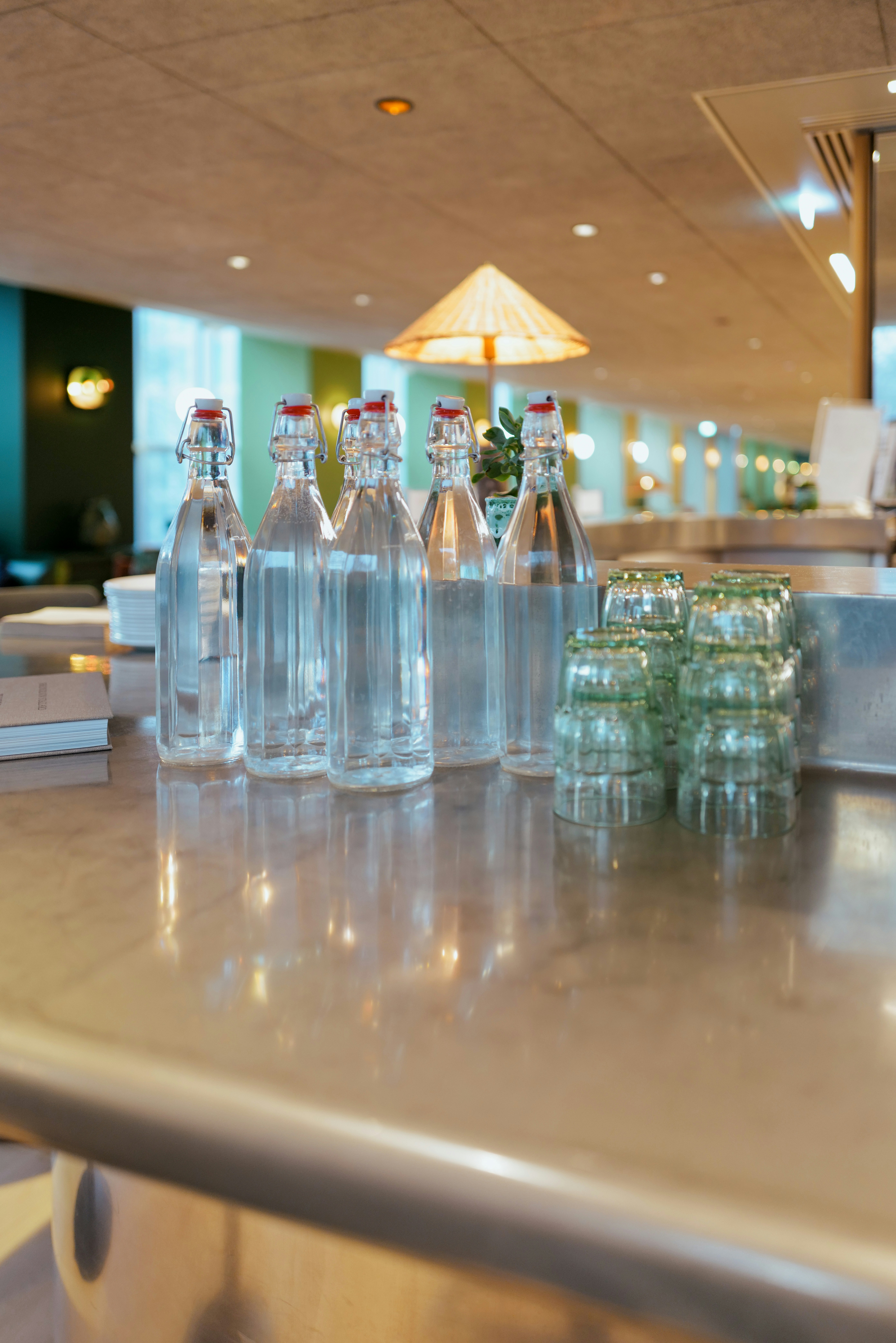
Sustainable living in the United States can sometimes feel like navigating an obstacle course—especially when dining out. Ask for water in a stateside café, and you might need to specify tap water, no ice, no straw, and not in a disposable plastic cup, please. So it’s refreshing to dine out in New Zealand where sustainable choices are the norm. One of our favorite “sustainability made easy” features of going out to eat in New Zealand is their system for bottled water: glass bottles full of water and stacks of empty glasses. Just help yourself: no muss, no fuss.
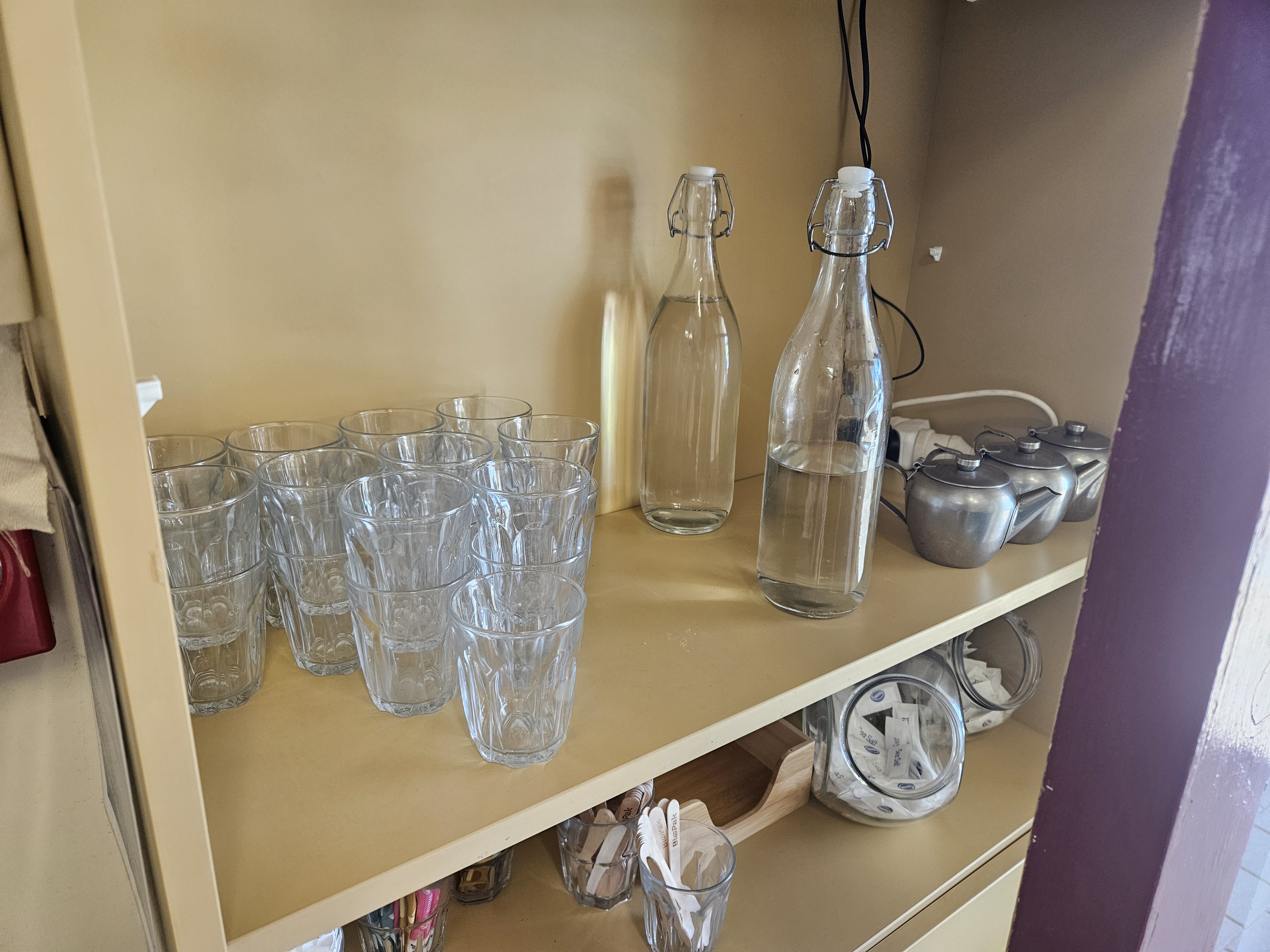
This plastic-free approach to bottled water is right in line with New Zealand’s country-wide ban on single-use plastic tableware, cutlery, and produce bags that went into effect on July 1, 2023. Single-use plastic straws are also banned, and there’s even a plan to phase out the non-compostable plastic labels on produce. That solves my personal pet peeve of finding plastic labels from organic bananas in my home compost. (No matter how hard we try to remember to pull all those little stickers off and send them to the landfill, a few still sneak by.)
Drinking Water Around the World
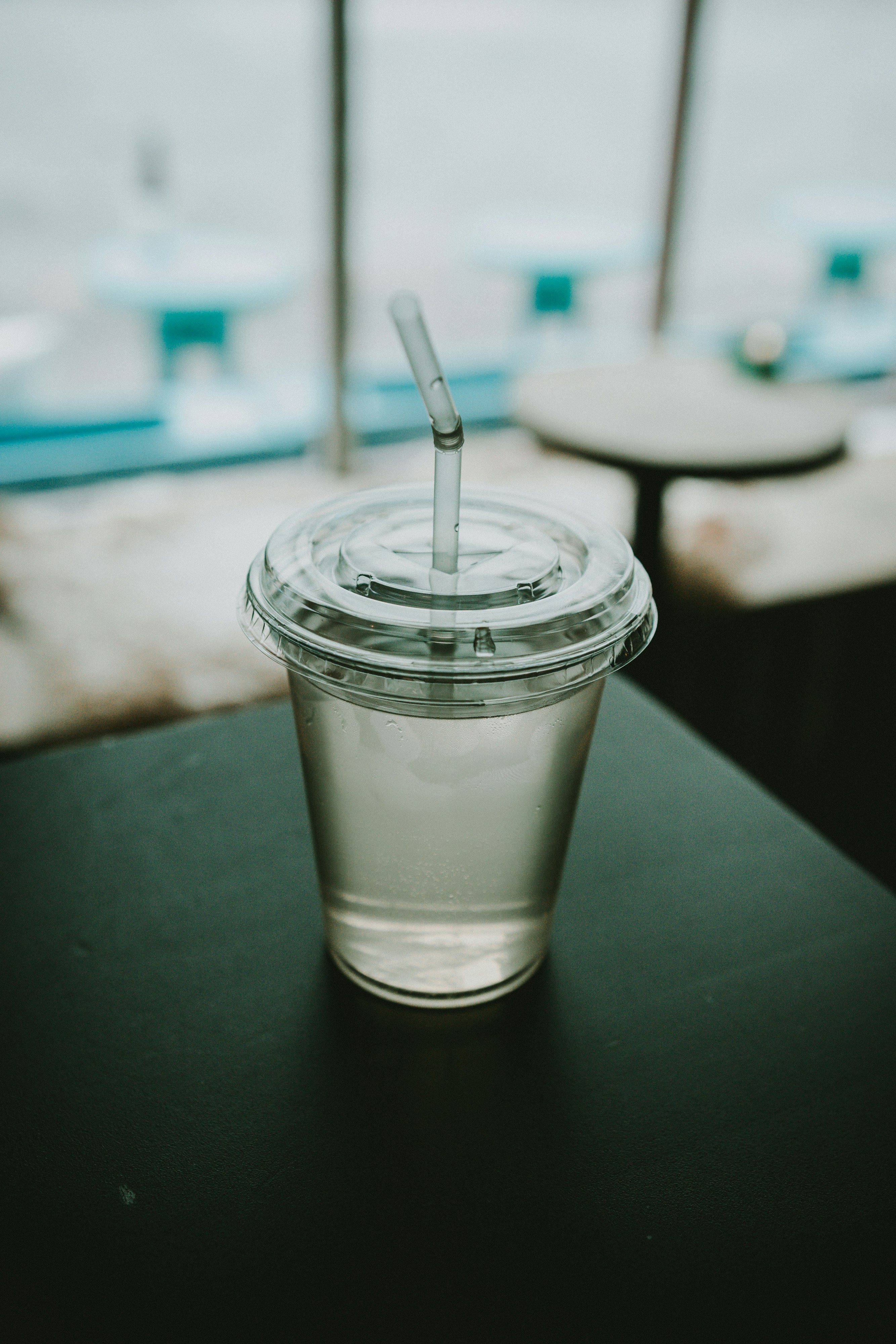
Comparing how restaurants around the world serve water, New Zealand is world class. In the United States, it’s certainly not common (outside of school cafeterias) to serve water sustainably. Our water is usually surrounded by plastic or comes with ice.
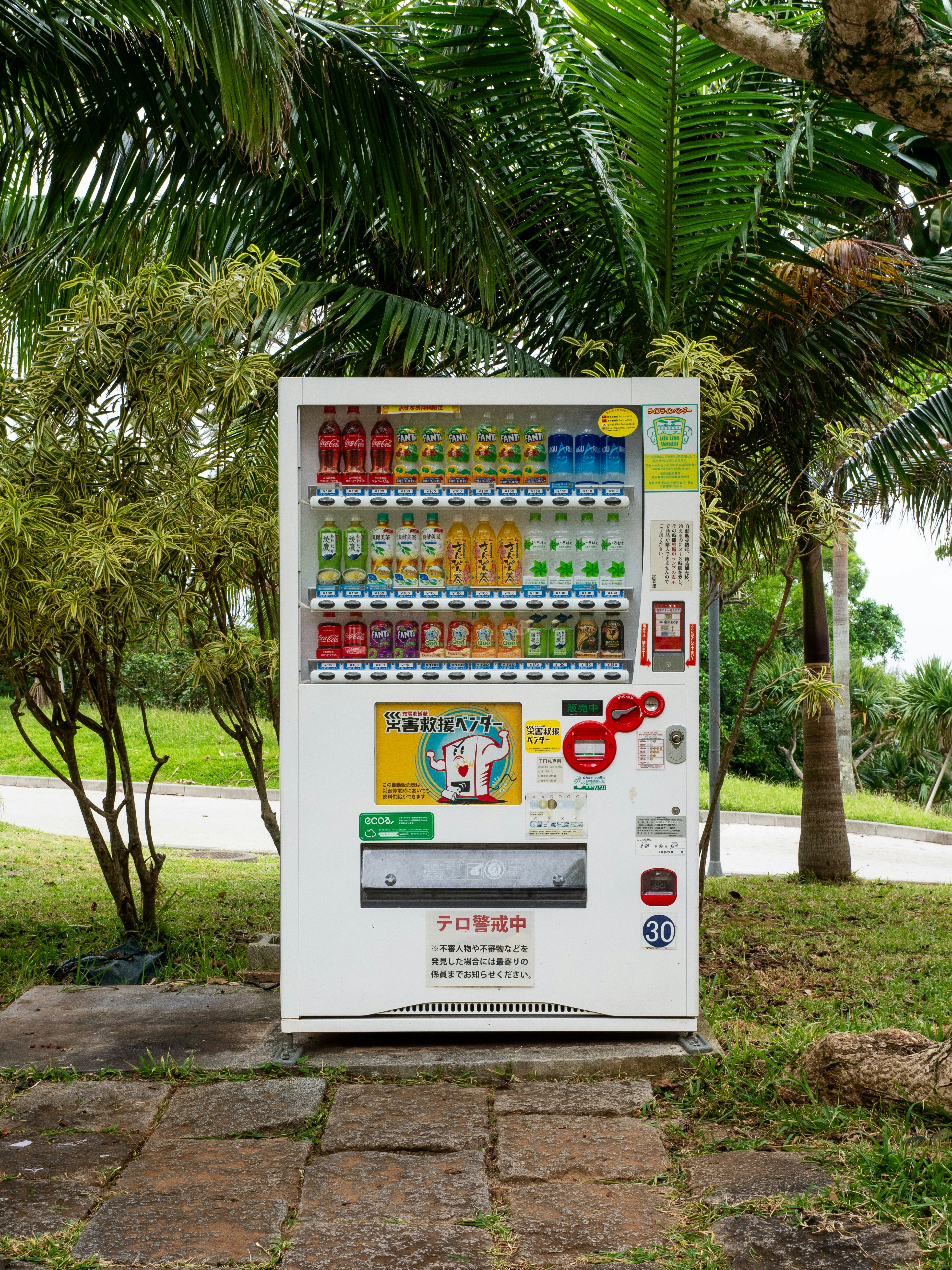
When we lived in Japan, tap water was served to the table, often without ice. Sometimes we’d see large carafes or faucets for serving yourself water. In more traditional establishments, tea would be served by default rather than water. But when I think about going out to eat and choosing a beverage, the big sustainability challenge in that country is vending machines—they are everywhere. It’s almost impossible to resist the urge to buy a bottled beverage when you’re surrounded by the opportunity. Reducing the volume of plastic waste is now a national priority; drinking more tap water could go a long way toward achieving that goal. (Like New Zealand, Japan has instituted country-wide bans on single-use plastic items.)
Living in South America was a rude surprise for my thirsty children. Our youngest child told us he missed his favorite restaurant back home “where we can get free refills on our water!” Most restaurants served only bottled water (at least to tourists like us), and charged by the bottle. Even at home, we had to filter our tap water and ended buying drinking water in 15-liter plastic bottles delivered to us.
When I lived in France, bottled water was the norm. My experience there is that most restaurants assumed we would prefer bottled water, so we needed to order a carafe of water explicitly to avoid being served water in individual bottles. Furthermore, for bottled water, almost every establishment offered the choice of sparkling water or flat.
Tip of the Sustainability Iceberg
Here’s why the New Zealand approach to serving water is a particularly clever sustainable idea worth emulating. For one thing, it completely avoids plastic waste. For another, it saves energy and money. Having helped troubleshoot ice makers on more occasions than I’d like to count, I can tell you that the less ice you need to produce in your restaurant, the better. Having also crawled under and around more commercial refrigeration units than I’d care to remember, I can also tell you that the less refrigerated space in your restaurant, the better.
Freezing drinking water and keeping it refrigerated should be unnecessary. But now that customers in the United States expect ice water, it might be hard for them to accept room-temperature water. Nonetheless, I hope that the idea of serve-yourself tap water catches on. It’s an easy, high-visibility step that shows you’re taking sustainability seriously.
Beyond eliminating waste and saving resources, there is a third reason this practice is superbly sustainable. It helps people make sustainable choices. Sustainability can be simple and easy if we provide the right infrastructure and incentives. When deciding on a beverage to have with a meal, room temperature tap water is the most sustainable choice. Prominently displaying free bottles of it encourages people to drink it. And what better drinking habit to encourage than having your customers pour themselves a glass of water.
In many parts of the world, including most of the United States and Canada, we’ve gone to great lengths to supply safe drinking water by tap to millions of commercial buildings. Providing a nudge to take advantage of that enormous investment in infrastructure is just the tip of the iceberg. But if the tip of the iceberg isn’t sticking above the surface of the water, most people won’t notice it. So let’s raise a glass to New Zealand for reminding us how easy it can be to take a sustainable step.
Dispatches from New Zealand
Every other week we’re sharing a dispatch from New Zealand, showcasing interesting sustainable practices that differ from how we do things in North America. The alternate week we’re continuing to publish our series of practical action guides.
Last year, we explored the pathway to sustainable movement, energy, and goods. Now, we’re exploring the pathway to sustainable food. From the standard American diet to a healthier plant-centered diet, and from industrial farming to regenerative agriculture, stay with us on the journey to sustainability.