Reducing Microplastic Pollution
Plastic production has more than doubled in the last two decades.
Microplastics are on the short list of our planet's worst pollution problems. Tiny plastic particles and fibers are now dispersed across our entire globe, from the air at the top of our highest mountains to the sediment at the bottom of our deepest oceans. Synthetic plastic did not exist until humans invented it in 1907—now, all life on Earth is reacting to this new material that has rapidly pervaded our environment. We don't yet know how or even whether humans and the ecosystems that sustain our lives can successfully adapt to a planet that accumulates more plastic than life on its surface.
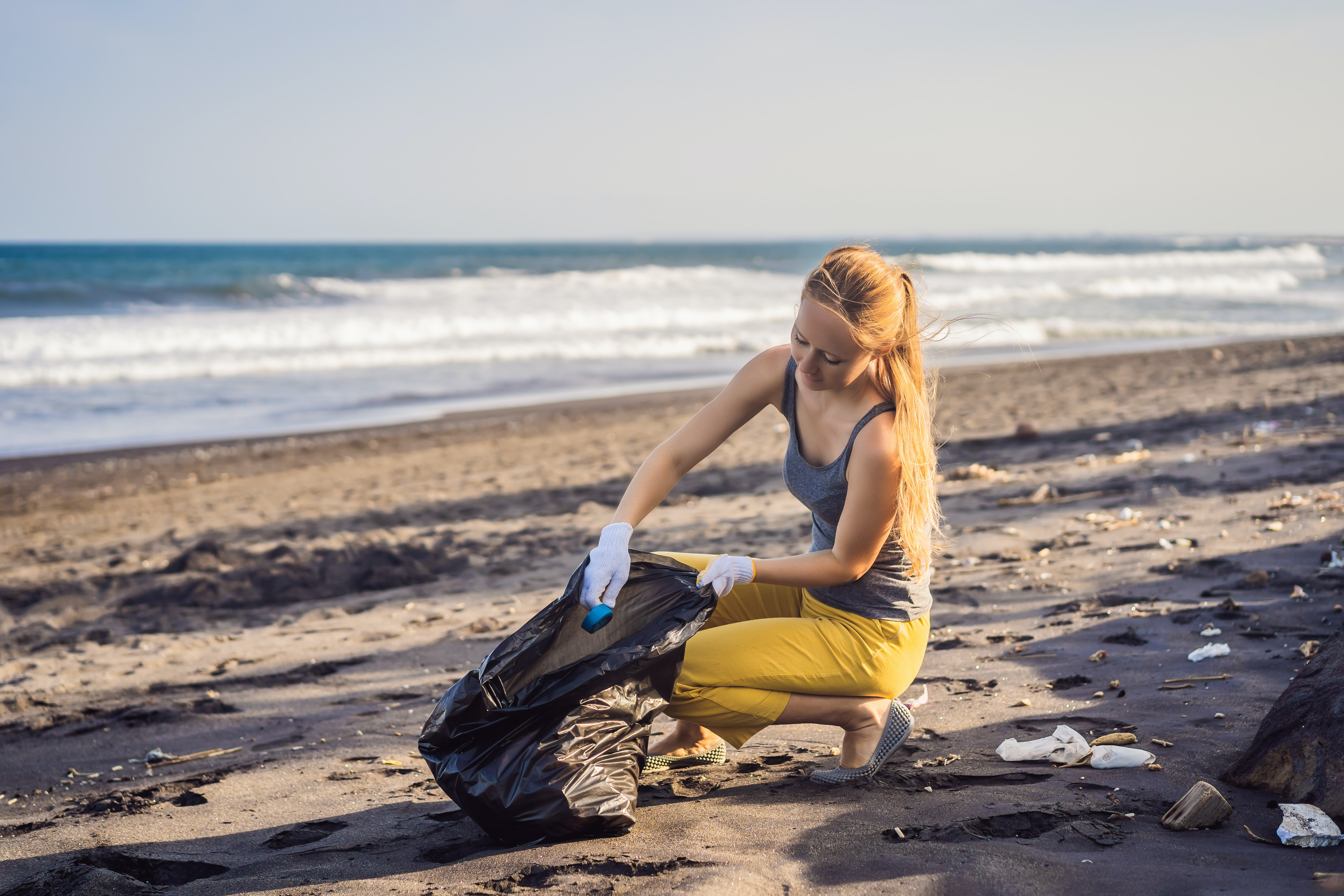
This action guide explores how to reduce the amount of microplastic we add to our planet. If ever there was a case of “every little bit helps,” this is it. Literally! As always, we start by understanding the problem and the science:
Plastics are synthetic polymers (very large molecules that are multiples of simpler chemical units) that can be molded, extruded, cast into shapes, pressed into films, or drawn into filaments.
Microplastics are little bits of plastic less than five thousand microns (one-fifth of an inch) in diameter or small plastic fibers less than 15,000 microns (µm) long with a length-to-diameter ratio of 100 to 1 or more. (By comparison, human hair ranges in diameter from 17 to 181 microns, with an average of 50 microns.)
We create microplastics when we leave plastics outside exposed to sun and wind, when we wash or dry clothes made from synthetic fibers, when we recycle plastic, and when we drive cars or ride bicycles (because tires are made from plastics).
We can take these effective steps in our own households and organizations to reduce the amount of microplastics we create:
Choose goods made from other materials, such as metal, wood, glass, cotton, hemp, and wool.
Drink more water and less alcohol, soda, and juice to buy fewer plastic beverage containers.
Avoid buying water in plastic; use filtered tap water instead.
Have a plan to minimize single-use plastic when eating out—visit establishments that have made the switch to plastic alternatives or bring your own cutlery and takeaway container (in case you want to bring home leftovers).
Buy products in bulk to eliminate unnecessary plastic packaging.
Reuse plastic containers.
Put unwanted plastics in landfill trash, not recycling.
When washing synthetic fabrics, hang them to dry or use a condensing or heat pump dryer rather than a vented dryer.
Choose to walk, bicycle, take transit, or combine car trips to buy fewer tires.
Kick the smoking habit: one study estimated that 300,000 tons of plastic microfibers might be annually reaching aquatic environments from cigarette butts, which are made from cellulose acetate.
Help! I thought recycling plastic was a good idea, but now I hear it creates microplastics. Should we recycle or not?
To be superbly sustainable, you should NOT recycle plastic, but you SHOULD recycle metal and glass. We now know plastic recycling does not work and creates more problems than it solves. On the other hand, recycling metal and glass works very well. With today’s technology, metal and glass can be recycled; plastic cannot. No amount of wishful thinking will make plastic recyclable.
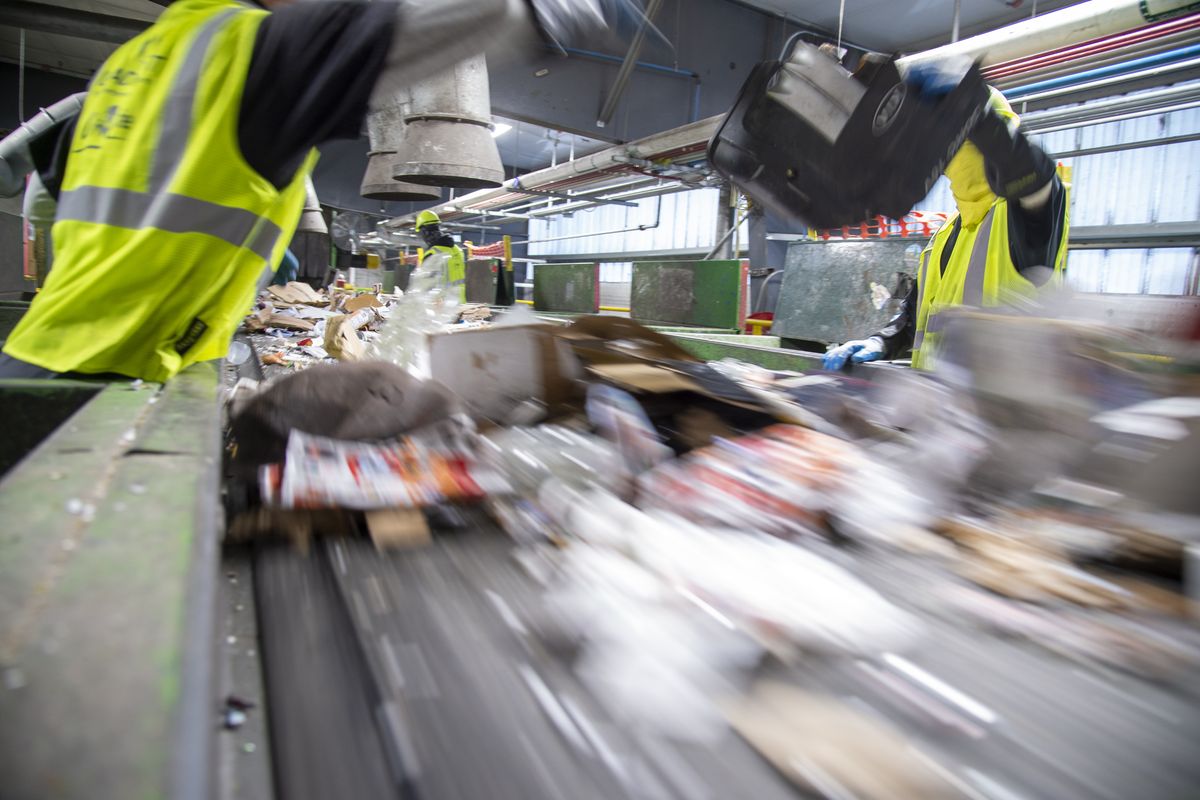
Here are best practices based on facts about recycling and microplastic pollution:
Do NOT attempt to recycle plastic; instead, focus your efforts on reducing your consumption of it and landfill whatever plastic waste you cannot eliminate.
Understand the history of the recycling symbols on plastic containers: it does not mean plastics can be recycled.
Create a plan to reduce the amount of plastic your household buys.
Strictly avoid vinyl, including all PVC products, whenever possible.
Reuse plastic containers as long as you can.
Compost all paper, cardboard, wood, food waste, and yard trimmings that can decompose.
Establish and implement a policy for your household and organization to put any unwanted plastic in landfill trash.
Talk with your local officials about plastic and the recycling policies your local and state governments promote.
Here is why landfilling plastic waste is more sustainable than attempting to recycle it:
Landfills can safely compact and contain plastic waste if all paper, cardboard, wood, food waste, and yard trimmings are composted instead of landfilled. (We need to keep organic waste out of landfills so they stop producing noxious gasses.)
Landfills bury plastics, protecting them from sunlight and wind so they don’t break into airborne or waterborne particles.
Once we improve our technology and recycle plastics safely, we can mine old landfills for valuable materials.
Here’s what happens when we try to recycle post-consumer plastic waste today:
Plastics are bulky, so we spend money, create unnecessary traffic, and emit dangerous pollution by collecting and transporting plastic to sorting facilities.
Plastics contain a huge variety of resin types, which melt at different temperatures and cross-contaminate batches of recycled resin.
We spend time and money building and maintaining machines and hiring people to try to sort plastics by type of resin, colorants, and other criteria to pick out just the valuable plastics; we landfill or incinerate the rest.
Once we have a batch of plastics sorted by resin type and other desirable criteria, we shred it. This creates microplastic pollution.
Every time we attempt to recycle a plastic polymer, we shorten its length. (This happens with paper fibers, too.) Because recycled plastic contains a mix of shorter and regular-length molecules, the recycled plastic we produce is less valuable and less useful than virgin plastic. While there have been successful trials in laboratory settings to produce longer-length recycled polymers by fully breaking down polymers to their constituent monomers and then building them back up into polymers, no one has been able to scale those processes up to be economically viable.
All of the above adds up to this: as environmental champions, we should set a positive example by composting everything we can, leaving plenty of room in our existing landfills to store plastic until better recycling techniques can be developed. In the future, our waste industry can mine landfills for plastics and other valuable materials.
Help! I just found out that washing and drying my clothes produces microfiber pollution. What can I do about that?
Every time you wash your clothes, some fibers break off. Lint is full of fibers less than 15,000 microns long, which are classified as microfiber pollution if they are released into the air or water. If your clothes are made from natural fibers, this is no problem. Those natural fibers will naturally decompose—you could put them in your compost pile and then use the nutrients to grow delicious tomatoes next year.
But if your clothes are full of synthetic fibers—or even worse, if your clothes have PFAS stain resistance, flame retardant, or waterproofing, the microfibers you create when you do your laundry are hazardous and will not naturally decompose. As with any household hazardous waste, rather than dumping it down the drain or blowing it into your yard, the most sustainable practice is to bring it to a household hazardous waste collection event. Unfortunately, that is not possible to do today. Most collection centers can’t be bothered to deal with laundry lint, even though, in a perfect world, it should and could be collected.
Our most practical course of action is to buy natural fiber clothing whenever possible, avoid PFAS whenever possible, filter wastewater from our washing machines, and hang dry or use condensing or heat pump dryers instead of vented dryers. Condensing and heat pump dryers collect water from clothing by heating and then cooling air rather than using a fan and heater to blow air through clothes. The lint we collect from our washing machine and dryer filters we can put in our landfill trash or put in a glass jar and bury in our backyard. That will keep the hazardous microfibers we’ve collected safely contained, not spread around the surface of our planet.
Help! My local organic farm uses plastic film to control weeds and build greenhouses. Isn’t this contributing to the problem of plastic?
Yes, it is. This is one of many examples where more work needs to be done to find more sustainable solutions to meet our needs. Unfortunately, alternatives such as cardboard for weed suppression or glass for greenhouses are more expensive. Organic farms are already struggling to compete for customers against conventional farms with much worse environmental practices.
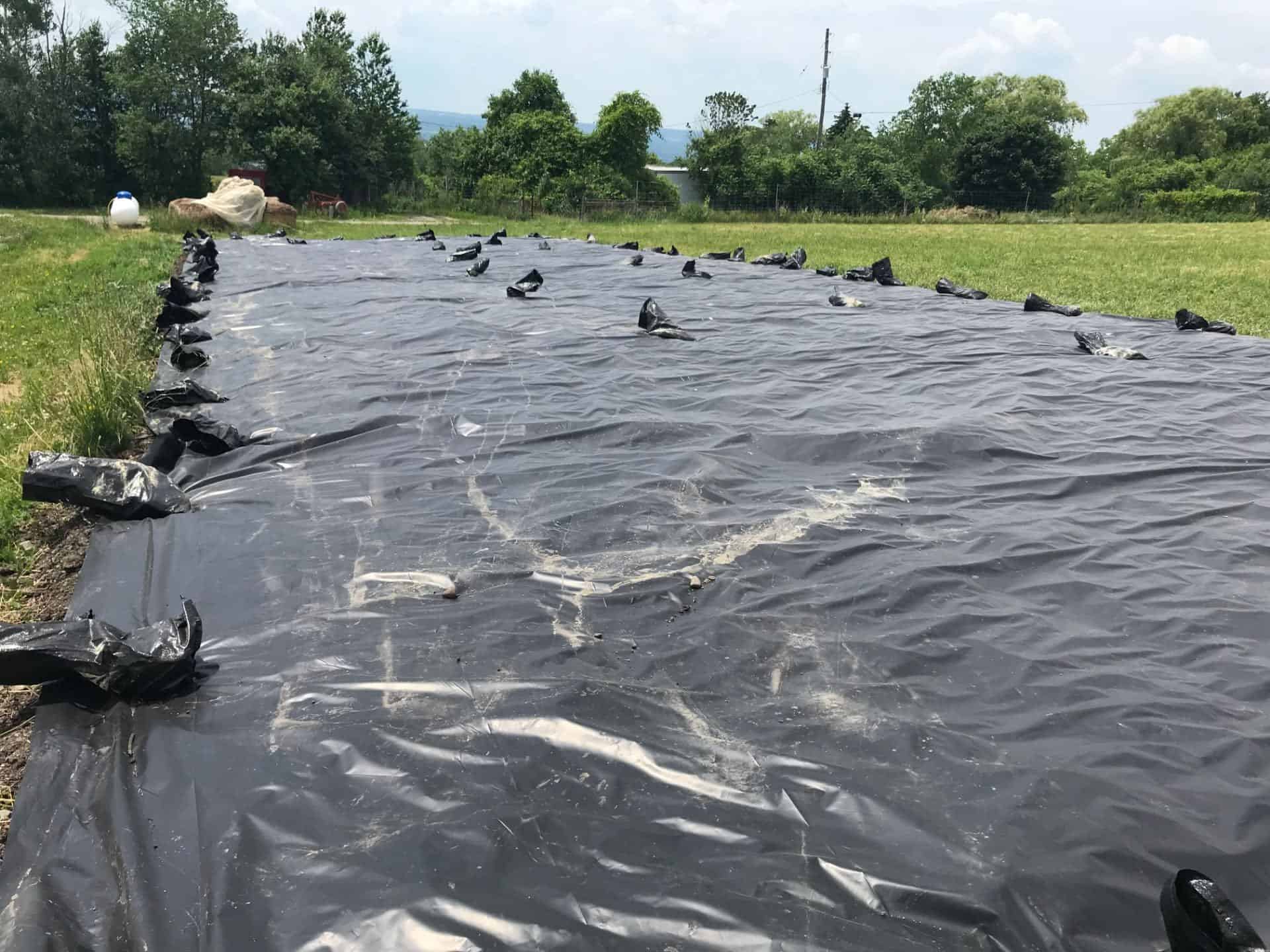
To put this in perspective, we could spend a lot of time and lose a lot of goodwill trying to convince an organic farmer to use less plastic, but we’ll probably end up with nothing to show for our efforts. Or we could start with a different step for sustainability—reducing our own use of plastic—and make much faster and surer progress toward the goal of a world with far less plastic pollution.
What’s Still Ahead on the Pathway…
Earlier this year, we explored the pathway to sustainable movement and energy. Now, we’re exploring the pathway to sustainable goods to make the transition from a linear landfilling economy to a circular recycling economy. Stay with us on the journey to sustainability as we take action to have a positive impact on the world.
References and Further Reading
Plastic Pollution, Our World in Data
Airborne hydrophilic microplastics in cloud water at high altitudes and their role in cloud formation, Environmental Chemistry Letters
Microplastics contaminate the deepest part of the world’s ocean, Geochemical Perspectives Letters
The Age Of Plastic: From Parkesine To Pollution, Science Museum
Pelagic distribution of plastic debris (> 500 µm) and marine organisms in the upper layer of the North Atlantic Ocean, Scientific Reports
An Introduction to Plastics, ChemicalSafetyFacts.org
9 Alternatives to Landscape Fabric, LawnStarter
What Is a Condenser Dryer and How Does it Work?, In The Wash
Cigarette butts as a microfiber source with a microplastic level of concern, The Science of the Total Environment
Facts about Cigarette Butts and Smoke, Berkeley University Health Services
Recycling plastic is practically impossible — and the problem is getting worse, NPR
Recycling can release huge quantities of microplastics, study finds, The Guardian
How Many Times Can That Be Recycled?, Earth911
What is ‘wishcycling’ and why is it a problem for the circular economy?, World Economic Forum
Spokane might start picking up recycling half as much. Here’s what that would look like, The Spokesman-Review
The History of Plastic: The Theft Of The Recycling Symbol, Dieline
Addressing the Plastics Crisis: Why Vinyl Has to Go, Healthy Building Network
Uncontrolled chemical reactions fuel crises at L.A. County’s two largest landfills, Los Angeles Times
Landfill mining: A review on material recovery and its utilization challenges, Process Safety and Environmental Protection
'Plastic recycling is a myth': what really happens to your rubbish?, The Guardian
Is it possible to recycle plastics an infinite number of times?, BBC
Reusable Black Tarps Suppress Weeds and Make Organic Reduced Tillage More Viable, Cornell Small Farms Program