Who's Crazy About 24/7 Green Energy?
Slowing down the transition to solar power and batteries would be crazy.
Should you believe the idea that a “crazy rush to green energy will push us to endless blackouts”? Or is it actually wise to “rush” to green energy?
Two thirds of Americans polled in 2023 believe that we should prioritize green energy before fossil fuel. But this doesn’t please Congressman Jeff Duncan, chair of the House Energy, Climate, and Grid Security Subcommittee of the Energy and Commerce Committee, who believes the hurry is “based on a false premise that intermittent power generation can meet energy demand in the United States.”
In the new survey, 67% of Americans say the U.S. should prioritize developing alternative energy sources, such as wind, solar and hydrogen technology, while 32% say the priority should be expanding the exploration and production of oil, coal and natural gas.
—Majorities of Americans Prioritize Renewable Energy, Back Steps to Address Climate Change
What do you think: is it wise or crazy to rush to green energy?
Why Representative Jeff Duncan Wants Slower Progress Toward Clean Energy
In an editorial published December 11 by Fox News, Representative Duncan makes several claims:
Solar power only generates power intermittently, “not 24/7/365.”
It is a “false premise” that “intermittent power generation can meet energy demand in the United States.”
Battery technologies “still require lots of advancements before they make intermittent power as reliable as conventional, dispatchable generation.”
He specifically criticizes policies that favor green energy as
forcing a “reliance on China for the components necessary,”
being “detrimental to Americans’ standard of living as well as our safety,”
taking offline “certain energy generation, like coal and natural gas,”
hampering the building of more coal and natural gas generation through “excessive regulation, slow permitting and the failure to allow the buildout of delivery infrastructure like pipelines,”
“using subsidies to fast-track renewable projects like wind and solar,” and
causing “the nation to face a potential crisis from brownouts and blackouts.”
Endless Energy, Not Endless Blackouts
A crazy thing about Representative Duncan’s argument is that his preferred policies—to rely more on nuclear and natural gas thermal power plants, backed up by pumped hydroelectric facilities—would eventually lead to endless blackouts as we deplete our limited supplies of coal, uranium, petroleum, and natural gas. It would also tie up an enormous amount of fresh water or require building thermal power plants and pumped-storage facilities that use seawater. By contrast, making a successful transition to solar power will grow the amount of productive power available to our economy, provide endless energy, improve the reliability of our electricity systems, increase the amount of fresh water available for purposes other than power production, and prevent blackouts.
As environmental champions creating superbly sustainable homes and organizations, we can act more quickly to make the necessary transition to clean power by going solar ourselves. True, China is currently producing more solar components than the United States, and the sun only shines during the day. But we’re facing a pollution crisis that requires urgent action. Continuing to rely on thermal power plants that burn fuel is foolish—and perhaps even crazy.
We can install solar generation and batteries on properties we own and buy shares in community solar and battery energy storage projects on properties we don’t own. With our own investments, we can prioritize solar ahead of natural gas or nuclear power plants—that will strengthen our country and raise the standard of living for everyone on our planet over the long run.
Building more solar power and more battery energy systems now will provide reliable energy that works whenever we need it, with no need to burn fuel or use water. Because humans as a species are diurnal (i.e., we are naturally more active during the day and sleep at night), we need more power during the day than at night. Solar, with a few hours of battery backup, is actually extremely well-positioned to meet our power needs. We can charge up our batteries all day from the sunshine, then use that stored power to run our lights and screens for a few hours before we sleep.
While we’re adding more batteries, we can operate existing natural gas power plants to provide electricity when the sun isn’t shining. Unlike nuclear power plants, which are designed to run only at full power, modern gas power plants can respond to fluctuations in demand, burning less gas in periods of low demand and more gas during high demand. Nuclear power, running 100% day and night, was actually a nightmare for early energy planners. Several pumped hydroelectric storage facilities were built simply to provide a place for excess nuclear electricity to go at night when it’s not needed. Once we take those nuclear power plants offline, we can use those hydropower plants to store solar electricity instead of nuclear electricity.
One more energy fact is helpful for every environmental champion to know: solar energy alone can provide all the power we need to sustain and enhance our standard of living. We just need to install enough panels to capture the energy the sun streams to us. We don’t really need any more coal, gas, nuclear thermal power plants, or hydropower dams.
What we really need is much more efficiency—which we can do quickly and cheaply—and then much more solar power on buildings and over pavement. Places we’ve already “developed” by chopping down forests or paving over grasslands are good candidates for solar panels. Solar farms in the hinterlands are a choice—but we could also put solar panels in our cities and suburbs where we actually use electricity. The sooner we start installing solar panels where we need power, the sooner we’ll get the job done.
Our government’s recent decision to join the Powering Past Coal Alliance, committing to phase out “unabated coal power,” recognizes that we can stop building coal power plants and start retiring them. As we tap into our solar potential and build more energy storage to handle the predictable intermittency of sunshine, we will be able to retire all of our nuclear power plants, too, and then our natural gas power plants.
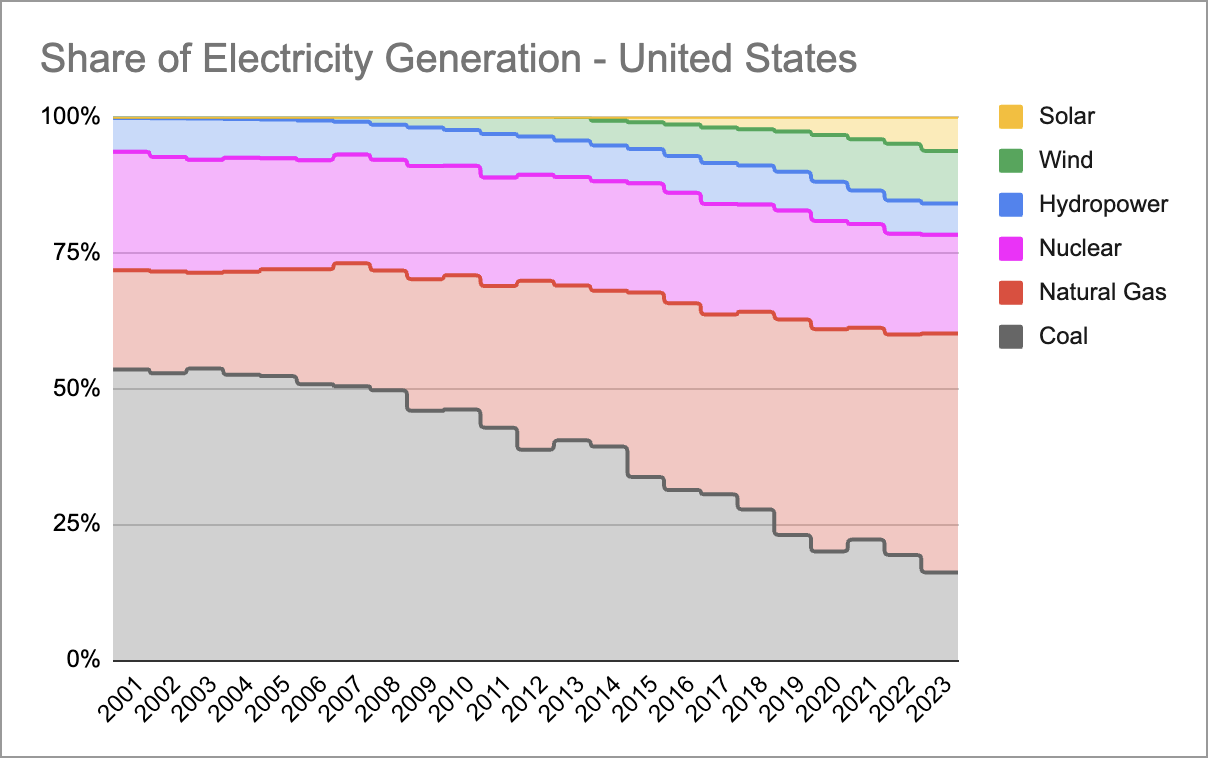
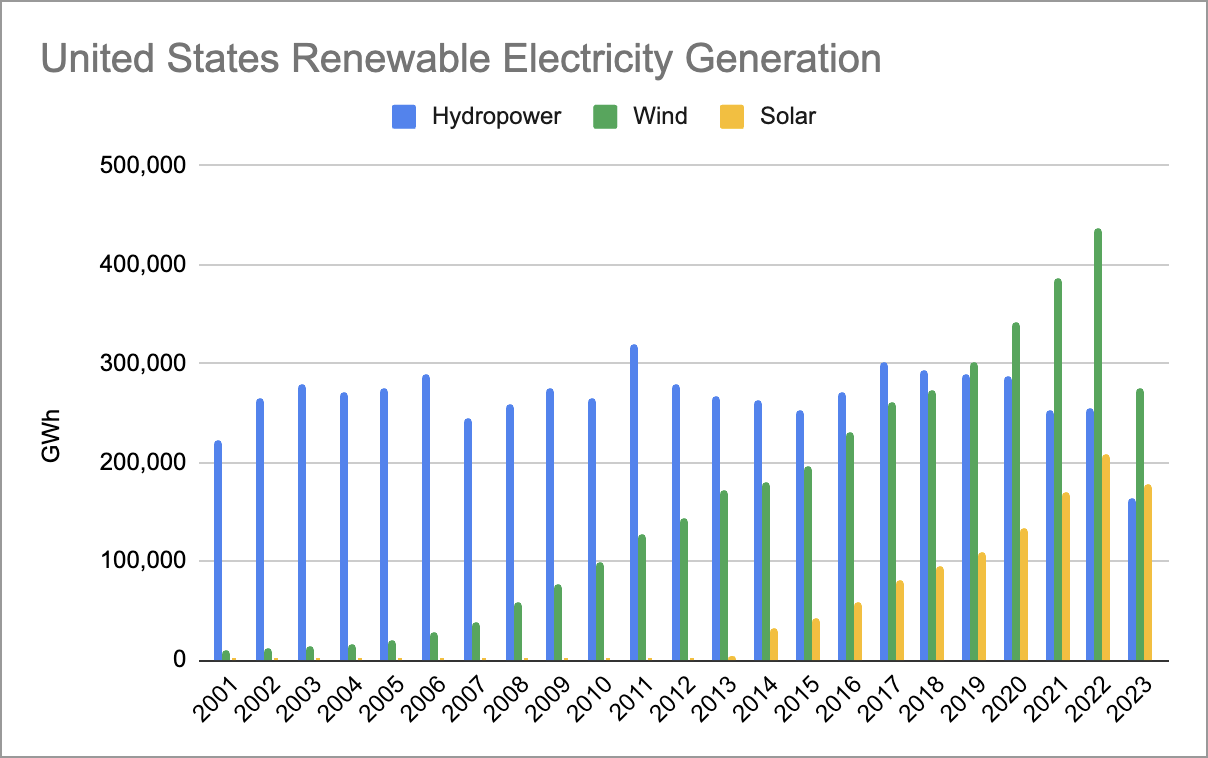
Our entire country has started the transition to solar power, which will provide more electricity than hydropower across the United States this year, next year, and every year thereafter. (Wind power surpassed hydropower in 2019.)
If we examine the impact of solar power on our own household or organization, the transition will be even more dramatic and immediate. In the space of a long weekend, a crew of two people can install enough solar panels and battery backup on a roof or in a yard to meet 100% of the electricity needs of an efficient household in the United States.
Whether and how quickly crews of two will choose to spend their time helping households across our country go solar depends on the financial and political decisions we make. And those decisions depend on which ideas we think are crazy. Are a majority of Americans right to prioritize a faster transition to green energy, or is Representative Duncan right to apply the brakes?
References and Further Reading
Biden's crazy rush to green energy will push us to endless blackouts, Fox News
Majorities of Americans Prioritize Renewable Energy, Back Steps to Address Climate Change, Pew Research Center
COP28 Opens With Remarkable International Actions On Coal Phase-Out, Powering Past Coal Alliance
Enough Meaningless Phrases on Fossil Fuels, Bloomberg
Electricity Data Browser, U.S. Energy Information Administration