A Brief on Bicycling
Cycling is 100 times more sustainable than driving a hybrid car, and even 3 times more sustainable than walking.
Every time I see a cyclist, I think of H.G. Wells. He may not have said, “Every time I see an adult on a bicycle, I no longer despair for the future of the human race.” But he must have felt that way since his vision of utopia had bike lanes everywhere.

You probably know riding a bicycle or tricycle is more sustainable than driving. But did you know that cycling is more sustainable than walking (mainly because it is so much more energy and time efficient)? Pedal power is the most sustainable way to move.
For this Sunday’s sustainability solution, let’s explore how to take more trips using an incredible technology—pedal-powered cycles!
Weekly Poll: Bike Trips per Week
How to Cycle (Safely)
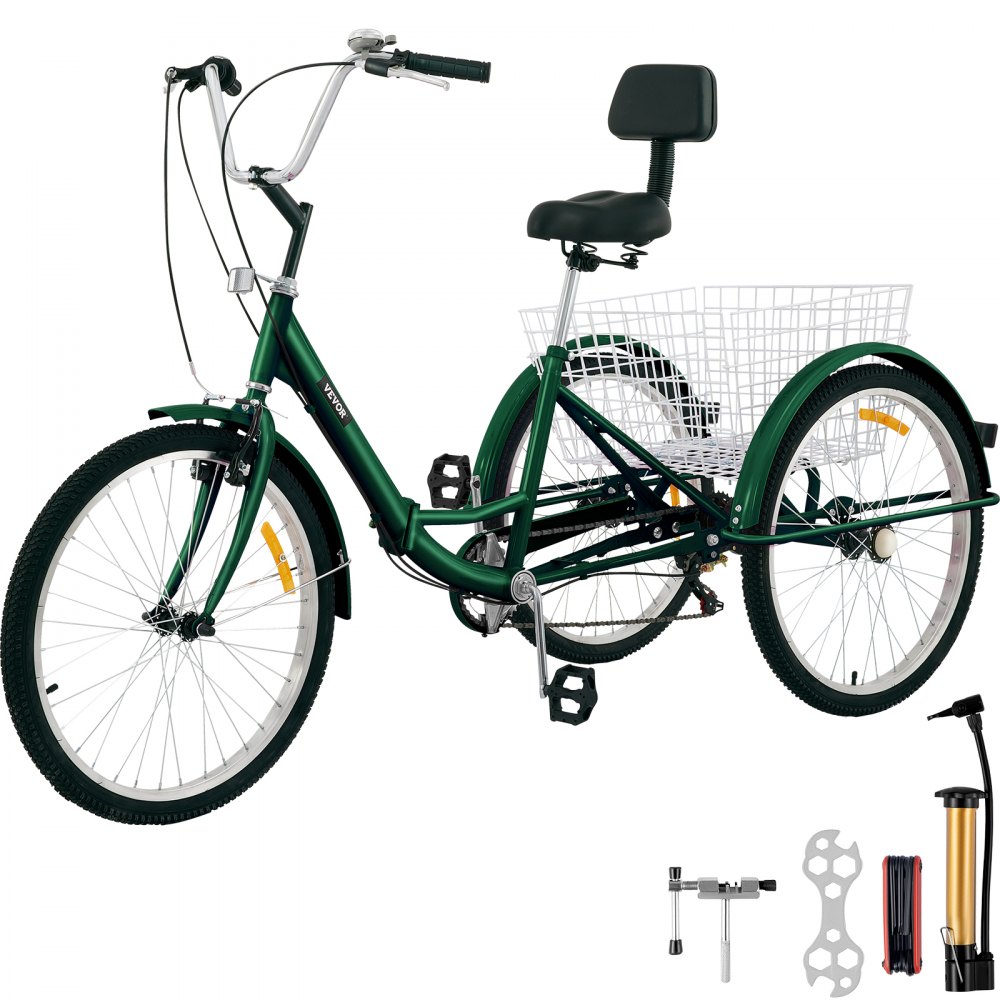
Riding a two-wheeled vehicle shows the power of mind over matter. Bicycles are surprisingly stable in motion, but riding one does require mental effort and learned skill. Utility trikes (three-wheeled cycles) are stable both stationary and in motion on flat ground, great for most errands around town.
In the United States, more than half of all daily trips in 2021 were less than three miles, so they could be cycled in about 9 to 13 minutes. Yet less than 1% of all trips were completed by cycling.
Safety concerns deter many from using this most sustainable mode of moving: about 1,000 cyclists die each year in North America due to accidents, many of them involving motorized vehicles. To put this number in context, in the United States, about one cyclist dies per 12.5 million miles cycled.
If you rode your bike every single day for three miles, about once every 11,560 years, you could expect to be involved in a fatal accident. Your safety mileage will vary depending on your neighborhood. Wider streets, marked bike lines (or simply allowing considerate cyclists on sidewalks), and lower speed limits make it dramatically safer to cycle.
Besides infrastructure and policy measures, there are many personal steps you can take to stay safe while riding:
Cycle during the day.
Avoid using alcohol or drugs while cycling.
Listen to traffic and the world around you, not to headphones.
Give yourself plenty of time to complete your errands, so you aren’t rushing.
Follow all traffic regulations, including coming to a complete stop at red lights and stop signs and looking and listening for cross traffic before proceeding.
Wear a helmet.
Wear sunglasses so you aren’t blinded by glare.
Stay off controlled access highways where bicycles are not allowed.
Why Cycling Is So Sustainable
I calculate that cycling is 100 times more sustainable than driving a 2023 Toyota Prius and three times more sustainable than walking.
First, bikes and trikes are a great use of materials. Cycle frames, cables, chains, and crankshafts are mostly metal, which can be fully recycled. The components that are made from synthetic materials—tires, seats, and a variety of plastic pieces—are much smaller than the equivalents in motorized vehicles. A car weighs 120 times more than a bike. This is reflected in the price: a 2023 Toyota Prius costs about one hundred times more to buy than a city bike. Plus, the operating costs of a car are many times more than a bike; the exact ratio depends on a huge host of factors, including the cost to register and insure vehicles and the cost of fuel versus the cost of food.
Second, bikes and trikes last for decades and are easy to keep in good repair (although there are some exceptions at the low end of the market). I estimate that the average useful life of a cycle is at least 50 years, compared to about 20 years for a Toyota Prius. You can do most bike repairs yourself with a small set of tools.
Third, cycling is highly energy efficient. On flat ground, it requires about five times more energy to walk three miles than to bicycle the same distance.
Fourth, walking or cycling emits no pollution, whereas a 2023 Toyota Prius emits 155 grams of greenhouse gas per mile.
Fifth, cycling is more than three times more time efficient than walking: the average person takes about an hour or more to walk three miles but can easily bicycle the same distance in less than twenty minutes. Of course, cars are even more time efficient: at highway speeds, you travel three miles in less than three minutes.
And finally, it’s much friendlier and safer for everyone around you when you cycle. Your risk of seriously injuring or killing someone else while cycling is negligible, whereas even the most careful and conscientious drivers occasionally kill others accidentally.
Combining all of these factors into a single sustainability score can be tricky—that’s why we’re developing a web app and handbook to do that—but in my estimation, a 100-to-1 sustainability ratio is reasonable for cycling versus driving.
A Few Tips for Sustainable Cycling
North Americans are famous for buying lots of bicycles but not using them. About 52% of our population has access to a working bike, but less than 5% use it at least twice a week. Here are a few tips to help everyone hop on a bike more often:
If you have an old bicycle you don’t need, donate it to charity. While most people have a working bike, 48% don’t. Google “bicycle donation programs near me” to find one that will pick up your bike, tune it up, and give it a useful life.
Buy a utility trike if balancing a bicycle is daunting. You can go slow and steady.
Wear a backpack or add a rack to your bike so you can carry things. With a rack, you can also add side bags called “panniers” to carry more stuff safely. For even more cargo, you can turn your bicycle into a mini-pick-up truck with a tow-behind cargo trailer.
If you’d like to extend your cycling range or need help pedaling up hills, consider an e-bike. These are cycles with batteries and motors to assist when you pedal. There are kits to convert almost any pedal bike to an e-bike.
Questions? Comments?
I’d love to know if you’ve discovered ways forward on the pathway to sustainable movement. What has worked well—and what hasn’t been that great—for you?